Types Of Content For Local SEO

Key Takeaways
- Local SEO content boosts your visibility, attracts local searchers, and helps you establish dominance in a specific geographical area.
- Local SEO drives leads effectively, with 28% of local searches ending in a purchase and 76% of nearby searchers visiting a business within 24 hours, according to Google.
- Optimizing content for local keywords increases visibility, influences organic rankings, and builds credibility with the customers closest to you.
Across the local campaigns we run at HigherVisibility, the businesses that win aren’t guessing at tactics. They pair location pages with service area pages, reviews, and locally focused blog content, then measure every lead that follows. The content types below are the ones that consistently move local rankings and fill the pipeline for our clients.
Here’s why this work pays off. According to research from LocaliQ, people are willing to pay 22% more when a company has a strong online reputation. Reviews carry that reputation, and BrightLocal’s 2026 Local Consumer Review Survey found that 97% of consumers read reviews for local businesses. Google’s own research shows that 28% of local searches result in a purchase, and 76% of people who search for something nearby visit a business within 24 hours, per Think with Google. Search Engine Journal’s marketer poll reported by Backlinko found that 49% of marketers identify organic search as the top ROI-driving marketing channel.
If you’re not optimizing your content for local keywords, you’re handing that revenue to the competitors who do. Thin or missing content also makes your business look less credible to the customers deciding between you and the shop down the street.
According to Whitespark’s 2026 Local Search Ranking Factors expert survey, the top local organic ranking factors include dedicated service pages and the geographic keyword relevance of your content. Higher rankings mean more visibility, and more visibility tends to mean more conversions.
Other benefits are:
- it helps you attract in-person traffic to your site
- it allows you to rank for branded and geo-specific keywords
- it boosts your bottom-line revenue
- it increases your visibility on the search results for local search queries
What Is Local SEO Content
Local SEO content is web content created to target a specific geographical area. Its purpose is to boost your visibility for local search queries, establish dominance in your target market, and attract nearby searchers to your website and store. Think location pages, service area pages, reviews, locally focused blog posts, and your Local SEO profile content working together.
Here’s why it matters, based on what we see across client accounts:
- it captures high-intent searchers who are close to buying, not just browsing
- it earns rankings for geo-specific keywords that are easier to win than broad industry terms
- it feeds the reviews, maps, and profile signals that decide who shows up in the local pack
- it gives you a measurable, ROI-focused channel you can tie directly to calls and leads
Types Of Content For Local SEO
Here’s some content inspiration for your local SEO.
1. Location Pages
Location pages, or local landing pages, are web pages optimized to target people in a specific geographical area. They’re an excellent way to help prospects find your business location while giving them additional details about your product or service to incite a click-through or visit.
Location pages also help improve your search performance. Instead of competing for difficult keywords in your industry, which are harder to rank for, you can target keywords containing geotags like “near me” or “industry + [city name]” keywords, which have substantial search volume and are easier to rank for.
For example, “personal injury lawyer” has a search volume of over 90k and a 78% keyword difficulty score, which means it takes a lot of work to rank for this keyword.
Conversely, adding a geotag to the keyword reduces the search volume and KD, which is easier to rank for.
These keywords are more effective as they attract high-intent traffic to your store or website.
If you’re thinking about how to structure your location pages, steal this inspiration from Ahrefs. Typically, a good location landing page covers details about the business and the service area, images, maps, and reviews from local customers.
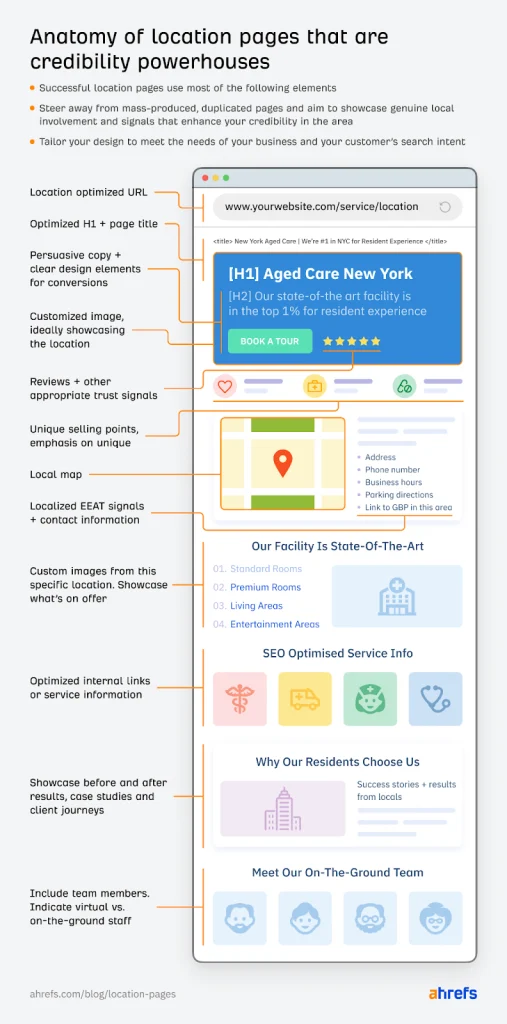
Thanks, Ahrefs!
There are four types of location pages:
Regional And State Landing Pages
These pages target searchers at a state or regional level. Because of their broader nature, they expand your targeting options beyond individual cities or neighborhoods and allow you to funnel traffic even from locations where you may or may not be physically located.
Franchise businesses, banks, legal firms, state government agencies, and similar organizations use state pages to cater to audiences in this category.
State pages can also serve as a central hub for information about your services, locations, and operations within the state.
For context, see this example from an injury and real estate legal firm in Florida. Their homepage is a state page targeting Florida and other cities within the state:
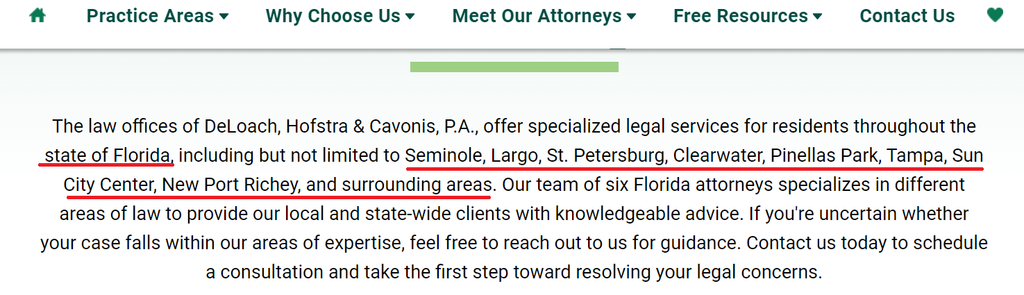
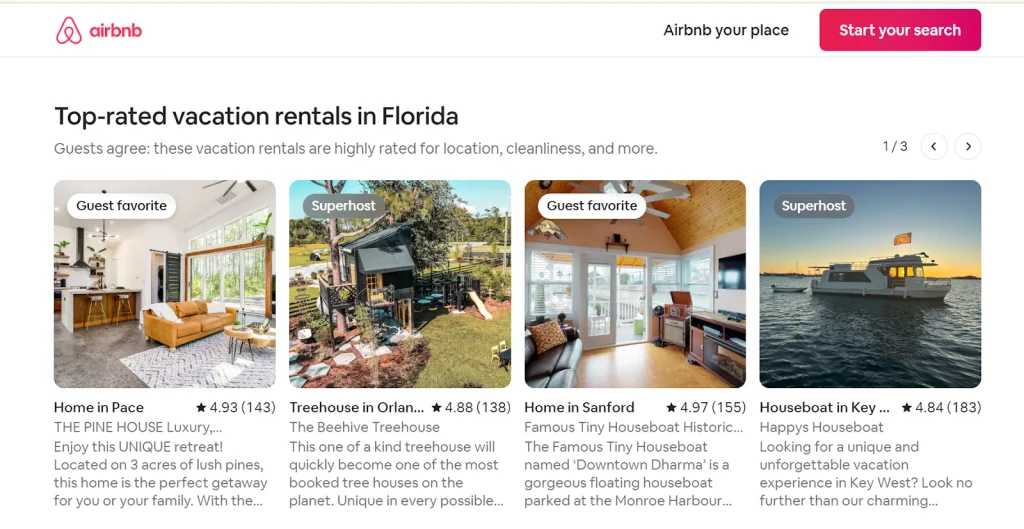
This is another example from Airbnb, Florida. Airbnb runs content strategies for multi-location businesses. Showing their rental options across Florida allows them to attract guests looking for accommodations in different parts of the state while targeting city-specific keywords for SEO purposes:
City-Specific Pages
These types of web pages target specific cities, towns, zip codes, and other surrounding areas. Since they’re more specific, they allow you to rank organically for high-value keywords in every market you service.
But what if you already have a GMB profile serving that purpose?
City pages work well if you’re targeting multiple suburbs, especially if you don’t have a physical storefront in each area. For example, suppose you run a local bread shop in Westchester, Miami, and are targeting customers nearby. You likely don’t need a separate city page since your GBP already effectively covers your local presence.
However, if you’re an HVAC service company serving multiple locations with only one physical address, you’ll need to create separate city pages for each target location. You can’t create multiple GBPs without having multiple physical locations, so city pages help you target and rank for local search queries in each area.
See an example from Jeni’s Splendid Ice Creams scoop shop page for Orlando, Florida:
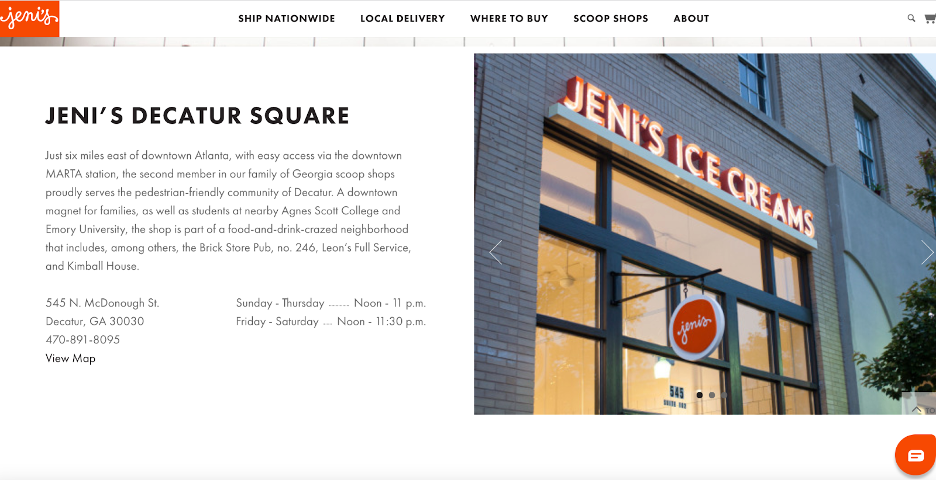
Neighborhood Pages
Neighborhood pages are even more targeted than city and state pages. They’re web pages designed to target searchers looking for specific, hyper-local information about distinct areas within a larger city, such as Parkdale in Toronto, Ontario, Canada. Because of their high specificity, they’re perfect pages to rank for “near me” searches.
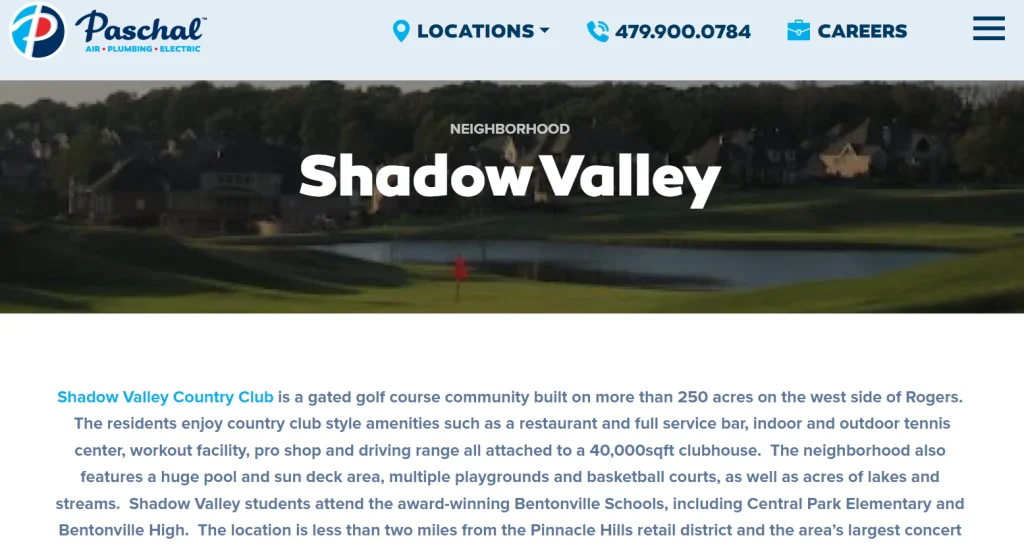
See a good example from Paschal, an HVAC company serving Arkansas, Missouri, and Texas, for Shadow Valley. The copy highlights places and landmarks around Shadow Valley that will resonate with customers from this location:
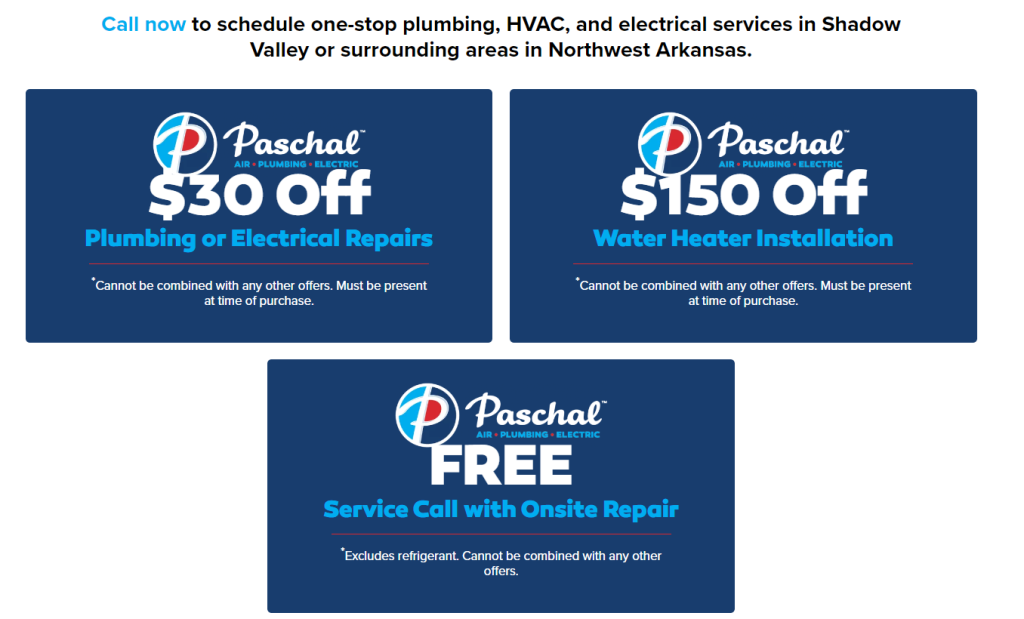
They also included specific discounts for their services, making their offerings appealing to the residents:
2. Service Area Pages
Service area pages, or SAPs, are web pages designed for service area businesses (SABs), companies that offer services directly at customer locations and do not have a physical storefront for customers to visit. This includes plumbers, landscapers, delivery services, HVAC technicians, and similar trades.
For example, a plumber serving customers in Miami can create separate neighborhood pages for areas like Coral Gables, South Beach, and Little Havana. Each page could contain the specific services offered, testimonials from customers within the region, and other landmarks relevant to that neighborhood.
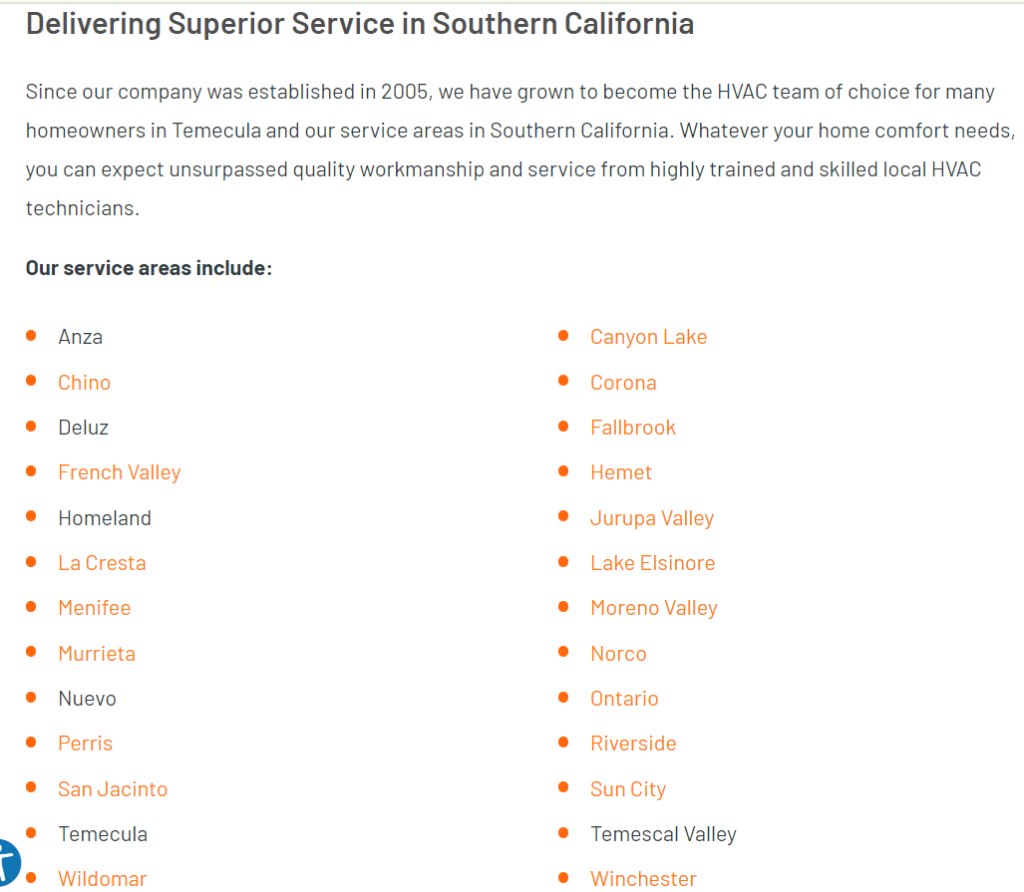
This is an excellent example from OnTime Home Services showing all their service areas outside their primary location:
Who’s this for? Service area pages are perfect for service area businesses (SABs) and hybrid businesses, those that don’t have permanent on-site signage, such as a local restaurant that delivers food outside its locality.
3. Testimonial And Case Study Pages
Testimonial and case study pages are perfect for showing your credibility in delivering services in the target area. The former features reviews from past customers, and the latter showcases projects you’ve undertaken in each service location.
They communicate trust to your prospects and, as a result, can influence their buying decisions. According to BrightLocal’s 2026 Local Consumer Review Survey, 85% of consumers are more likely to use a business after reading positive reviews, and 93% have made a purchase after reading reviews.
For best results, research shows that having high-value ratings and reviews from reputable third-party sites is more effective in boosting your local search rankings and conversions.
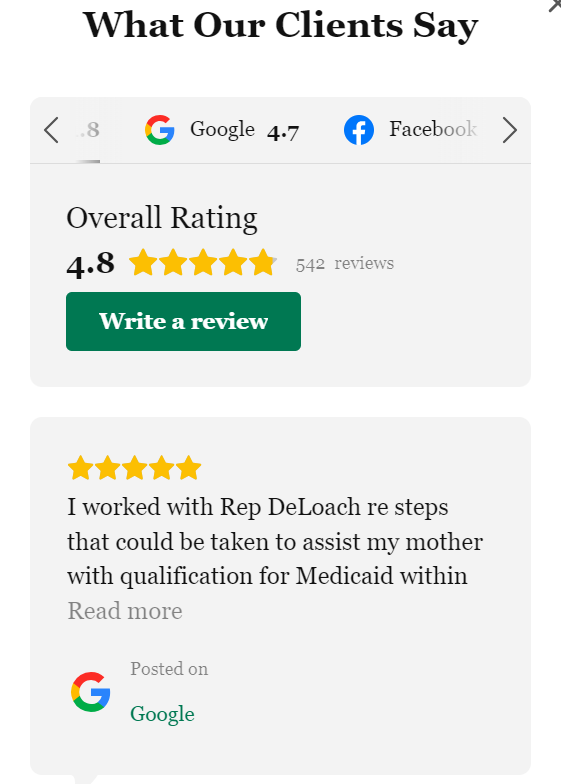
See this example from DHC Laws. They integrated reviews from Google, Facebook, Yelp, and Avvo:
Also, consider having reviews for each location if you have multiple location pages. Customers want to see reviews relevant to their location. See this example from Kidd Roofing:
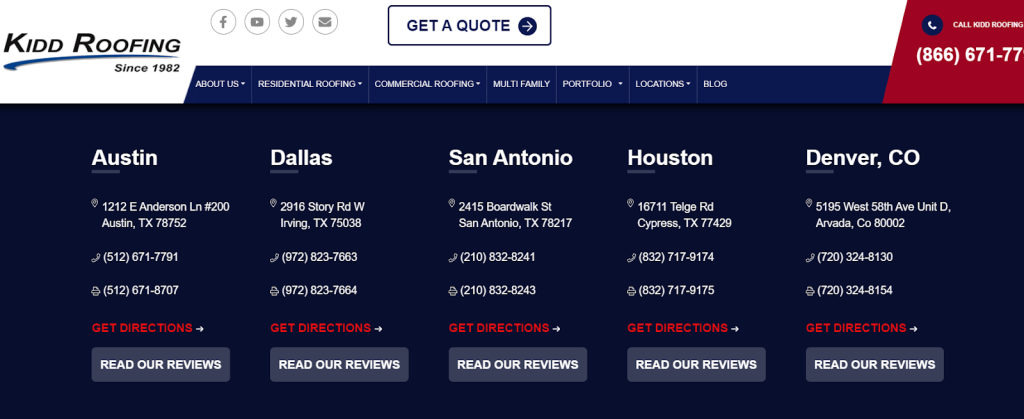
Case studies are even more effective than testimonials. Combined with reviews, they’re powerful tools for showcasing your business’s expertise and trustworthiness.
For example, if you’re a local roofing company, showing before-and-after photos alongside customer testimonials can encourage prospects to visit or contact your business.
4. FAQ Pages
As the name suggests, these pages are dedicated to answering common customer queries. They’re in question-and-answer format, so they’re likely to rank for informational or navigational search queries in the search results.
5. Blog Posts
If you’re having second guesses about having a blog post for your local business, here’s a confirmation that you should. It’s not enough to have optimized product and service pages. Blogging can help you:
- gain a competitive advantage in your local market and the SERPs
- target and rank for local and industry-related keywords
- increase your trustworthiness and credibility in the eyes of your prospects and SEO bots
- build your domain authority by attracting relevant backlinks from reputable sites
- connect and build relationships with your customers
It also helps you break away from the promotional location pages to provide valuable answers that address your customer concerns. Here are some inspirations for topics to cover in your blog section:
- how-to guides
- industry or local news
- a local event
- case studies and success stories
- local business collaborations
- seasonal and holiday-themed content
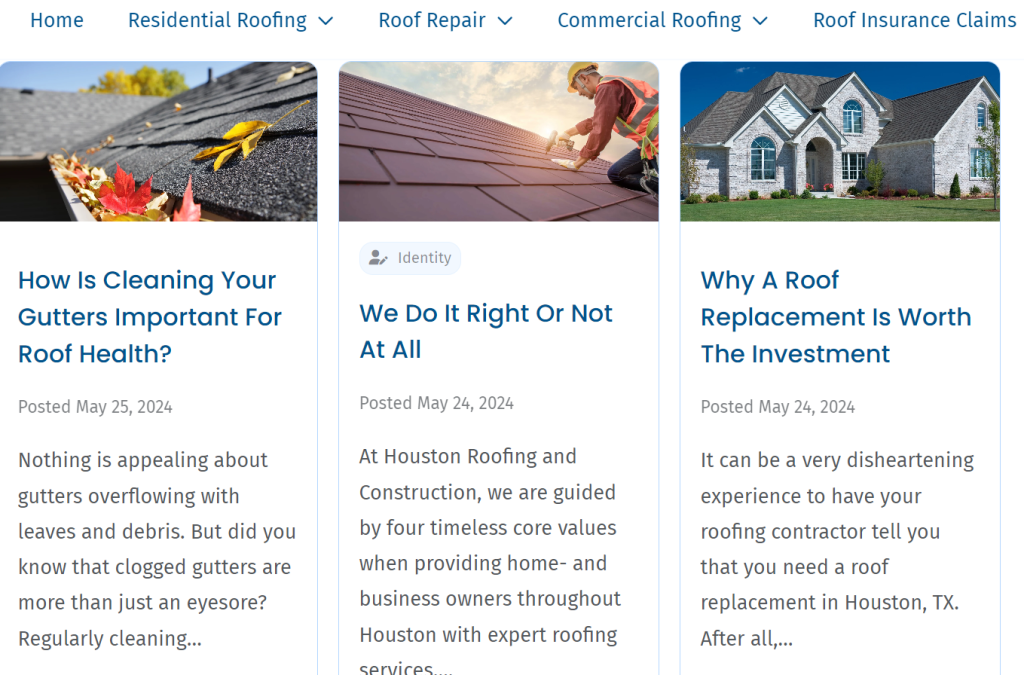
See this example from Houston Roofing:
6. GBP Content
Google allows you to add text to your business profile, up to 1500 characters. This text shows up alongside all other information on your business profile. There are many advantages to having content on your GBP:
- it allows you to share updates such as special offers, local events, news, and sales with visitors searching for your product or service
- advertising seasonal promos is a great way to capture prospects’ attention before they check out the competitors
- it increases your targeting options, since GBP posts let you include relevant local keywords on your profile to improve your chances of ranking for the search terms
A complete, active profile is worth the effort. According to a 2017 Google and Ipsos study, businesses with a complete Google Business Profile are 2.7x more likely to be considered reputable, 70% more likely to attract visits, and 50% more likely to lead to a purchase.
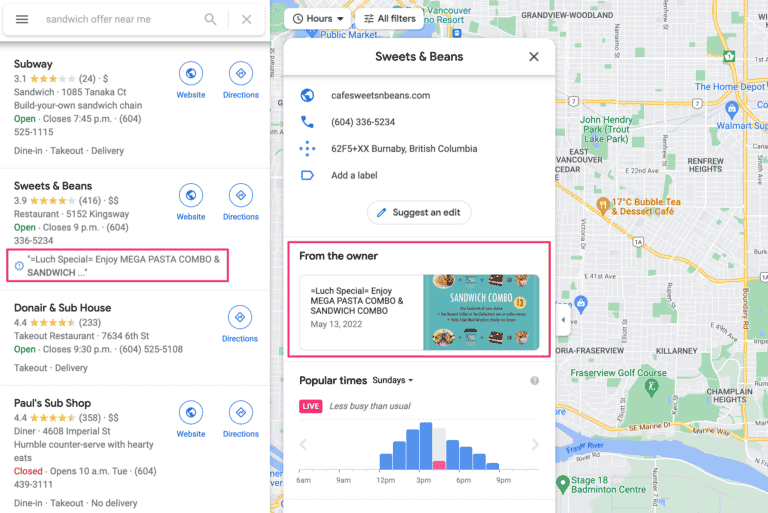
The good thing is that GBP content can take varying formats: photos, reviews, updates, offers, events, and FAQs. It can even be a combination of any. For instance, see how Sweet & Beans combined images and text to showcase their special offer:
Read more: How to rank your Google Business Profile.
How To Create A Content Plan For Your Local SEO
Now that you know the content types needed for your local business, here’s the sequence our strategy team runs. It maps to our proprietary Targeted Growth System (TGS), which centers on precise audience targeting, strategic alignment, and continuous optimization. The steps below are the same ones we use to build local content plans that clients can tie directly to leads and revenue.
1. Understand Your Audience
Who are your customers? What are their search patterns and queries? Before we build a content plan for a client, we map who they’re writing for. Skip this, and you’ll publish content that misses search intent and that nobody wants to read.
We start by identifying the critical characteristics of current customers. Run a survey to learn how they perceive your product or service and what information they’d love you to share. If you own a physical store, ask them in person in exchange for a coupon code or gift.
Once you’ve gathered this data, segment customers based on their journey through the marketing funnel. You can also create personas that help you shape content for each group’s needs.
For example:
Group A includes customers in the awareness stage searching for the best, most reliable solution to their problem. They may use search terms like “how to find a good dentist in [your city].” Content ideas here include an informative guide on choosing a good dentist or a listicle highlighting the top practitioners in your city.
Group B includes customers in the consideration stage. They know what they want but need more information to ease their decision. They’ll likely use search terms like “affordable plumbing services in [your city]” or “the best bakery shops near me.” Content ideas here include a case study or customer review page that showcases your expertise and client satisfaction.
2. Brainstorm A List Of Topics
Now that you know who you’re targeting, their intent, and their context, you can start brainstorming the topics you’d like to be found for. This is your core topic area. It guides your content creation process, including keyword research and content format.
You want to be known as your locality’s best, go-to option. So start with a broad search term for your service or product, then add the tags your customers will likely use in their search.
For example:
- best restaurants in [city name]
- restaurants near [a famous landmark]
- live music restaurant near me
Google Search Console can give you insights into the top queries you’re ranking for, which points you toward what to focus on. Sometimes your customers won’t use direct search terms. Instead, they may search based on their pain points or needs. In that case, use a third-party keyword tool to find topics related to your product or service. Ahrefs has a Keywords Explorer feature for this purpose.
3. Conduct Keyword Research
The next step is to build your keyword list. Use keyword research tools like Google Keyword Planner, Ahrefs, or Semrush to expand your keyword list. These tools provide insights into each keyword’s search volume, difficulty, and intent.
Take a look at the Questions section. While the topics listed don’t serve local intent, since they have no local tags, they can still help you create content that addresses common customer pain points.
For instance, if you’re writing content on emergency automobile repair services, you can introduce a local tag like “cost of hiring an emergency automobile repair in [your city].” This way, you also attract traffic relevant to your target market.
Read more: How to choose the right keywords for SEO.
4. Find Gaps In Your Competitors Strategy
If you’re stuck on what else to include, study your competitors. Start with the type of content they’re publishing, such as blogs, location pages, and FAQ pages. What topics are they covering? How did they structure their content? If they run multi-location SEO across several service areas, check how they create blogs and guides for each location.
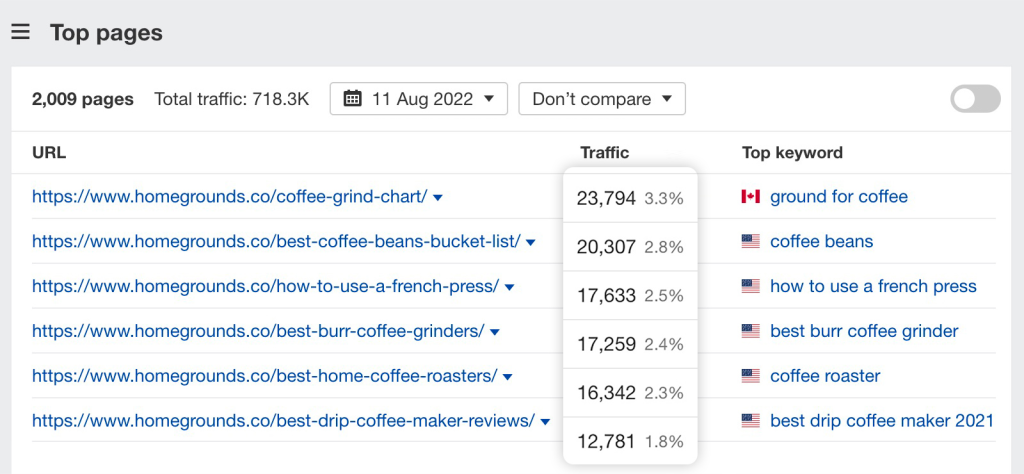
How? SEO tools can give you insights into a competitor’s local content strategy. Ahrefs has a Site Explorer tool that shows you the pages bringing competitors the most traffic:
There’s also a Content Gap feature that helps you find keywords they’re ranking for and you aren’t. This can surface more keyword opportunities to target.
Read more: How to conduct SEO competitor analysis.
5. Create A Content Plan
Now that you’re armed with the right keywords, it’s time to build a customer-centric content plan around your local keywords.
Start by organizing your keywords based on their potential, position in the funnel, priority, and search volume. This helps you know which keywords to focus on, which content gaps to fill, and which web pages to re-optimize for higher conversions.
This is where multi-location businesses hit their biggest snag, and it’s the problem our team solves most often. When you build separate pages for a dozen cities, you risk duplicate content that dilutes rankings across every location. The fix isn’t thin, copy-pasted pages. Create a content template you can mirror across all your target markets, then distinguish each page with nuances unique to that location. That can be local testimonials, neighborhood landmarks, service specifics, or regional language. Each page should read like it was written for that community, not stamped out for a spreadsheet.
6. Have A Promotional Strategy In Place
An excellent content plan isn’t enough. You also need a way to distribute your content, because the customer journey isn’t always linear.
Sometimes people search for the best restaurant on their social media pages, and if you’re not promoting your content, you’ll miss out on sales.
Here’s how to do it:
- partner with complementary local businesses in your area to expand your reach
- encourage customers to create and share social posts when they visit, and host social media contests to boost participation
- collaborate with local influencers who align with your brand to amplify your content
- sponsor local events such as festivals or games
- guest post on top publications to increase your brand awareness
- feature testimonials from happy customers on your key pages and social profiles
How To Measure Your Local SEO Results
Content only counts if you can tie it to results, and that’s the standard we hold ourselves to when we report to clients. Track a small set of metrics that connect your content back to leads and revenue.
- Google Business Profile insights: monitor profile views, searches, direction requests, and clicks to your website.
- Local pack and map rankings: track where you appear for your priority “service + city” and “near me” queries.
- Google Search Console local queries: watch impressions, clicks, and average position for your geo-specific keywords.
- Calls and form fills: measure the phone calls and contact form submissions your location and service pages generate.
- Conversions: connect those leads to booked jobs, sales, and revenue so you know which pages pay off.
Tie each metric back to the content types above. If your service area pages climb in the local pack but calls stay flat, the page may need clearer calls to action or fresh reviews. Leads, calls, and conversions are the numbers we report to clients because they show what your content is actually worth.
Conclusion Should You Create Local SEO Content
Yes! We’ve worked with several local businesses and seen how it increases brand local visibility, traffic, and sales. Here’s one of the many cases we handled.
Absolute Refrigeration is a leading HVAC service provider in Lubbock, Texas. Although they’ve been in the business for over 18 years, they had no record to show online because of a poorly optimized digital presence. Their last agency also contributed to this, making it challenging to convince them to give us a shot. But they did!
Instead of creating content immediately, we conducted an audit to understand why they weren’t ranking despite being in the HVAC industry for a long time. Then, we claimed and optimized their GBP for better visibility.
We also conducted keyword research to identify high-intent keywords with low difficulty for which they could easily rank. Our SEO strategy team developed a matching content plan that targets these keywords for even more visibility.
At the end of the campaign, they saw a 580% increase in leads and calls, and they had to hire extra hands to answer them! They also saw a 155% increase in organic traffic and 723% in organic conversions.
Why wait? Request a Proposal today and let’s build a local SEO content plan that drives your leads.
Frequently Asked Questions
What Is Local SEO Content
Local SEO content is web content created to target a specific geographical area, such as location pages, service area pages, reviews, and locally focused blog posts. Its purpose is to boost your visibility for local search queries and attract nearby, high-intent customers to your business.
How Does Local SEO Work
Local SEO works by signaling to Google that your business is relevant to searchers in a specific area. Those signals include geo-specific content on your pages, an optimized and complete Google Business Profile, consistent citations across directories, and strong local reviews. Together they help you appear in the local pack, maps, and organic results for nearby searches.
How Do You Measure Local SEO Performance
Track a focused set of metrics: Google Business Profile insights, local pack and map rankings, geo-specific queries in Google Search Console, calls and form fills, and conversions. Tie each one back to the pages that drive it. The numbers that matter most are leads, calls, and revenue, because they show what your content is actually worth.
What Are The Different Types Of SEO Content
The core types for local SEO are location pages, service area pages, testimonial and case study pages, FAQ pages, blog posts, and Google Business Profile content. Each one targets a different stage of the customer journey, from awareness through to the decision to call or visit.
What Is The Best Thing To Do For Local SEO
Start by claiming and fully optimizing your Google Business Profile, then build geo-specific pages for the services and locations you want to rank for. Pair those pages with fresh, positive reviews and locally relevant content. In our experience, the businesses that combine a complete profile, strong reviews, and dedicated service and location pages win the local pack most consistently.
Sources
Whitespark, Local Search Ranking Factors
BrightLocal, Local Consumer Review Survey 2026
Google, Think with Google, mobile search trends


Enter your email to get strategic insights, a plan of action, and pricing options.
From Our Insite Blog
We believe that SEO requires an all-encompassing approach to ensure a sustainable future for your site and achieve your goal…. conversions.

After working with HigherVisibility for just a few months, we started getting more traffic and selling more memberships. Great people that treat you right and get results.