10 Expert Tips for Building a Winning SEO Content Strategy

An SEO content strategy should do one thing above all: turn search demand into qualified leads and revenue, not vanity metrics. At HigherVisibility, we treat it as a content roadmap that guides how you create, structure, optimize, and distribute content to hit real business goals, whether that’s more visibility on search engines, relevant traffic and leads, or genuine topical authority in your industry.
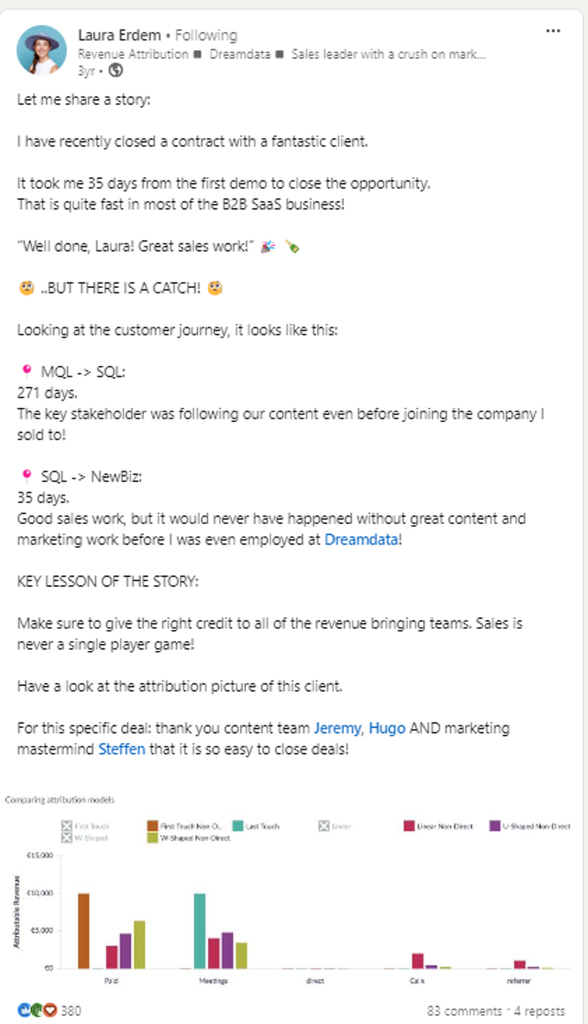
That roadmap aligns your content with user search intent and search engine algorithms, and it complements every other marketing channel you run. For example, Laura, a sales leader at Dreamdata, shared how easy it was to upsell a new client despite the convoluted B2B SaaS customer journey. Why? The stakeholder had already been consuming content from the Dreamdata blog for 271 days before the conversation. That’s the flywheel a strong strategy builds.
So what makes an SEO content strategy work? User-centricity. Google core updates, AI Overviews, and AI answer engines like ChatGPT, Gemini, Perplexity, and Copilot are all refining how people search for solutions. AI Overviews use generative AI to answer questions right on the results page, and that changes click behavior. Pew Research Center found that in March 2025, users clicked through to a website only 8% of the time when an AI Overview appeared, compared with 15% when one didn’t, and about 18% of searches triggered an AI Overview at all.
Here’s the through-line for everything below: a modern SEO content strategy has to satisfy three audiences at once, your readers, search engines, and AI answer engines. Brands that understand user intent and build content experiences for all three stand the best chance of withstanding the turbulence.
10 Ways to Build an Effective SEO Content Strategy
Below are 10 actionable tips to help you build an effective SEO content strategy, followed by a case study showing how we created a content strategy for an enterprise client and improved their conversion rate.
1. Understand Your ICP and Target Audience
SEO is about catering to user search intent, and you can’t do that without knowing who you’re serving. Google’s Helpful Content System rewards original, valuable content built for people and penalizes sites that write for search engines instead. Understanding your ideal customer profile (ICP) and target audience lets you tailor your strategy to real pain points. Without it, you’re guessing.
So how do you build that picture?
- Use the “User Attributes” feature in Google Analytics to understand your current customers, including demographics, interests, and the channels they come from.
- Conduct interviews with past customers, especially your most loyal accounts and those with the highest lifetime value.
- Ask your customer success and sales teams for recurring patterns, so you can spot the traits that define your ICP.
Once you know who your ICP is, take the next step: map their questions to the stage of the buyer’s journey they’re in, then to the content format that serves each stage. That mapping sets up your content calendar later in Tip 7. In our own agency work, defining a sharper ICP often reshapes the entire content mix.
For a deeper walkthrough, see our guide on how to define your target audience for SEO on the HigherVisibility resource library.
2. Perform Topical Research
To rank, you need high-quality, optimized content that covers both industry topics and the questions your potential customers are actually searching. Trust is the currency of search, so build credibility around a focused set of topics. As a digital marketing agency, we publish marketing-related content to demonstrate expertise and help readers make informed decisions. So what do you want to be known for?
Here’s how to find topics worth ranking for:
- Start with seed or broad terms tied to your industry. In the automobile niche, that might be trends, maintenance, and buying guides.
- Ask sales and customer success which questions come up most often from prospects and customers.
- Mine Reddit communities and Quora for real search queries and phrasing.
- Use a tool like Answer the Public to gather related questions around your seed keyword.
- Pull search-intent data from SEO tools like Semrush or Ahrefs (more on this in Tip 6).
Don’t stop at a flat list of topics. Organize them into topic clusters, where one comprehensive pillar page covers a broad subject and several supporting cluster articles go deep on subtopics, all interlinked back to the pillar. This structure signals topical authority to both search engines and AI answer engines, instead of leaving you with isolated posts that never reinforce each other. We build topical authority for clients this way because clusters compound: each new supporting article strengthens the pillar’s ability to rank and be cited.
You can organize your topics and clusters in a spreadsheet, or map them visually in a mind-mapping tool like Boardmix.
3. Conduct a Website Audit
Review your website to find strengths you can build on and weaknesses you can fix. Start by analyzing your pages to see which keywords you already rank for. Why are those pages performing? What queries are they winning? If you’re ranking for buyer-intent keywords, that’s a signal your site is already attracting ready-to-buy customers, so you can re-optimize those pages for more conversions or build new pages targeting top, middle, and bottom-of-the-funnel keywords.
At HigherVisibility, we examine each page based on:
- its position on the SERPs,
- its current and potential traffic, and
- the keywords it ranks for, including cost-per-click value, search volume, and difficulty.
We also assign each page a monetary value so we know exactly where to channel effort, an angle most audits skip. This shows us what’s already working so we can build on it in future campaigns. Tools like Semrush or Ahrefs give you a detailed breakdown of each page’s SEO performance.
An audit isn’t just a report, it’s a decision. For every existing page, decide whether to keep it as is, improve and re-optimize it, or prune it if it no longer earns its place. We run this keep, improve, or prune judgment routinely, and it’s the foundation of the ongoing content-refresh discipline we return to in Tip 10.
For the funnel-keyword mechanics behind this, read our guide on [how to discover top, middle, and bottom-of-the-funnel keywords]([URL TO BE CONFIRMED]).
4. Analyze Your Competitors’ Content Strategy
If your competitors rank for seed, non-branded keywords, they’re doing something right, and reverse-engineering it shortens your own research. Pick three to five competitors outperforming you in search. Drop their URLs into the competitor analysis tool in your SEO software and compare results.
Ahrefs has a content-gap feature that surfaces keywords you’re not ranking for but your competitors are, along with volume, difficulty, and position. That gives you a clear read on which keyword categories drive business growth.
Next, evaluate their best-performing pages. What format are they using: white papers, case studies, guides? Is the content free or gated? Then study their conversion approach:
- Are there clear calls to action prompting a next step, like downloading an ebook?
- Are there obvious ways to improve the user experience?
- Do the design, placement, and language of the CTAs match the overall messaging?
Finally, take a broader view. Examine content quality, distribution, and link-building tactics, then decide how to fold the best of it into your own plan. For the full process, see our guide on how to conduct competitive analysis for SEO.
5. Set Business Goals
Your intended business results should drive your content strategy, not the other way around. That’s the difference between content that builds a brand and content that builds pipeline. We start every engagement by tying the strategy to revenue and qualified leads, because that’s the only measure of success that holds up in a board meeting.
Documenting the strategy matters. The Content Marketing Institute’s 2025 B2B benchmarks found that 47% of the most successful B2B content marketers point to having a documented strategy as a factor in their success. And in CMI’s Insights for 2026, 61% of B2B marketers said their content strategy’s effectiveness improved year over year, with 74% of those improvers crediting strategy refinement as the leading reason. In other words, writing the plan down and refining it are habits of the teams that win.
Start by collaborating with company leaders to understand this year’s goals. If the company wants to grow revenue year over year, ask how an SEO content strategy contributes. Your goals might look like this:
- Goal 1: Increase organic traffic by publishing top and middle-of-funnel blog posts.
- Goal 2: Rank in positions one through three for conversion-intent keywords by year end.
- Goal 3: Improve website conversion rate through landing pages optimized for high-intent keywords.
- Goal 4: Integrate product-led content that shows prospects how your product solves their problems.
Make your goals SMART: specific, measurable, attainable, relevant, and time-bound, and tie them to the overarching business objectives. Then break each goal into the activities that get you there. To grow organic traffic, for example, you might:
- audit and re-optimize pages that have slipped from their former performance,
- create mid and top-of-funnel content targeting low-difficulty keywords with meaningful search volume, and
- build a distribution plan that pulls traffic from channels like social media and podcasts.
6. Find the Keywords You Want to Rank For
With your goals, audience, and topics defined, it’s time to find the exact queries your audience uses to find businesses like yours. Keywords are the pillars of your strategy. Without them, you can’t:
- appear in search results for the right queries,
- funnel conversion-ready visitors to your site, or
- create content that answers what your customers actually need.
At HigherVisibility, we take a data-backed approach and start by establishing a keyword strategy baseline. We track:
- domain rating,
- keyword difficulty,
- keyword competitiveness,
- search volume,
- cost per click (CPC),
- search intent, and
- page rankings on the SERPs.
These metrics define which keywords fit your business. If your site has a domain rating of 40, chasing highly competitive seed keywords won’t pay off, because the odds of ranking near the top are slim. Don’t guess, though. Evaluate your pages to set a realistic keyword-difficulty threshold for your site.
If you run Google Ads, use the keywords already driving conversions there to shape your organic strategy. When a paid keyword performs, lift it into your organic plan for compounding results.
Reading intent is just as important as reading volume. Before you commit to a keyword, look at the current SERP for it and let the results tell you the format the query demands. If the page-one results are how-to guides, publish a guide. If they’re comparison pages, build a comparison. If they’re product or location landing pages, don’t answer with a blog post. Matching format to intent is part of our process, and it’s often the difference between ranking and stalling.
Compile your keywords in a spreadsheet and rank them by the metrics above, then organize the competitor keywords you’re not yet ranking for the same way. Use a tool like Ahrefs for keyword-level data, then run additional research to find long-tail variations for each seed keyword using Google Autosuggest or a tool like lowfruits.io. Those keywords can re-optimize existing content or seed entirely new pages. Once you have them, it’s time to build a content calendar.
7. Create a Content Calendar
A content calendar is your publishing schedule. It organizes content creation, publishing, and distribution over a set period, whether that’s monthly, quarterly, or annually, and it captures your editorial topics, formats, and other essentials.
Start with the keyword gaps that carry high conversion potential but are underused in your current strategy. A simple decision matrix helps: cover high-priority, high-volume keywords first, then high-priority, low-volume keywords next.
Sequence the calendar around your topic clusters, too. Publish the pillar page and its supporting cluster articles as a set so they interlink on release, rather than scattering them across months where they can’t reinforce each other. And give every planned piece a short brief, target keyword, search intent, angle, and internal links, instead of just a working title. That’s how we keep a calendar producing connected assets rather than one-off posts.
Another effective method is organizing topics around your customer’s journey, defining the opportunity at each stage:
- Awareness Stage: Users want informative articles that address their pain points. Publish blog posts, infographics, explainer videos, ebooks, and white papers that position your brand as a thought leader and cut through the noise.
- Consideration Stage: Users are comparing options and want proof your product works. Publish comparison content such as X vs. Y pieces, case studies, or a cost calculator.
- Decision Stage: Users are ready to commit and need to be convinced you’re the better choice. Publish product reviews, service FAQs, and demos, and offer free, personalized consultations (especially valuable in B2B).
- Retention Stage: The user is now a paying customer. Keep them engaged with product updates and helpful how-to content that improves their experience.
- Advocacy Stage: Loyal customers become your marketers. Support this with referral, affiliate, or loyalty programs and personalized offers that show you value their business.
Next, we’ll cover the SEO fundamentals: on-page, technical, and off-page.
8. Cover On-Page and Technical SEO Basics
Your content needs a solid foundation to rank. On-page SEO covers everything on your site that improves search performance, while technical SEO keeps your site healthy and easy for search engines to crawl and index.
For on-page SEO:
- Include the page’s primary keyword in the meta title and description.
- Optimize headings, body copy, and images with relevant keywords.
- Add contextual internal links to distribute link equity and build clear site architecture.
- Add a table of contents to long posts so readers can skim.
- Use heatmaps to see how visitors navigate, then improve conversion paths.
For technical SEO:
- Run a site audit to catch issues hurting your rankings, including duplicate content.
- Create and submit an XML sitemap so search engines can find and index your pages.
- Use noindex tags for pages you don’t want in search results.
- Keep URLs short and keyword-relevant.
- Optimize for Google Core Web Vitals and use responsive, mobile-friendly design.
- Add breadcrumb navigation so users can find their way around.
Two current priorities deserve their own focus. First, implement schema (structured data) markup so your pages qualify for rich results and give search engines explicit context about your content. Second, make your content extractable for AI answer engines. AI Overviews and tools like ChatGPT and Perplexity pull from pages that are easy to parse, so use clear, descriptive headings, put a concise answer near the top of each section, and structure information in well-organized lists and tables. This is exactly what we now build into client content, because being citable in an AI Overview is becoming as important as ranking in the classic results.
For the technical side in depth, see our guide on how to conduct a technical SEO analysis.
9. Build a Solid Off-Page SEO Strategy
Off-page SEO covers everything you do outside your website to improve visibility, rankings, and overall performance, including link building, content distribution, and syndication. It matters because it contributes to your trust signals with Google. I strongly believe it’s a major contributor to your domain authority score.
Here’s where to start:
- Review your backlink profile. Are low-quality sites linking to you? Are there disavows hurting your efforts? Build a strategic link-building plan to fix the issues and earn new links.
- Develop a content distribution plan to repurpose content across platforms and amplify reach. Use Google Analytics to find your top traffic sources, then double down on the channels already working, whether that’s organic, social, or email.
- Collaborate with non-competitive sites to bring their audiences to you, through joint webinars, guest podcasts, and shared expert insights.
10. Track Your Performance
You improve a content strategy by measuring it. Use SEO tools to track traffic sources, organic traffic, conversion rates, and the other metrics tied to your specific goals. SEO doesn’t deliver overnight, so evaluate your overall strategy every three to six months.
Where you point those metrics matters more than the metrics themselves. Tie your KPIs to business outcomes, qualified leads, revenue, and conversion rate, not vanity numbers like raw pageviews. That’s the reporting standard we hold ourselves to, because a ranking that doesn’t move pipeline isn’t a win.
Make content refresh an ongoing discipline, not an afterthought. Rankings and traffic decay over time, so audit your library on a regular cadence and update decaying pages instead of only publishing new ones. Often, re-optimizing an existing page returns more than starting from scratch.
Finally, track AI and search visibility together. Classic rankings still matter, but you also want to know whether your pages get cited in AI Overviews and pulled into answers from tools like ChatGPT, Gemini, and Perplexity. With Google holding roughly 90% of global search share (StatCounter, 2026), search is still where the audience is, but the way answers surface is changing, and your measurement should keep pace.
For a full framework, see our guide on how to measure your SEO success.
How We Helped North American Van Lines Scale Their SEO Efforts
North American Van Lines is a leading moving company serving national and international regions. They’ve been in business for over 90 years and have earned a reputation as one of the most efficient service providers in the moving industry. The problem was that their online visibility didn’t match that reputation, and they were losing ground to other well-established movers.
When they came to us, their SEO was in rough shape:
- Spammy links and low-quality content had damaged the site’s trust and authority.
- Previous firms failed to produce consistent results or share their strategies.
- The site was losing search visibility to major competitors.
- Organic traffic was declining and lead flow was slipping.
- High-quality links had been mistakenly disavowed.
Our first step was to define what they wanted to achieve:
- Primary objective: increase organic lead flow by 20% year over year, from about 1,800 leads per month to about 2,160.
- Secondary objective: reverse the decline in organic traffic and grow it by 5% year over year.
Our vision centered on three key objectives: improving conversion rate, strengthening the link profile, and developing strategic content. Here’s how we did it.
Stage One, Website Audit
We began with a complete on-page and technical audit, documenting every issue keeping the site from performing at its true potential.
Stage Two, Keyword Research and Content Mapping
We ran keyword research to find new opportunities among consumers searching for long-distance moves, and we leveraged past PPC spending to identify converting keywords where North American Van Lines had no organic presence. One theme kept surfacing: before choosing a mover, consumers searched with queries like “Moving from Atlanta to NYC.”
We identified about 100 opportunities where search volumes were lower but keyword difficulty was extremely low, meaning the site could compete quickly with well-produced content. A major problem was the volume of thin, low-quality content across the site, so we launched an intensive content-development campaign to create copy that matched user intent. Building out strategic articles, specifically on the benefits and average costs of moving from one city to another, had a tremendous impact on both organic traffic and conversions.
Stage Three, Off-Page SEO
Knowing previous firms had dabbled in questionable link building, we audited the backlink profile and disavowed links that could cause further harm. Sites with past link issues often over-disavow valuable links, so we reviewed the existing disavow file and found numerous high-authority links worth reinstating, then removed them from the file to recover their value. After cleaning up the profile, we rebuilt the site’s authority through a link-building campaign that included competitive research, asset ideation, and the creation of link magnets to support an extensive outreach program. We also recovered lost links and unlinked brand mentions and engaged in strategic outreach.
Stage Four, Optimizing for Conversions
Using visitor recordings and heatmaps, we studied how consumers interacted with the site and used those insights to lift conversions. We continuously tested the site and applied proven methods, including A/B testing form fields, CTA button colors, CTA positioning, and messaging, then redesigned specific landing pages after split-testing to confirm the improvements.
The Results After 12 Months
Our data-driven SEO content strategy delivered:
- Annual organic conversions grew from 20,748 to 38,692, an increase of about 86% year over year. That worked out to monthly leads climbing from roughly 1,800 to about 3,221, well past the original 2,160 goal.
- Organic traffic grew from 303,744 to 408,250, an increase of about 34% year over year.
Frequently Asked Questions
What Is an SEO Content Strategy?
An SEO content strategy is the roadmap for creating, structuring, optimizing, and distributing content so a website hits specific business goals, like more qualified leads, revenue, or topical authority. It aligns your content with user search intent and search engine algorithms rather than publishing at random. Done well, it ties every piece of content back to a measurable business outcome.
How Is an SEO Content Strategy Different From an SEO Strategy?
An SEO strategy is the broader plan that covers on-page, technical, and off-page work, everything from site health and crawlability to link building. An SEO content strategy is the content-focused layer inside it: what you publish, for which keywords and intents, in what format, and on what schedule. You need both, and the content strategy only performs when the technical and off-page foundations are in place.
What Are Topic Clusters and Pillar Pages?
A pillar page is a comprehensive page covering a broad subject, and cluster articles are the supporting pieces that go deep on individual subtopics, all interlinking back to the pillar. This structure builds topical authority and helps both search engines and AI answer engines understand how your content fits together. Instead of isolated posts, you get a connected library where each new article strengthens the whole.
How Often Should You Refresh SEO Content?
Treat content refresh as an ongoing discipline rather than a one-time project. Audit your library on a regular cadence, and update or re-optimize decaying pages as their rankings and traffic slip. Refreshing an existing page often returns more than publishing something new, so build a recurring review into your calendar alongside net-new content.
How Do You Optimize Content for AI Overviews?
Make your content easy for AI answer engines to extract. Use clear, descriptive headings, put a concise answer near the top of each section, and structure information in well-organized lists and tables. Add schema (structured data) markup so search engines understand your content, and keep answering real user questions directly, since AI Overviews and tools like ChatGPT and Perplexity pull from pages that are genuinely helpful and well-organized.
If you want us to replicate these results for your website, schedule a no-commitment call with our SEO consultants, or request a proposal to see how our Targeted Growth System can turn your content into qualified leads.
Sources
- Content Marketing Institute, B2B Content Marketing Benchmarks, Budgets, and Trends 2025: https://contentmarketinginstitute.com/b2b-research/b2b-content-marketing-trends-research-2025
- Content Marketing Institute, B2B Content Marketing Insights for 2026: https://contentmarketinginstitute.com/b2b-research/b2b-content-marketing-trends-research
- Pew Research Center, “Google users are less likely to click on links when an AI summary appears in the results,” July 22, 2025: https://www.pewresearch.org/short-reads/2025/07/22/google-users-are-less-likely-to-click-on-links-when-an-ai-summary-appears-in-the-results/
- StatCounter Global Stats, Search Engine Market Share, 2026: https://gs.statcounter.com/search-engine-market-share

- 10 Ways to Build an Effective SEO Content Strategy
- 1. Understand Your ICP and Target Audience
- 2. Perform Topical Research
- 3. Conduct a Website Audit
- 4. Analyze Your Competitors' Content Strategy
- 5. Set Business Goals
- 6. Find the Keywords You Want to Rank For
- 7. Create a Content Calendar
- 8. Cover On-Page and Technical SEO Basics
- 9. Build a Solid Off-Page SEO Strategy
- 10. Track Your Performance
- How We Helped North American Van Lines Scale Their SEO Efforts
- Frequently Asked Questions
- Sources

Enter your email to get strategic insights, a plan of action, and pricing options.
From Our Insite Blog
We believe that SEO requires an all-encompassing approach to ensure a sustainable future for your site and achieve your goal…. conversions.

The biggest thing we saw right off the bat was organization. They do what they say they are gonna do. I'd tell anyone there is nobody else I'd recommend than HigherVisibility.