Hidden Marketing Costs Killing Your Business Profits

Key Takeaways
- Hidden marketing costs are those less obvious expenses incurred over time, often underestimated, difficult to quantify, and discovered only after affecting profitability.
- Small businesses with limited budgets can suffer from inefficient spending, low ROI, and hindered growth due to accumulated minute costs.
- Aligning marketing strategies with sales processes can boost revenue by 32% and customer retention by 37%, but inefficient strategies or misimplementation can lead to money losses in the long term.
Hidden marketing costs are less obvious marketing expenses that your business incurs over time.
It could be time spent on marketing efforts or money spent on subscriptions that don’t contribute revenue.
These costs are usually:
- Unexpected or underestimated when budgeting
- Difficult to quantify or track
- Discovered after they’ve affected your profitability
- Not immediately visible on financial statements.
If you are a small business with a limited budget, these minute costs can accumulate and lead to inefficient spending, low return on investment (ROI), and stumped growth.
In this article, I’ll share four marketing processes that your business may be losing money on, how they affect your profitability, and what you can do to avoid or manage them.
Hidden Marketing Costs Killing Your Business’s Profitability
Your business’s success depends on your marketing strategy and processes. Studies have shown that aligning marketing strategies and sales processes can increase revenue by 32% and customer retention by 37%.
But even with the growth, you could still lose money if your strategy isn’t efficient. Or if you’re implementing it wrongly. Here are some costs in your marketing efforts that may affect long-term profits:
Time-Based Hidden Costs
Time-based costs are indirect expenses from spending time on tasks that can be handled more efficiently when outsourced or automated.
You may not notice how this affects you because it doesn’t appear in financial statements. But it diverts your team’s attention from high-value activities to mundane tasks, which can hurt productivity and profitability.
A good example of time-based costs is when you manually enter customer data into your CRM system, when the process can be automated with modern CRM software.
It looks like a lot of work, but it’s basic work.
And it’s not just your team. A study from Time Doctor shows that employees spend over 58% of their time on mundane tasks. You can also incur hidden costs doing these:
DIY Marketing Efforts
Marketing is time-consuming, and if you are a small business with many responsibilities— inventory, customer services, HR, sales, etc.— adding a DIY marketing strategy to your list of responsibilities may take up time that can be used for other productive activities.
Your team may spend hours posting content, responding to comments, and writing captions on your social media posts. These activities are a waste of time if they’re not directly driving revenue— especially if your most effective marketing channel is not social media.
This means that although social media marketing is important, spending time on a channel that doesn’t convert users to customers is a waste of time. It’s better to outsource roles like this and let your team engage in something directly related to sales.
If you’re wondering whether to outsource or hire in-house employees, read this article to see the pros and cons.
Unnecessary Strategy and Content Changes
While reviewing your strategies regularly is important, have a clear path to doing so. Some people change their strategy immediately when something happens with Google or SEO; this reactive model can affect your long-term plans.
In other words, if your strategy works, there is no need to change it. It is, however, okay if you want to experiment with something else that is certain will yield better ROI. But while at it, listen to experts and follow the best practices to build a better content strategy. You can also outsource it to freelancers or credible agencies like HigherVisibility.
Also, you don’t need to change your content strategy every month; you can review it once every three months. It also depends on your business goals for each quarter.
- If the goal is to increase leads, you’ll create a different type of content.
- If the goal is to increase traffic, you’ll also target different kinds of keywords.
So, lean on your business goals before deciding which strategy to transition to— if you need to change the content strategy.
This way, you’ll avoid chasing the “next big thing” that costs you money and time.
Employee Productivity Losses
Your team’s time and energy are important for your business’s growth. But it’s common for employees to get bogged down by routine, low-impact tasks that don’t contribute to business success.
These include:
- Spending hours inputting financial data into spreadsheets instead of using accounting software.
- Managing content creation in-house without a dedicated writer, editor, or even a creation process.
- Handling manual administrative tasks that can distract them from their primary roles.
These routine tasks can reduce your team’s productivity levels. Visier says 43% of employees spend more than 10 hours/week on productivity theater tasks. Tasks that are time-consuming but do not contribute to “meaningful business results.”
These tasks are harmless, but they take up a significant amount of the team’s time and energy over time. Here’s how to prevent that:
- Automate where you can
Use software tools for repetitive tasks like data entry and reporting. CRM tools like HubSpot or Pipedrive can automate customer data management, and QuickBooks can be used to manage accounting.
- Outsource when necessary.
Hire freelance writers or SEO content agencies to write and edit your content. They’ll create higher-quality content, and your team can focus on more valuable tasks.
If you want to run PPC ads, rather than learn everything on your own, outsource to an agency. You’ll see results and be able to scale faster because they have the experience to manage your ads account.
If your goal is to improve social media marketing, outsource it to a freelancer or an agency and set the KPIs. They will manage everything for you without you having to do anything directly.
- Assign specialized roles.
Assign tasks to team members based on their strengths and expertise. This allows them to focus on what they do best.
Resource-Based Hidden Costs
I know that many small business owners have tight budgets. It’s important that every dollar spent adds value to your business.
You may be spending above budget on tasks and processes that don’t matter in the long term. If you’re not sure where these costs seep into your budget, here’s what you should do:
- Check for redundant or underutilized software
You need some tech tools to improve your marketing. This includes Canva for graphic design, Hootsuite or Buffer to schedule social media posts, MailChimp to manage email marketing with current and potential customers, HubSpot CRM to track leads, Ahrefs to research SEO keywords for your business, etc.
Using these tools is great, but the challenge begins when you invest in multiple tools and platforms with overlapping functions.
For example:
- Subscribing to Hootsuite and Buffer to schedule social media content and respond to feedback.
- Manually responding to reviews even when you have a review management tool like Sprout Social.
These additional costs drain your budget without offering any benefit.
What to do:
- Audit your tools to find which ones overlap or are underused.
- Consolidate to one tool that meets most of your needs.
- Ask your team for their preferred choice.
- Take your time. A Capterra survey found that 67% of respondents say it takes 1-3 months to decide on the best software for their business. If you don’t, you may be like the 70% who regret at least one of their software purchases.
- Cancel subscriptions for services you’re not actively using or are irrelevant to your business’s bottom line results.
- Look for underperforming marketing channels
Some marketing channels may not work for your business.
For example, a local coffee shop targeting middle-aged customers won’t get much traction on Snapchat or Pinterest. Most middle-aged consumers use Facebook, YouTube, and Instagram—a recent survey from AARP confirms this.
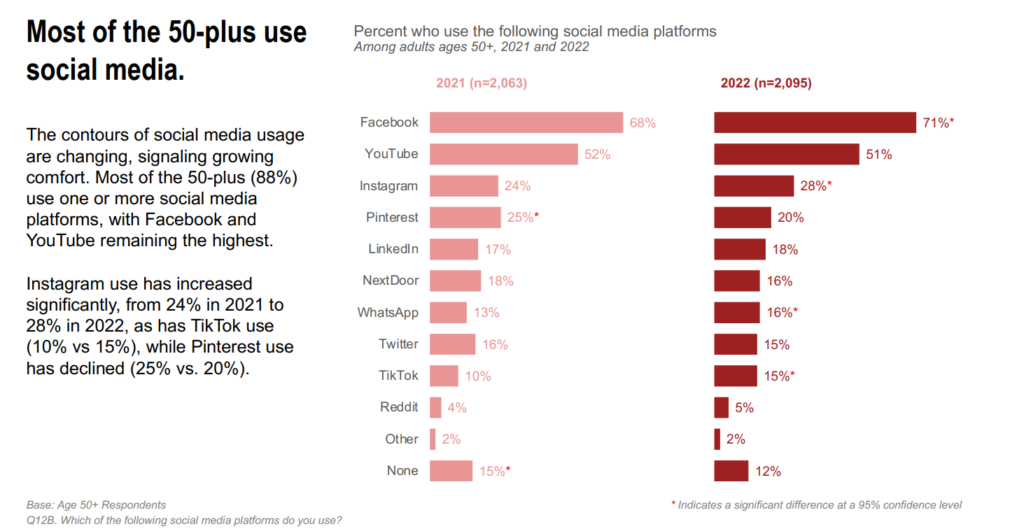
This coffee shop may lose the opportunity to invest in channels that work because they spend so much money on channels that aren’t working.
If you’re invested in the wrong channels, you should:
- Review your data to identify which platforms generate the most leads.
- Stop investing in platforms that don’t align with your target audience. Create a buyer persona to identify your target audience and know where to reach them.
- Analyze customer demographics to improve your ad targeting.
- Excessive vendor or agency fees
Outsourcing tasks takes the burden off your team but ensure you’re not overpaying for simple projects.
For example, some agency retainers may cover strategy meetings as a general service, even when these meetings don’t directly generate results for the project. It’s different if you’re paying them for consultation.
This is why it’s important to:
- Evaluate what you’re paying for to know if they are necessary.
- Shift tasks in-house when possible or hire freelancers instead of keeping expensive retainers.
- Assess the performance of outsourced tasks to ensure you’re getting value for your money.
Read this article to learn how to find the right SEO service for your small business.
Operational and Process-Based Hidden Costs
These are the expenses from inefficiencies, redundancies, or gaps in your business’s daily operations and processes. They’re often overlooked because they are indirect, irregular, or difficult to quantify.
These inefficiencies could be because of:
Poor project management and communication
This happens when your employees don’t have a clear process for completing tasks and sharing information. They
- Don’t know what needs to be done and when,
- Have too many meetings
- Have no accountability for task results.
One way to avoid this is to schedule meetings only when necessary. If a message needs to be passed, use tools like Slack to send it to the appropriate channels.
Another way is to define your company’s workflow. Ensure your employees know who is responsible for what and when certain tasks should be done.
Your workflow should also include your approval process to help your employees determine what tasks need approval and who approves them. Tracking these processes is easier with a project management tool like Asana, Monday.com, or ManyRequests.
Misaligned Team Goals and Tasks
Internal collaboration is important for any growth.
Your marketing team should align with the sales or accounting team to map out a process that benefits every department.
Most companies do this by having weekly meetings with all the departments. You can use these regular cross-functional meetings to keep your teams on the same page.
For example, your marketing team should know the kind of audience the sales team is targeting so they can create content that attracts the right audience. They can discuss this during the all-team regular meetings or informal cross-collaboration between teams.
If you don’t encourage this, tasks may overlap. Your sales team may be focusing on the same project as the marketing team, which would mean they’re wasting funds on the same initiative.
Another way to avoid this is to clearly communicate each employee’s responsibilities to them. For example, the individual responsible for social media posts shouldn’t design email campaigns unless it’s part of their job description.
Non-Strategic Partnerships and Influencer Collaborations
Avoid partnerships or collaborations that won’t benefit you in the long run. One common mistake even bigger brands make is partnering with influencers who don’t share their values or target audience.
An example is Kendall Jenner’s partnership with Pepsi. Pepsi’s “Live For Now” campaign aimed to connect with younger audiences through the Black Lives Matter protest.
The campaign featured Jenner joining a protest and offering a can of Pepsi to a police officer to symbolize peace.
This, of course, didn’t sit well with people for many reasons because:
- One, before the campaign, Jenner didn’t even show interest in social protests.
- Two, people criticized Pepsi for insinuating that a can of Pepsi would solve world problems.
If you’re interested in influencer marketing, ensure the influencer is a core part of the community of your target audience and validate their content so it aligns with how you want your brand to be represented.
Another mistake in partnership is paying an influencer for a single post or event.
These posts will only generate a short-term buzz, and your target audience may forget you just as fast. Partner with influencers who share your values and can collaborate with you over time.
Opportunity Costs and Lost Revenue Potential
Opportunity costs are the hidden costs of missed opportunities. They include the potential growth or profit your business could have achieved by making better decisions or taking different actions.
Opportunity costs aren’t direct expenses like the cost of outsourced social media marketing or inventories, but they can impact your revenue— it’s more like a game of What Ifs.
Here’s what I mean:
- If you don’t analyze customer data, you might waste money targeting the wrong audience.
- If you don’t focus on retaining customers, you miss out on repeat sales and customer loyalty.
- If you skip A/B testing your ads, you might miss a version that can convert better.
- You’ll waste time on manual follow-ups if you don’t automate email campaigns.
- If you neglect post-purchase communication, customers might forget your brand.
Some of the ways you could be losing out on money here include:
You don’t focus on data-driven decisions.
Guiding your decisions with data means relying on facts and numbers, like website traffic and buyer psychological preferences, rather than guesswork.
Data shows you what people did on your website, the pages they viewed, and how you can use that information to improve your sales.
Businesses that ignore data may spend money on marketing tactics that won’t deliver the desired results.
One effective way of knowing what works and doesn’t is through A/B testing. If you create two landing pages for your product page — one with a CTA of Buy Now and another with “Add to Cart” which would convince your target audience to buy?
The only way to know which will resonate with your audience is to test both pages on different audience segments.
Read this to learn more about A/B testing on landing pages.
You don’t automate low-level tasks.
Automate repetitive processes to save time.
You can automate:
- Sending welcome emails with Mailchimp
- Logging customer interactions and follow-up reminders with HubSpot CRM
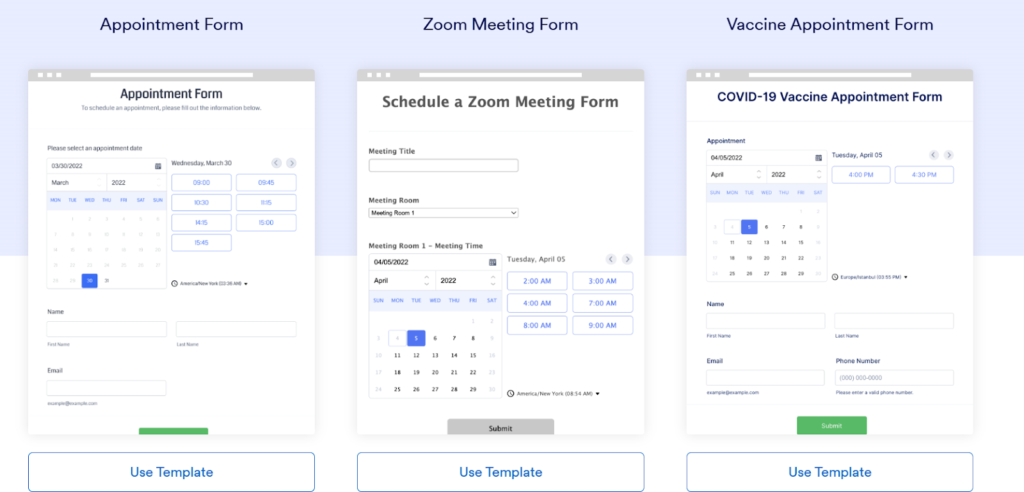
- Scheduling appointments— let your customers self-book meetings and send automated reminders with Calendly.
You can also find templates online. Here’s an example from Jotform:
- Scheduling social media posts with Buffer.
- Track inventory with TradeGecko.
- Track employee hours with Gusto.
You neglect customer retention.
Acquiring new customers is important, but retaining the existing ones is even more important. Besides, acquiring a customer is 5 to 25 times more expensive than retaining old customers. If they love your product or service, existing customers are more likely to buy again, and you don’t even need to spend money attracting them.
Some of the things you can do to retain customers include:
- provide excellent customer service,
- personalize your communications with them,
- engage with them after they purchase from you,
- ensure your values are consistent,
- ask them for feedback, and if they give it, act on it.
- A good tip is to celebrate with them. Recognize their birthdays and the little wins they share online.
You can read more on how to calculate your customer acquisition cost to know how much it costs you to acquire a customer and how you can reduce it.
Conclusion
Hidden marketing costs blend into daily operations, which makes them easy to overlook. You should regularly audit your expenses to know if these costs are eating deep into your profit and marketing budget.
You should also assess how much ROI (return on investment) your marketing campaigns bring in. This tells you if the channel is worth it or not.
A tip is to ask yourself these questions:
- Are these efforts driving real results?
- Can I automate this task instead? Does automating cut costs?
- Are you using any tech tools as you should?
- Are you invested in partnerships with long-term value?
Your answers will show you what is wrong and how to fix it. If you need help figuring this out or want to cut unnecessary costs by outsourcing your marketing activities, read more on how we can help here.


Enter your email to get strategic insights, a plan of action, and pricing options.
From Our Insite Blog
We believe that SEO requires an all-encompassing approach to ensure a sustainable future for your site and achieve your goal…. conversions.

The quality of the deliverables is outstanding. The only limitation is our in-house capacity to implement the great recommendations. I recommend HigherVisibility VERY highly.