What is PPC Management? How to Succeed at Pay-Per-Click

Anyone can run a pay-per-click (PPC) advertising campaign. Just log into Google Ads, pick a few keywords, set a budget, and check back in a few months.
Sounds easy enough, right?
Well, the trouble is most people don’t know how to run a successful PPC campaign.
For that, you need a thought-out strategy and careful PPC management. You need to know how to select high-performing keywords, reach your target audience, and continually optimize your campaigns. You also need to keep track of changes to different ad platforms and the market more broadly.
If these demands of PPC management don’t fit your skill sets or time constraints, it might be worth working with a PPC management agency.
We’ve run PPC campaigns for businesses since 2009, so this guide comes from an agency that does this work every day, not a generic explainer. We’ll cover what PPC management actually involves and help you decide whether hiring a PPC management agency is right for you.
What Is PPC Management?
PPC management is the ongoing process of implementing and optimizing a company’s PPC campaigns.
It can be done by an in-house team, agency, or specialist.
PPC management includes responsibilities such as:
- Competitor analysis: Examining competitor PPC strategies to uncover gaps and opportunities.
- Channel selection: Identifying which paid channels provide the best ROI potential for your specific business needs.
- Keyword research: Identifying which keywords your target audience is searching for.
- Negative keyword management: Filtering out irrelevant searches so your budget goes toward clicks that can convert.
- Ad groups and ad creation: Grouping together related keywords and developing corresponding ads.
- Budget management: Allocating campaign budget effectively to maximize ROI.
- Performance monitoring: Assessing campaign performance to see which ads drive the most traffic and conversions.
- Campaign optimization: Adjusting keywords, ad copy, landing page design, ad scheduling, and ad targeting to drive increasingly better results.
- A/B testing: Comparing the performance of different ad variations to identify those that perform best.
In our experience, keyword research and disciplined negative keyword management move the needle more than almost anything else on this list. We run these tasks under our proprietary Targeted Growth System (TGS), which keeps ongoing management tied to precise targeting, strategic alignment, and continuous optimization rather than a one-time setup.
Why Is PPC Management Important?
If your business already engages in PPC advertising, or if you’re considering launching a PPC program, then being proactive about PPC management can drastically boost your odds of success in several ways.
Better Quality Scores
Quality Score is the metric Google Ads uses to determine how your ad quality compares to other advertisers. As a rule, the higher your score, the more likely you’ll earn high ad positions in paid search results. Ads with high scores satisfy the user’s search intent, receive more clicks, and provide users with a relevant landing page experience. PPC management ensures your ads meet these crucial requirements so you get the best campaign returns possible. In the accounts we manage, steady attention to Quality Score is often the fastest way to bring costs down without cutting reach.
Lower Costs per Click (CPCs)
Another benefit of having good quality scores is you’ll get lower CPCs on average. PPC management uses several techniques to keep your CPCs as low as possible, such as targeting long-tail keywords. Unlike generic keywords, long-tail keywords tend to be less expensive and have a clearer underlying search intent, which makes it easier to craft highly-specific ads that cater to the audience’s needs.
Higher Click-Through Rates (CTRs)
Targeting the right keywords and creating relevant ads will naturally increase the number of clicks you get. But proper PPC management will further boost click-throughs by testing different ad copy and image variations and sticking to those with the best conversion rates.
Better Audience Targeting
Effective PPC management will also employ diverse targeting techniques to get the best campaign results. For example, by segmenting your audience based on shared interests and attributes, you can create more relevant messaging for your different target customers. You can also use various targeting options (like demographics, search behavior, and location) to ensure you deliver the right message to the right people in the right place. Remarketing options also allow you to re-engage users who have already demonstrated an interest in your products or services.
How AI And Automation Are Changing PPC Management
Automation now sits at the center of paid search. Industry estimates suggest upward of 78% of Google Ads spend flows through automated Smart Bidding strategies, and the tools keep expanding. Performance Max campaigns run ads across Search, Shopping, YouTube, Display, and Gmail from a single setup. Smart Bidding options like Target CPA, Target ROAS, and Maximize Conversions adjust bids in real time, and AI-driven audience and creative tools now assemble much of the targeting and testing work.
Automation doesn’t remove the need for management. It raises the bar for it. When the machine handles bidding, your strategy, feed and creative quality, and guardrails decide the outcome. That means clean conversion data, sensible budget caps, and brand-safety exclusions matter more, not less. The payoff still depends on the inputs a skilled team controls: clean data, sharp targeting, and disciplined budgets.
We lean on Performance Max and Smart Bidding where the data supports it, and we keep human strategy in charge of feed quality, conversion tracking, and where the budget should and shouldn’t go. That balance is the “continuous optimization” principle in our Targeted Growth System. In the accounts we manage, we hand Smart Bidding the in-auction decisions only after conversion tracking is clean and the campaign has enough conversion volume to learn from. Before that point, our strategists set the targets, feed Performance Max the right audience signals, and layer in exclusions so it doesn’t drift toward cheap, low-intent traffic. We’ve found that automation amplifies a sound strategy and magnifies a weak one, which is why the human inputs still decide the result.
Should You Hire a PPC Management Agency?
So you’re convinced that a detail-oriented PPC management strategy is key to getting the most out of your paid campaigns.
But this raises the question: should you take on the responsibility of PPC management yourself, hire an in-house team of experts, or outsource the work to a specialist agency?
Keep in mind that running successful PPC campaigns takes a considerable time investment, strategic planning, and wide-ranging knowledge of PPC best practices.
To help you decide, ask yourself the following questions:
- Do any of your existing employees have extensive experience running PPC ads?
- Do you currently have enough employees to manage the day-to-day demands of running PPC campaigns?
- Do you have access to top PPC tools? If not, can you afford them?
If you answered no to any of the above, you probably need a PPC pro (or several) on your team.
You have three realistic options: build the skill in-house, buy PPC management software and run it yourself, or partner with an agency. Software helps if you already have an experienced operator, but it won’t supply the strategy or the hours a busy team lacks.
You could hire a full-time PPC specialist to work at your company. For reference, as of 2026, the average salary of a PPC manager in the US runs roughly $77,000 to $80,000 per year, according to Indeed and Salary.com, with senior specialists in major markets earning considerably more.
Alternatively, you could contract with a PPC management agency. This gives you access to a full team of PPC experts, with costs based on your specific budget and business needs rather than the going rate for a salaried employee. For the marketing leaders we work with who lack in-house bandwidth, that partnership adds strategy and senior oversight, not just extra headcount.
Let’s take a closer look at what services PPC management agencies provide.
What Does a PPC Management Agency Do?
Successful PPC management involves three major workstreams: campaign creation, optimization, and reporting.
A good PPC company will have expertise in each of these areas. At HigherVisibility, we run all three under our Targeted Growth System, so precise targeting shapes creation, strategic alignment guides optimization, and transparent reporting keeps you in the loop. For example, our shared dashboards tie every campaign back to the numbers a marketing leader reports upward, qualified leads and revenue, not just clicks and impressions. We’ve found that framing keeps optimization decisions honest, because a campaign that wins on clicks but stalls on qualified leads gets flagged fast instead of running unchecked.
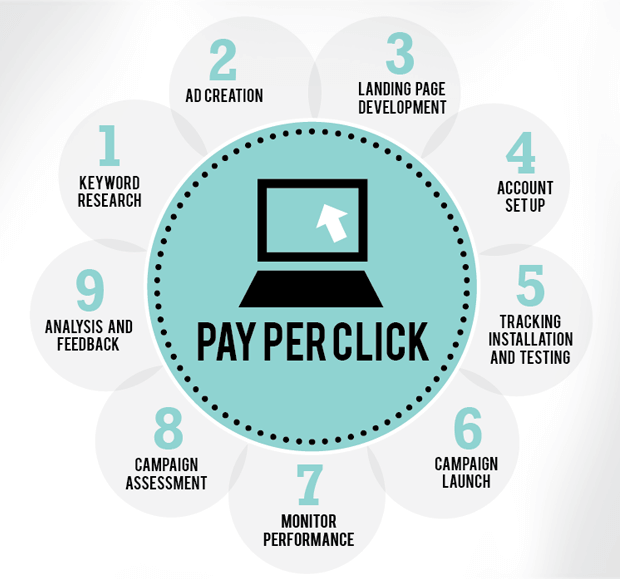
Campaign Creation
Your PPC management firm will work with you to create advertising campaigns that drive the right kind of customer to your site. This involves an in-depth research phase before your ads are created.
Keyword Targeting
The cost of clicks on a keyword is driven by demand. Popular keywords tend to come with a higher price, while low-volume keywords are usually less expensive (but may not drive as much traffic).
The most effective keywords target your ideal customer without breaking the bank.
A good PPC agency will know how to research your customers and the competition, use keyword planning tools, and strategically select keywords that give you the best ROI.
Landing Page Selection
It’s essential to choose the right landing page for your ad. After all, what’s the use of paying for clicks if visitors bounce off your site right away? The best landing pages are highly relevant to the ad’s audience and contain compelling calls to action.
Writing Ads
Since PPC ad copy is usually only a couple of sentences long, it’s easy for beginners to overlook its importance. A PPC management company will ensure your copy resonates with your target users and compels them to click.
Campaign Setup
Your PPC company will help you decide the right targeting options, appropriate budget restrictions, and maximum cost-per-click bids.
They can also advise on advanced tactics like dynamic remarketing, where you show ads for products or services a user has previously viewed on your site.
Optimization
Managing an ad campaign isn’t a set-it-and-forget-it task. One of the biggest benefits of working with a PPC management agency is that they’ll continuously monitor and optimize ads for better performance.
Quality Score Analysis
As we mentioned earlier, quality score is Google’s measure of an ad’s quality and relevance. It depends on factors like:
- CTR
- Keyword relevance
- Landing page quality and relevance
- Ad text relevance
- Account performance history
Since higher quality scores lead to lower ad costs and higher ad placement, your PPC management team will closely monitor all quality score factors to keep your ads as effective and inexpensive as possible.
A/B Testing
Discovering the most effective ad variants takes some experimentation. By testing alternative ad elements like headlines, body text, and images, your PPC management team will quickly home in on variants that resonate most with your target audience and drive the most clicks.
Monitoring and Adapting to User Behavior
Paid ad campaigns provide an endless stream of user data that your PPC management team can turn into actionable insights. They will continually adjust your ad strategy based on what the user data reveals.
Keyword Performance Monitoring
Every PPC program starts by creating a list of keywords that seem promising. But when your ads start running, you soon discover that some keywords perform much better than others.
As a result, a PPC management service will continually monitor keyword performance and identify those that should be replaced.
Bid Adjustments
Your PPC management agency will also adjust your keyword bids based on performance data and your specific marketing goals. For example, if you discover that your ads perform best in the morning, your agency can increase your bids for that time of day.
Reporting
Your PPC agency will ensure you always have visibility into how your campaigns are performing.
A good agency will provide regular reports or access to an online dashboard so you can see what’s happening.
Your PPC management company should make the following data readily accessible:
Ad Spend Insight
You should know exactly where your money is going.
The right PPC partner will report how your search budget is spent and what you’re getting in return.
Conversion Data
Conversion data tells you which ads and keywords drive the most transactions. This is not only important for optimizing your PPC ad spend, but it can also be used for SEO and other marketing activities.
Common PPC Management Challenges
Running PPC well is harder than it looks, and a few challenges trip up most advertisers. CPCs keep rising as more competitors bid on the same keywords, so your budget buys fewer clicks each year. Ad platforms change constantly, which means a strategy that worked last quarter can quietly lose ground. And there’s a real tension between chasing short-term conversions and protecting the long-term health of your account.
The mistakes we see most often when auditing accounts from other agencies or in-house teams follow a pattern: weak or broken conversion tracking, ignored negative keywords that drain spend on irrelevant searches, and set-and-forget budgets that no one revisits. Each one is fixable, but only if someone is actually watching. The pattern we run into most is conversion tracking that counts the wrong actions, like form-page views or every phone click instead of real inquiries. When that happens, the account optimizes toward the wrong goal, so the numbers look healthy inside Google Ads while actual leads stall. Our team usually rebuilds the tracking first, because every budget and bidding decision after that depends on measuring the right outcome.
How Much Does a PPC Management Agency Cost?
The cost of PPC advertising depends on your goals, how aggressively you want to focus on PPC ads, the ad types you want to run, and the competitiveness of your market.
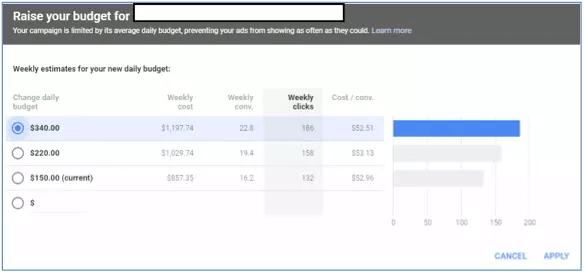
The industry you operate in also influences how much you pay. Some industries simply cost more. For example, according to WordStream’s 2026 Google Ads benchmarks, the average CPC in attorneys and legal services is $9.87, the highest of any category, compared with $1.63 for arts and entertainment at the low end, against an overall average of $5.42. In our experience setting budgets with clients across industries, that spread is exactly why a reasonable ad budget looks different for a law firm than for a local events venue.
So how much can you expect to pay?
The average cost of a PPC agency is between $100 and $149 per hour, according to Clutch.
Many PPC agencies instead charge you as a percentage of your ad spend, typically 10% to 20% of your monthly budget, along with a minimum monthly retainer. Fixed monthly retainers commonly range from $1,500 to $10,000 per month across the industry, and some agencies charge a flat fee.
How to Find the Best PPC Management Company
Since each business has unique PPC needs, a good agency should work with you to create a unique strategy.
When shopping around for a company to manage your PPC ads, consult the list of PPC activities above. Your ideal agency will be able to talk to you about how they manage the various aspects of campaign creation and optimization.
Successful PPC agencies have delivered results for other clients and should be able to provide you with case studies. All industries are different, so consider it a bonus if they’ve previously worked with companies like yours.
Ask the company what kind of PPC tools they have at their disposal. Access to top-of-the-line analytical and SEM management technology is a key reason that PPC management services get better results for less money.
Transparency is essential. Look for a company that will provide regular updates and reports, and that ties its work back to the KPIs you care about rather than vanity metrics.
For more guidance on vetting different agencies for digital marketing services, check out our online marketing RFP template.
PPC Management Case Study With Allure Bridals
The bridal industry is extremely competitive. Companies like Allure Bridals constantly contend with other designers, retailers, and big publications for precious search engine real estate.
When Allure reached out to HigherVisibility, they already had a successful SEO strategy in place. They wanted to complement this success with paid advertising, but their existing PPC management agency wasn’t delivering the results they expected.
The existing campaigns were underperforming. Ad spend was insufficient to cover rising CPC costs, and the existing ad copy wasn’t generating clicks.
To solve this problem, HigherVisibility analyzed past campaigns and crafted a new PPC strategy focusing on Allure’s trunk show events. The new tactics included:
- Limited time and exclusive ads
- Remarketing campaigns to target brides that expressed an interest in the events
- Video ads to drive higher engagement
- Elimination or deemphasis of low-performing keywords
- Ad copy optimization
The result?
HigherVisibility increased Allure’s ad interactions by 45.5% and CTR by 25.4% while decreasing the cost per conversion by 7.4%.
Frequently Asked Questions
What Does a PPC Specialist Do?
A PPC specialist plans, builds, and optimizes paid search campaigns day to day. That includes keyword and negative keyword research, ad creation, budget and bid management, conversion tracking, and ongoing testing to improve results. In short, they turn a paid budget into qualified traffic and track what it returns.
Is PPC Management Worth It?
For most businesses without an experienced in-house operator, yes. Paid search can deliver strong returns, but only with careful strategy and constant optimization. Professional management protects your budget from wasted spend and frees your team from a time-consuming, specialized workload.
How Is PPC Management Different From PPC Software?
PPC software gives you tools to run and monitor campaigns, but it doesn’t supply strategy or the hours to execute it. PPC management is the human expertise that sets goals, makes the judgment calls, and adapts as platforms change. Software is a lever, and management is the hand on it.
How Long Does It Take to See Results From PPC Management?
You can start driving clicks almost immediately, but meaningful optimization takes time. Campaigns typically need several weeks of data before a team can refine bids, keywords, and creative with confidence, and most account changes take about 30 days to stabilize. Expect steady improvement over the first few months rather than an overnight win.
What’s Included in PPC Management Services?
Full-service PPC management usually covers campaign creation, optimization, and reporting. That means competitor and keyword research, ad and landing page guidance, budget and bid management, A/B testing, and regular reporting on spend and conversions.
Final Thoughts
PPC advertising has a great ROI if you get it right, but it’s complex and time-consuming. Attempting to run PPC campaigns in-house simply isn’t worth it for many companies.
A good PPC agency is affordable and works toward your organization’s unique objectives. The right partner pairs measurable outcomes with transparent reporting, so you always know what your budget is doing and why. Request a Proposal to see how our team can build a PPC program around your goals.

- What Is PPC Management?
- Why Is PPC Management Important?
- How AI And Automation Are Changing PPC Management
- Should You Hire a PPC Management Agency?
- What Does a PPC Management Agency Do?
- Common PPC Management Challenges
- How Much Does a PPC Management Agency Cost?
- How to Find the Best PPC Management Company
- Frequently Asked Questions
- Final Thoughts

Enter your email to get strategic insights, a plan of action, and pricing options.
From Our Insite Blog
We believe that SEO requires an all-encompassing approach to ensure a sustainable future for your site and achieve your goal…. conversions.

HigherVisibility has been a huge help from the moment we hired them. The impact they have had on our lead flow can't be understated. Highly recommend!