How Review Quantity Affects Local SEO Rankings

Key Takeaways
- Google's local ranking is influenced by proximity, relevance, and prominence, with reviews playing a key role in boosting a business's performance.
- A study by Sterling Sky revealed that businesses experienced improved rankings in the map pack by increasing reviews from three to sixteen, indicating a significant impact even without ads or SEO.
- Reviews signal to search engines the activity and trustworthiness of a business, enhancing visibility for local queries and demonstrating credibility to potential customers.
Google’s local ranking system depends on three core factors: proximity, relevance, and prominence. Every local business competes within this triangle, but the more reviews it has, the better it performs.
One Sterling Sky study found that businesses moved higher in the map pack when they grew from three to sixteen reviews (without ads or search engine optimization); just recent customer feedback.
This is because reviews tell search engines your business is active and can be trusted. And the more reviews you have, the better your visibility for local queries. Here’s a brief overview of the three primary ranking factors for reviews:
1. Proximity
Google prioritizes businesses that are close to where a local search happens.
When someone in Deep Ellum searches “coffee near me” or “Coffee shop in Deep Ellum,” they will see cafes in Deep Ellum and Downtown Dallas (like I did here) before anything from Uptown or other locations.
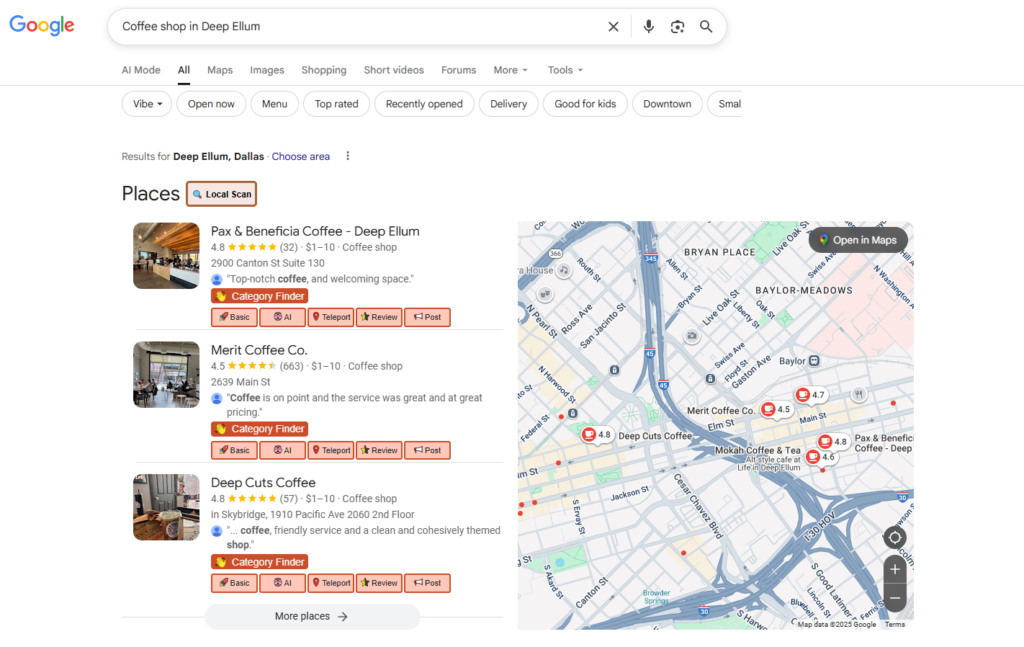
Nothing you do in local SEO can override location. Which is why it is always advised that you optimize your Google Business Profile with your name, address, phone number, website, (NAP-W). You can then take it a step further to optimize with the service area, and pin the map of your location correctly so map apps can effectively direct searchers to your location.
The more specific your location, the better for your business (in terms of visibility and rankings).
2. Relevance
This refers to the relevance of each review to your business.
For example, this review from Lara Mag about Metro Flow Plumbing uses keywords like “clear a mainline clog at our ranch” and ran the camera and discussed long term solutions for the roots.”
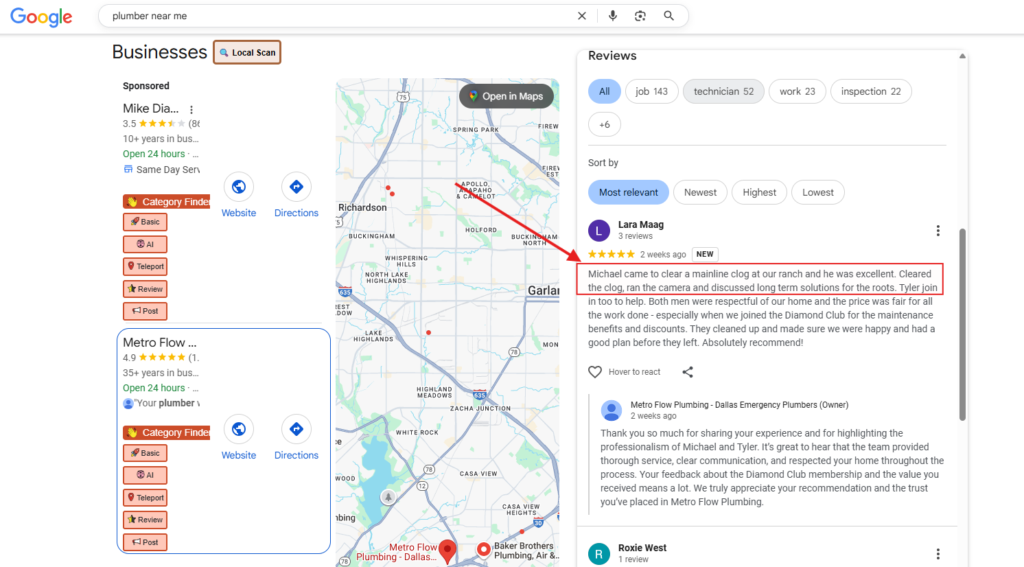
That natural wording alongside other details in the review can be relevant to future searchers with ultra-specific needs. For example, I wrote this on ChatGPT and Metro Flow was the first service it recommended:
“I have an emergency. I need a plumber in Dallas to clear the clog in my ranch, which service should I use?”
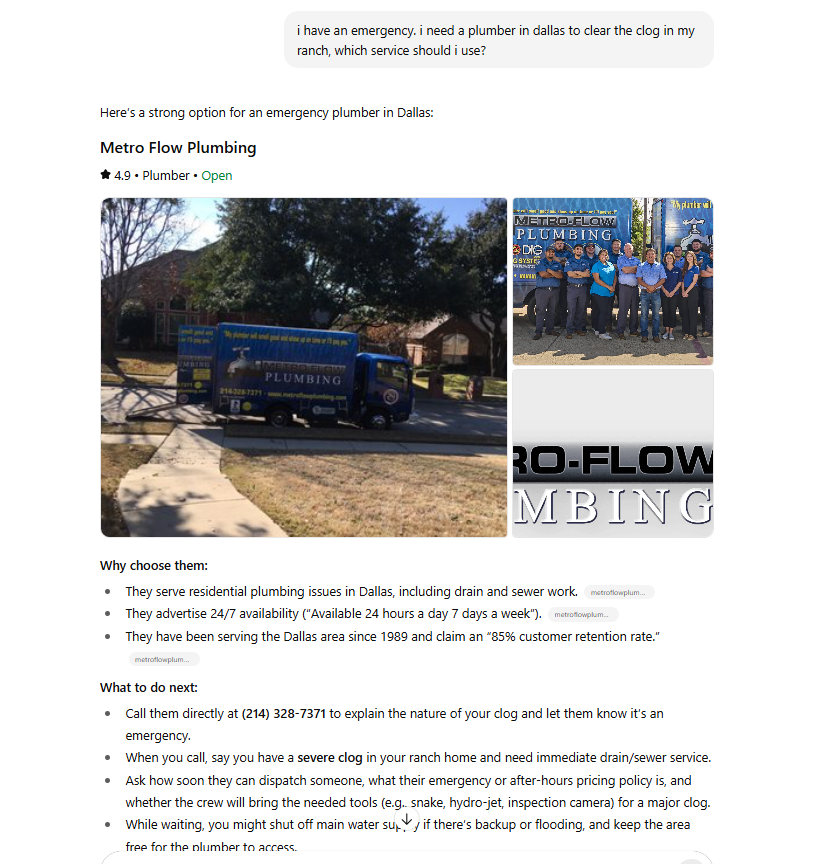
So, the more relevant each review is to your business, the better. This is because Google and other (AI) search engines match each business to searchers to meet their search intent.
3. Prominence
This reflects how well-known a business appears online and how active it is in local search results.
Search engines measure this through visibility cues like links, mentions, and the frequency of customer reviews.
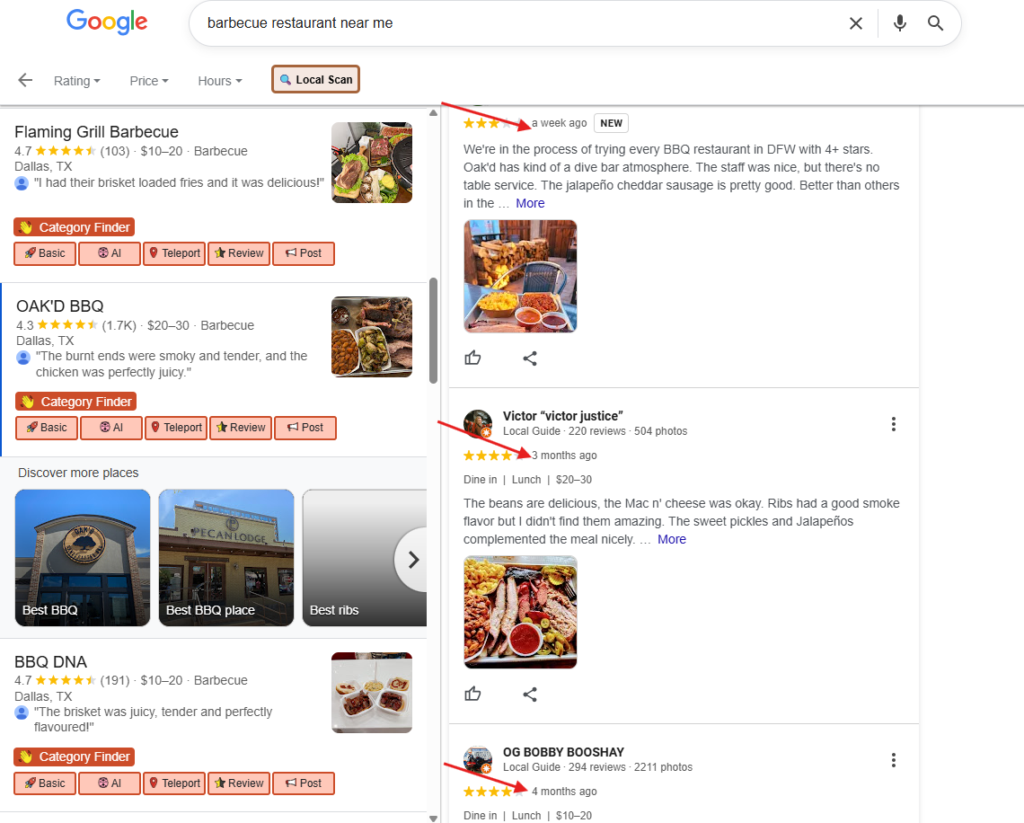
In Dallas, these barbecue restaurants have a lot of consistent (and high-volume) reviews because of the nature of their business.
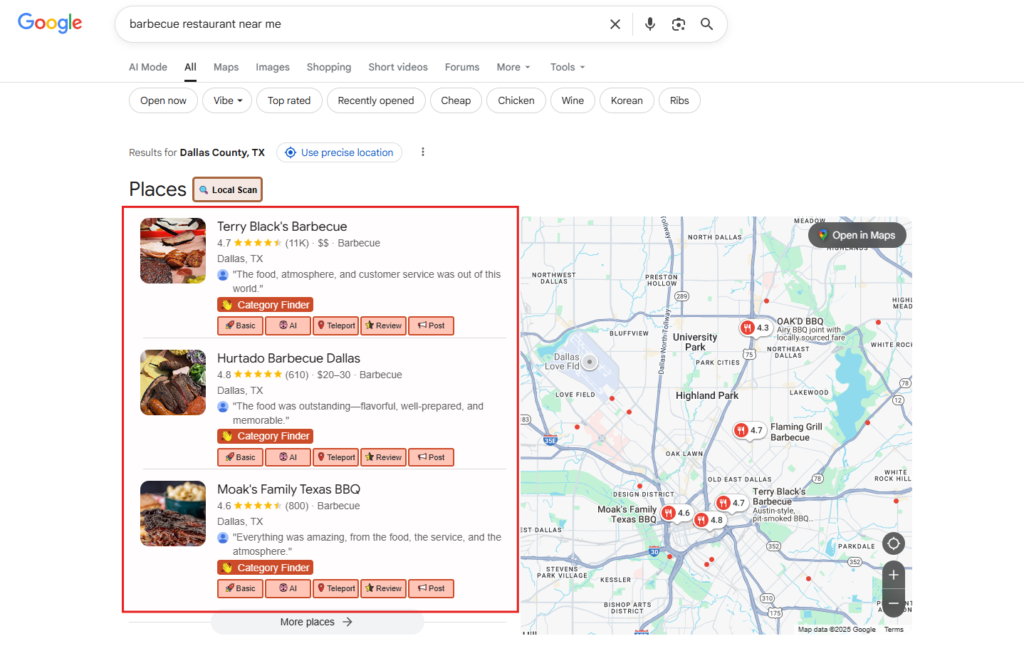
And with new customer feedback every week across Google and Yelp, it shows that people actively visit and talk about the restaurant. That steady pulse of attention tells search engine algorithms that the business is active and credible.
In contrast, other BBQ spots with older reviews and little to no recent feedback lose their top-three spots. See below:
In short:
- A steady flow of reviews signals consistent customer activity and trust.
- The specific words in reviews help Google match your business with local search intent.
How Quantity Interacts with Other Review Factors
More reviews usually help, but only when they are paired alongside other signals.
For example, a business with 100 generic reviews from last year may still rank below a competitor with 40 newer reviews that mention exact services, locations, and the outcomes they experienced.
How does that work?
1. Recency vs. volume
First, search engines place substantial weight on fresh reviews because a steady pattern of recent reviews signals that customers are still engaging with a business today, not six months ago.
Sterling Sky tested this by tracking multiple local businesses that gained new reviews after periods of inactivity. Businesses that increased from nine to ten reviews saw small but increase in Google Maps ranking for their main keywords..
This shows that a few new reviews can increase a business’s rankings in local search while older reviews won’t matter. Also, the more frequent reviews you get, the better:
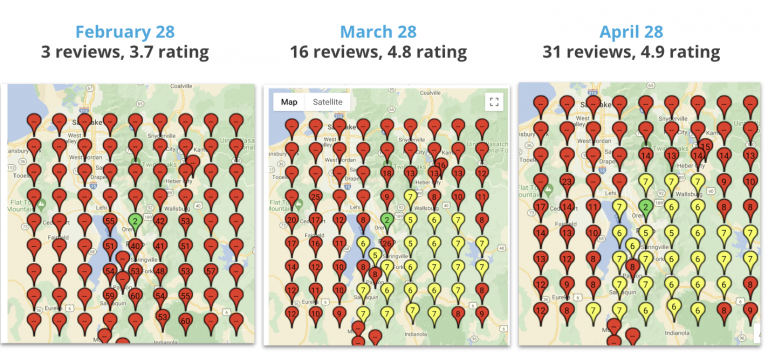
All these show that algorithms care more about recent reviews. And that’s because it shows that the business is still active. That’s where ratings come in.
2. Rating and why it matters
When businesses gather more reviews, the average score sometimes drops. A few mixed (or negative) ratings are not a bad sign because they show that people still patronize a store.
Look at The Salt Lick BBQ in Driftwood, Texas. The restaurant has a 4.6 star from more than 18,000 reviews.
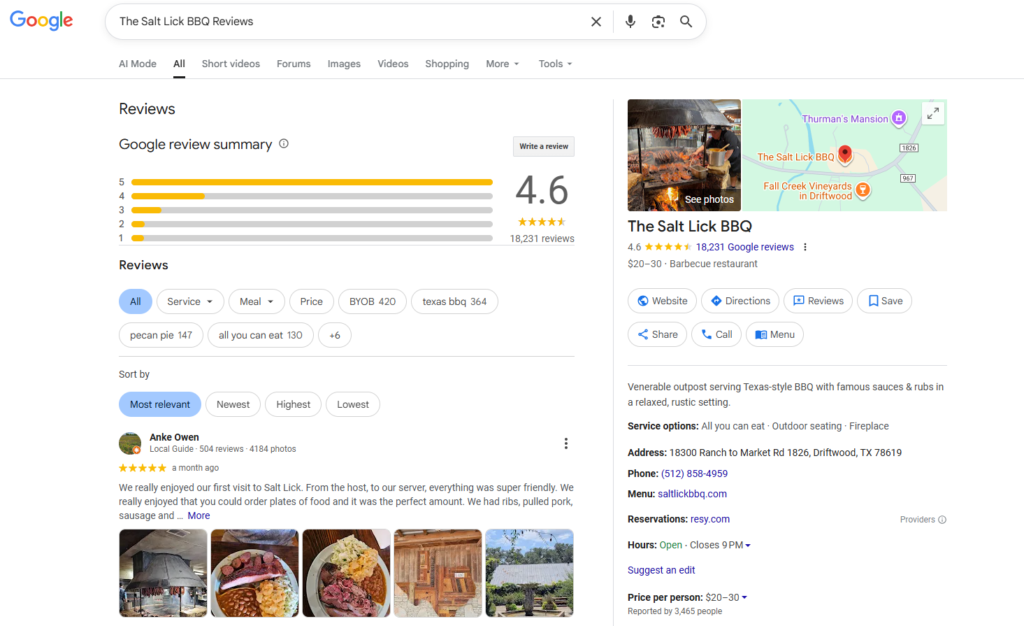
Some of the customers say they experienced long waits or crowded noise, but those steady reviews help it appear in the top for searches like “Texas BBQ” and “Austin barbecue.”
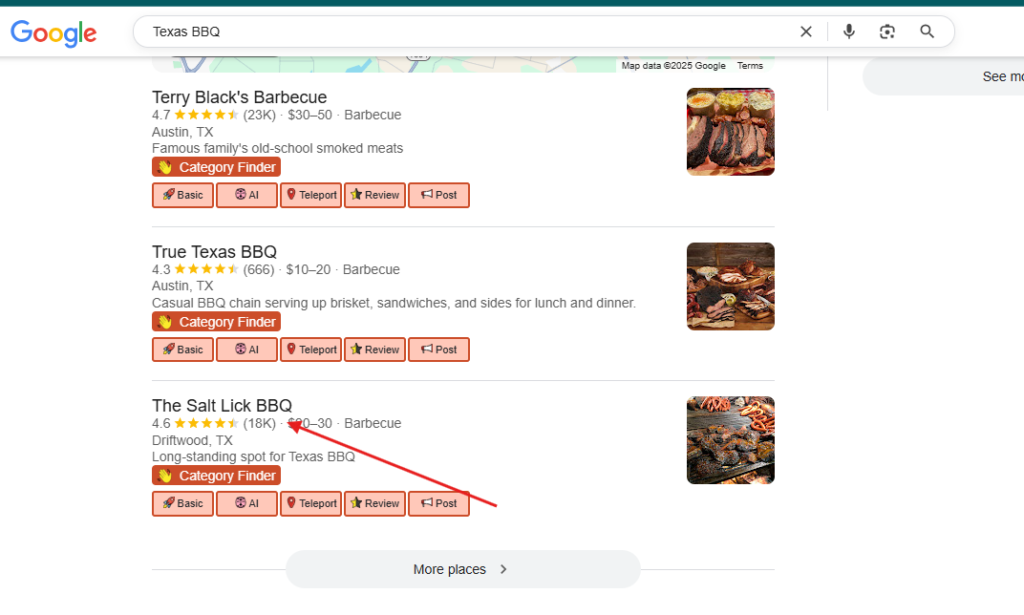
A smaller spot with a near-perfect five stars and only a few hundred reviews often ranks lower because search engines value the steady pulse of new feedback.
3. Keyword relevance in reviews
Search engines also pay attention to the words customers use in reviews.
Phrases like “fast AC repair in Scottsdale” or “bike tune-up in Bishop Arts” show exactly what a business does and where it operates. This relevance helps it rank without keyword stuffing.
Here’s an example: Oak Cliff Bike Works (a bike repair shop) in Dallas sees customers frequently mention “bike repairs,” “tune-ups,” and “electric bikes.” Even with minimal website optimization, consistent user feedback signals relevance to Google.
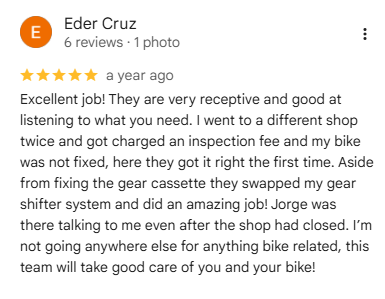
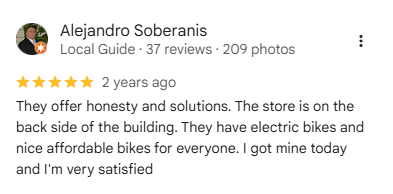
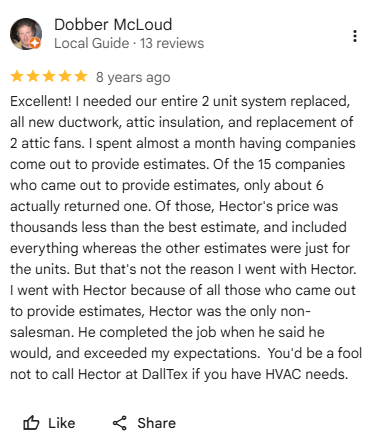
The same applies to service brands. A local HVAC company with customers that write “attic insulation” or “HVAC needs in (specified locations)” in their reviews gives more exposure to the service provider during local searches.
Those small bits of natural, location-linked language outperform generic phrases like “great service” or “highly recommend,” because they don’t contribute much to keyword relevance.
Tip: Always encourage customers to mention the exact service you offered and location as naturally as possible to help you increase visibility in the map pack. You can use simple prompts like:
- “If we fixed a problem or helped in any way today, let us know what stood out most in your experience.”
- “Quick question: What service did we help you with today, and how would you describe it to a friend?”
These can get you detailed, keyword-rich reviews that can help you rank higher.
How Many Reviews Do You Really Need to Rank Locally?
There’s no specific number of reviews, but 10-20 positive reviews is a good starting point. It helps you build trust, get an initial boost, and stay amongst the considered businesses for a product/service.
However, there are more nuances to this, especially depending on your industry and city.
Industry examples:
- Cafés and restaurants in mid-sized cities like Austin or Nashville can compete with a hundred or more reviews. A Dallas café in Oak Cliff with 120 recent reviews can outrank another location with more than 180 reviews that are two years old because they have fresher reviews.
However, you’ll probably need more to assert relevance if you’re in a bigger city. For example, if you run a BBQ stand in New York, you’ll likely need more.
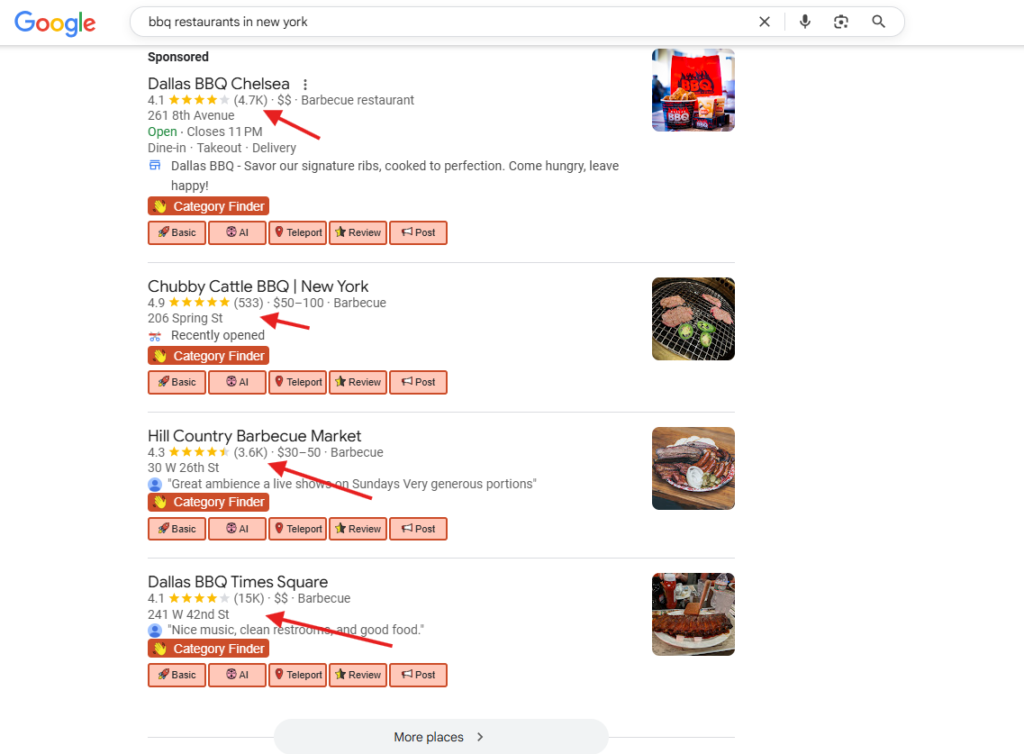
As you can see, the least here is 533 (beside restaurants with 4.7k, 3.6k and 15k), which makes it an outlier.
- Service businesses, such as plumbers or local gyms, require fewer reviews to move the needle. So, thirty to eighty authentic reviews over weeks can significantly improve visibility because each review signals immediate engagement.
So, eventually, what matters is the consistency of your reviews. The more often, the better.
How to set a baseline review target for your local business
Start by checking how your business compares to local competitors. To do that, search for your main keyword — for example, “dry cleaning service Manhattan.” Or laundry service in Manhattan (if the whole of Manhattan is your service area).
When necessary, be as specific (to your service area as possible to get ultra-relevant information.
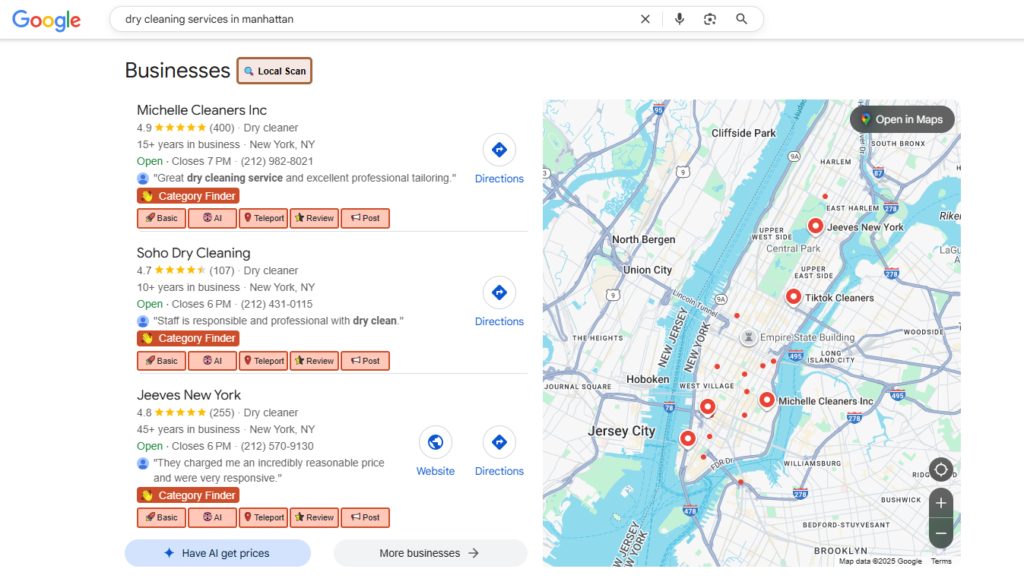
Look closely at the top three listings that appear in the local map results. In this example, “Michelle Cleaners” has 400 reviews, “Soho Dry Clean” has 107, and “Jeeves New York” has 255. That puts the median around 255.
Your goal should be to match or slightly exceed that median.
It gives your business a realistic benchmark without chasing inflated numbers. For a business with 37 reviews, that means they should encourage their customers to write more reviews about their experiences.
You should also track your progress to know what has changed in your rankings since you got more reviews. You can use a simple table that includes review volume, average rating per review, map-pack position, and actual business results, such as customer calls or bookings.
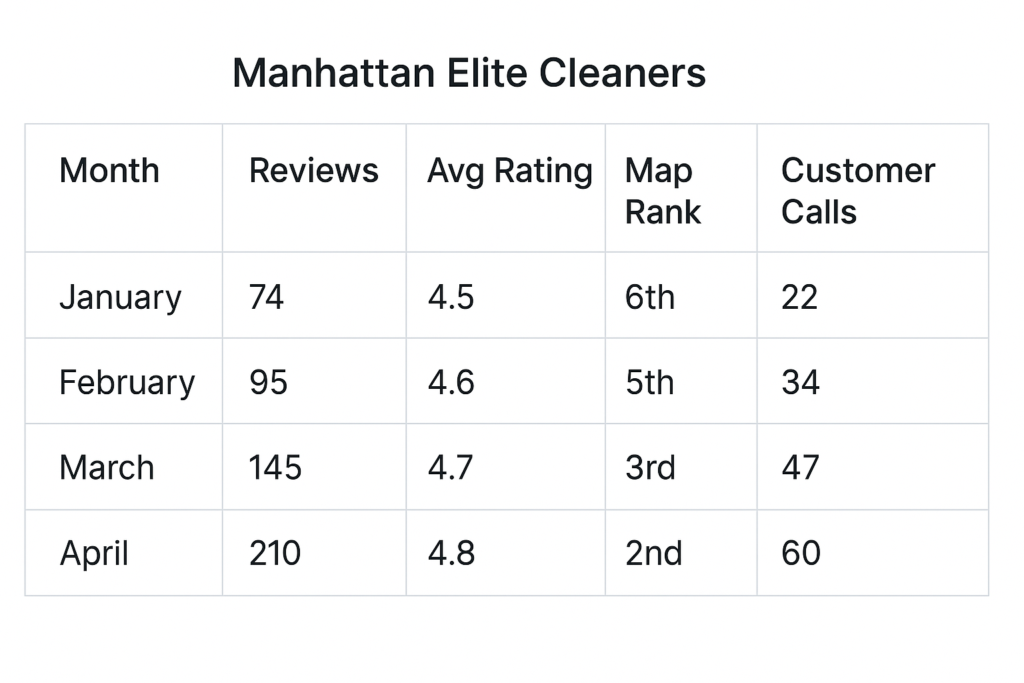
Over a few months, you’ll start to notice how each new batch of reviews affects visibility and engagement.
This process helps you stay consistent, measure improvement, and see how review growth ties directly to customer activity. Small, steady gains in reviews can move your business closer to the top positions where new customers usually click first.
Tips to Encourage Customers to Leave Reviews
According to BrightLocal, 69% of customers feel positive about using a business if its written reviews describe positive experiences.
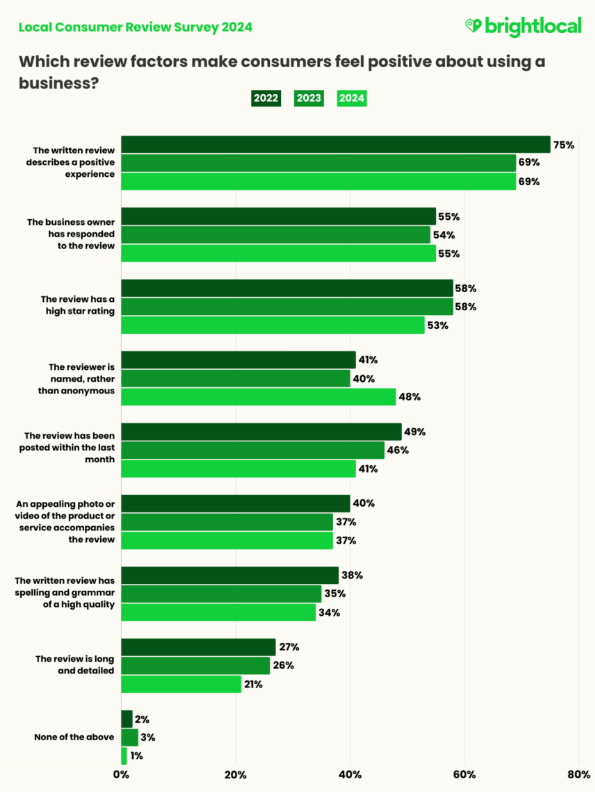
Reviews build trust and influence visibility in local searches, but customers rarely volunteer to write reviews. Here are some tips to encourage them to leave reviews.
1. Ask at the right moment
Timing influences whether a customer actually leaves a review.
According to research by ReviewTrackers, 7 out of 10 consumers will write a review if you ask them at the right time, usually right after a successful transaction or positive experience.
So, instead of waiting days after a sale, send your review request while the experience is still fresh. For service-based businesses, that might be a “write a review for us” line inside their receipt.
For an e-commerce business, it can be an automated message sent once the order has been delivered and confirmed in good condition.
An example below:

You can also follow this format from BrightLocal:
“Hi (Customer’s First Name),
We hope you enjoyed visiting us at (Your Business Name) recently.
While your experience is still fresh in your mind, we’d really appreciate it if you could spare a moment to let us know what you thought by clicking the link below.
(LINK TO REVIEW GENERATION CAMPAIGN)
We’re always trying to do right by our customers, and knowing how we’re performing helps us to continue to improve.
Thanks,
(Your Name).”
📌Read more: See more tips on how to encourage your customers to write reviews.
2. Simplify the review process
Many customers start the process of writing a review but abandon it because it feels like extra work. To increase submissions, remove every bit of friction. For example,
- Make your forms shorter,
- Reduce clicks, and
- Guide users with pre-written prompts if necessary.
Also, consider the data that 34% of consumers would leave a review if requested to do so by email, 33% would leave a comment if asked in person, and 32% would leave a review if they saw a prompt to do so from their receipt or invoice.
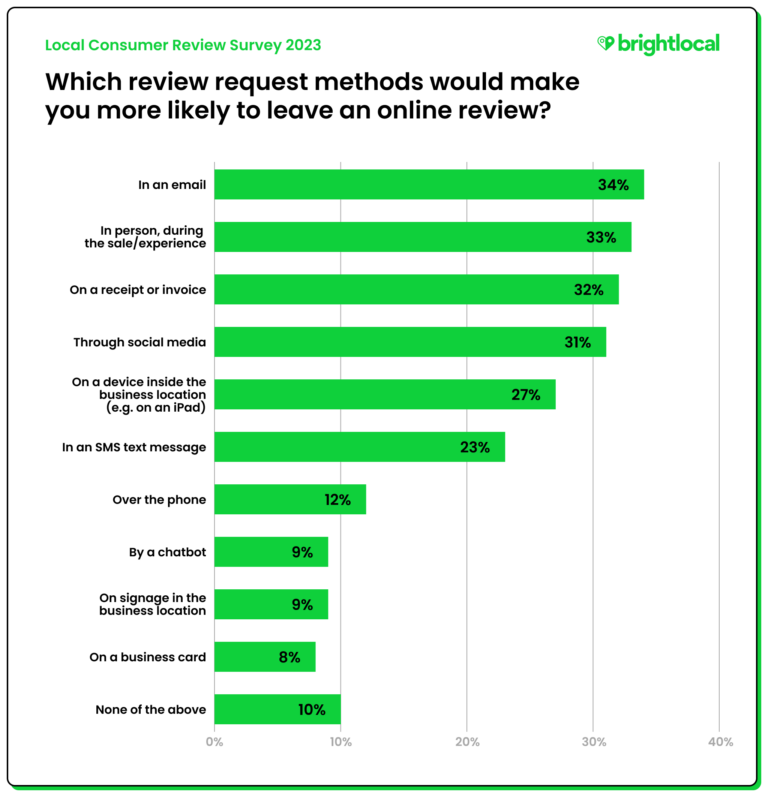
So, when you nail the process of asking, make it easier for them to write.
How to do it:
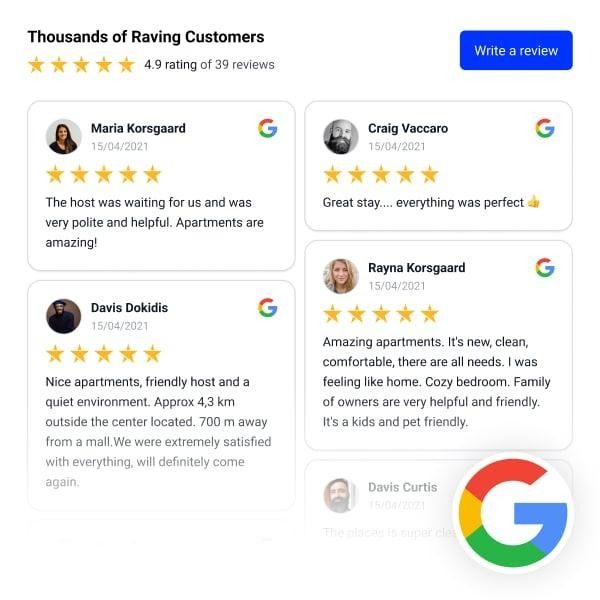
- Embed a star-rating widget or Google review link directly in your follow-up message.
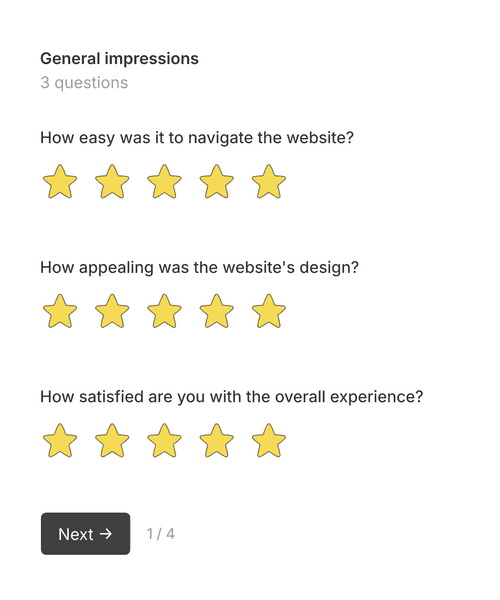
- Provide optional templates like “What did you enjoy most about your experience?, “ “How easy was it to navigate the website?,” and so on to get them started.
Test the flow yourself. If it takes more than 20 seconds to write a review, it’s too long.
3. Incentivize without crossing the line
Often, encouraging customers to leave reviews by offering small incentives such coupons, discounts, or loyalty points is a good idea. However, the rewards should follow FTC guidelines and never require positive feedback, only honest reviews from users.
- Offer a small reward, such as a 10% discount on their next purchase, once they submit a verified review.
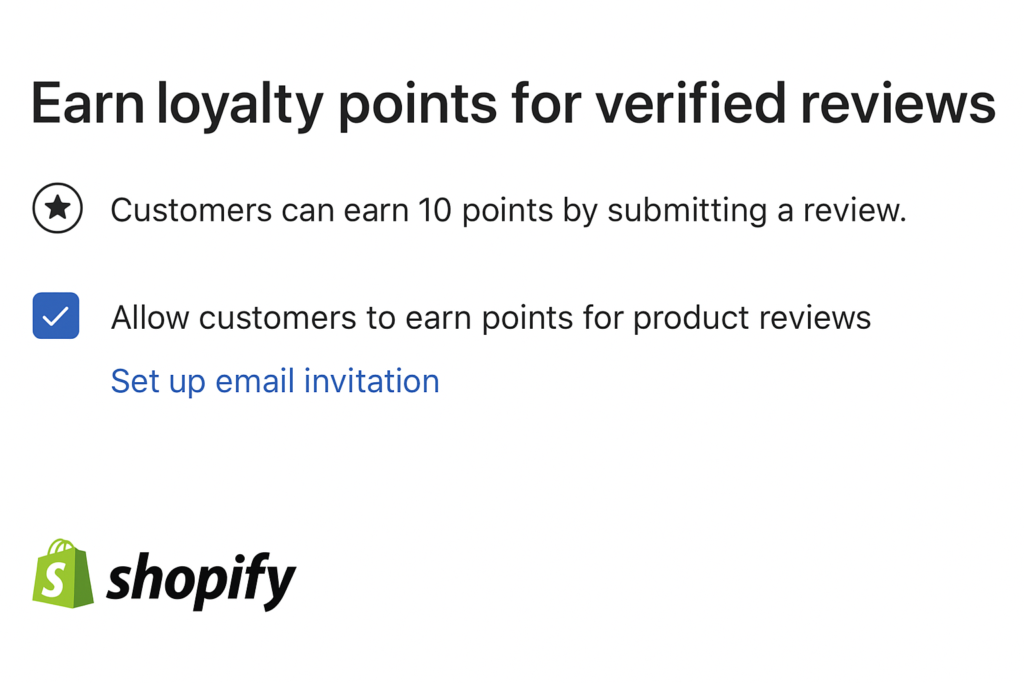
- Avoid phrasing like “Leave a 5-star review and get a gift.” Instead, say “Share your honest feedback to earn loyalty points.”
- Disclose the incentive in the review request for transparency.
4. Use social proof to encourage more reviews
People naturally pay attention to what others do, especially when choosing where to spend their money.
Reviews that describe real, positive experiences help others feel more confident about using a business. When those testimonials appear publicly on a website, product page, or social feed, they act as proof that real customers trust the service and often encourage new customers to share their own feedback as well.
How to do it:
- Feature snippets of positive reviews on your homepage or product pages.
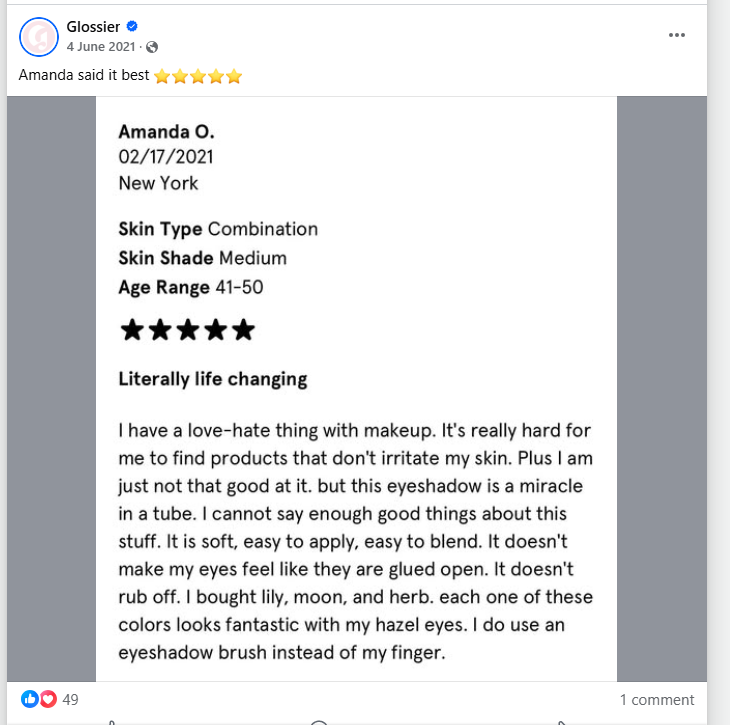
- Thank reviewers publicly. For example, reply to a 5-star Google review and repost it on social media.
Just like this brand did:
Frequently Asked Questions About Google Reviews and Local Rankings
1. Can deleting bad reviews help my overall rating?
No. Google doesn’t allow businesses to delete reviews unless they are false or against the policy of the platform. For instance, they’re spam reviews, hate speech, or irrelevant content.
Instead of worrying about deleting a negative review, respond politely and show effort to resolve the issue. A mix of positive and critical reviews looks more authentic to potential customers and helps your business appear trustworthy.
2. How long does it take for new reviews to affect local rankings?
Many businesses notice a difference within a few weeks, and for some, it may take longer. A healthy assumption is that it takes between three to six weeks of consistent review activity before it starts to improve local rankings.
However, it’s important to add that Google’s algorithm prioritizes consistent reviews, not bursts of reviews. This means a burst of review is consistent, or at least, there’s no significant drop in review volume over time.
3. Do reviews from other platforms like Yelp or Facebook count toward Google rankings?
Not directly, but Google indexes brand mentions across multiple sites. Consistent positive sentiment across platforms builds broader authority and can indirectly support your visibility.
4. Should I reply to every review?
Yes. Responding to all reviews (positive or negative ones) shows that your business is active and values feedback. Google has also hinted that engaging with reviews contributes to your visibility. In fact, shoppers prefer a store that responds to negative and positive reviews over stores that don’t because it shows that they acknowledge people’s reviews.
So, even short replies can help strengthen customer relationships and reinforce your brand’s credibility.


Enter your email to get strategic insights, a plan of action, and pricing options.
From Our Insite Blog
We believe that SEO requires an all-encompassing approach to ensure a sustainable future for your site and achieve your goal…. conversions.

HigherVisibility has been a huge help from the moment we hired them. The impact they have had on our lead flow can't be understated. Highly recommend!