How to Analyze Your Off-Page SEO Performance: Step By Step

Key Takeaways
- Off-page SEO involves activities like building backlinks and brand mentions to improve search engine rankings.
- Setting specific KPIs aligned with business goals helps prioritize resources and ensure strategies lead to desired outcomes.
- Example KPIs for improving online visibility include brand mentions, referral traffic, quality backlinks, and click-through rates.
Off-page SEO is the activities you do outside your website to improve your website’s ranking on search engines. Since you have a blog, you’ve probably built backlinks, increased brand mentions, and even published guest posts on third-party websites to get quality inbound links.
Of course, you track your organic rankings and revenue…everything looks good. But how do you tie these off-page strategies to sales qualified leads (SQLs) or actual revenue? How are you sure that what you do leads to the results you see?
In this article, I’ll show you how to measure your off-page SEO performance, so you can know which metrics improve your ROI.
But before you track or analyze any key performance indicator (KPI), you need to understand what you want to achieve:
Set Specific KPIs that Contribute to Business Growth
A set of specific KPIs helps you align your SEO with the business goals you want to prioritize. This way, you’ll avoid spending time and resources on strategies that do not help you achieve those goals.
Case in point: One of our clients, 25 Hour Farms, needed more sales. Their core concern was that their SEO strategy didn’t direct them to their potential clients. And those who were visiting were not converting at the rate they expected. Their goal was to amplify their online visibility, and by extension, attract the right people to their hemp flower store.
To fix this, our specific KPIs were increases in:
- brand mentions online,
- referral traffic,
- higher quality backlinks, and
- Click-through-rates
This meant that we had to:
- Guestblog on relevant authoritative websites for high-quality backlinks.
- Digital PR to attract inbound links from relevant news sites and forums.
- Get cited on high-value, industry-focused directories.
- We also targeted long-tail keywords, increased site speed, and adopted breadcrumb navigation so users and search engine crawlers can understand the website.
The results? Their organic traffic improved by 110% and they had significant organic traffic value (80%).
📌Read more about this case study.
That said, your goals determine your KPIs.
You can track KPIs like online brand mentions, number of rendering domains, referral traffic, and social shares, all of which have separate business value.
For example, you can specifically track referral traffic from ChatGPT if your SEO strategy has been focused on AI SEO and you want to know if you’re seeing results. In the rest of this article, I’ll focus on these metrics, why they matter for your business, and how to measure them.
How To Measure Your Off-Page SEO Performance
Step 1: Check Inbound Link Quality
Google uses inbound links to examine your website’s authority and credibility. The more authoritative inbound links you get to your website, the higher your domain authority or “trust.”
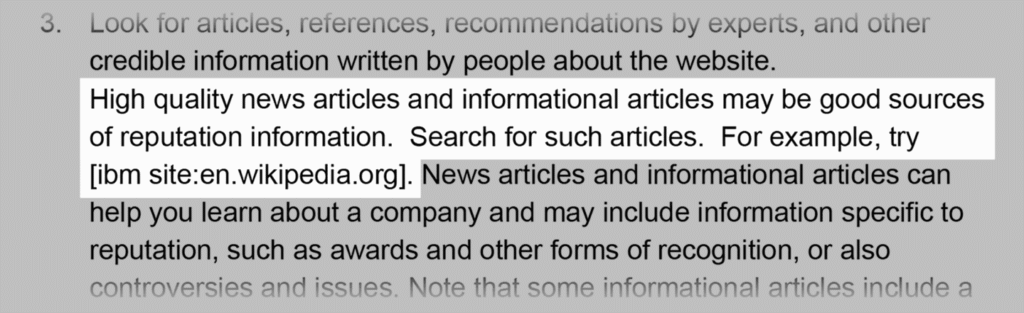
For example, in Google’s Quality Rater Guides, they mentioned how recommendations from high-quality news and informational articles increase trust ratings, especially for YMYL (Your Money Your Life) topics:
However, not all links are created equal. While some can increase your website rankings and authority, others can dilute your profile or even lead to loss of traffic (if they’re spammy). This is why link quality matters more than link volume.
A good inbound link:
- Has a high domain authority. The website has built enough credibility and is known to share relevant and informative content. You can target websites with a domain authority higher than yours. For instance, if your website (DA) is 50, target websites with a DA of 60 and above.
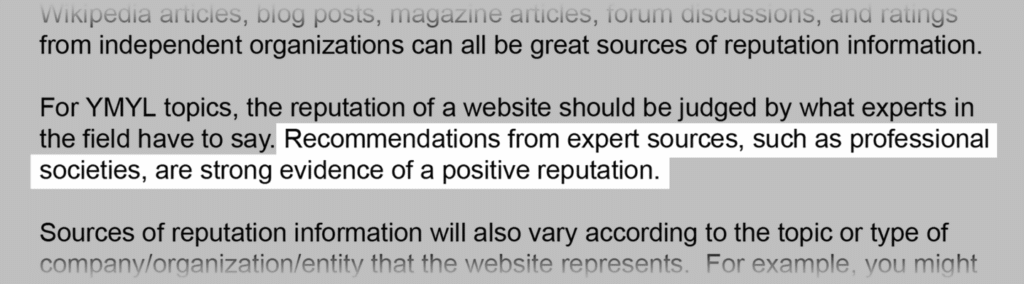
- Relates to your topical focus. For example, if you’re in the marketing space for small businesses, a relevant inbound link would be from Ahrefs, Shopify, or Backlinko. Google explicitly cited that recommendations from expert sources, such as professional societies, send strong credibility signals:
- It is naturally placed within your web content and can be used to provide context to the anchor text, like this:

You can see how it was naturally embedded without any context-switching.
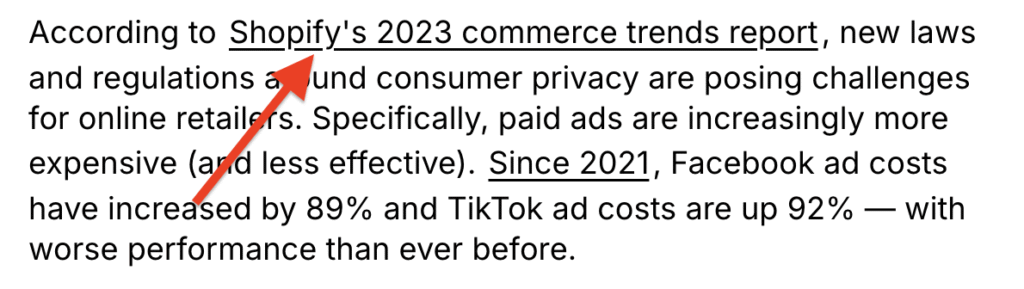
Here’s another example from Gorgias” blog linking to Shopify’s 2025 commerce trends report:
If you have linked your website to Google Search Console, you can pull out your link report to see:
- The website that links to you the most.
- Your top-linked pages.
- The most common anchor text used to link to your website. This can give you a basic idea of what topic you’re gaining authority for.
- Lost links.
This is how it looks:
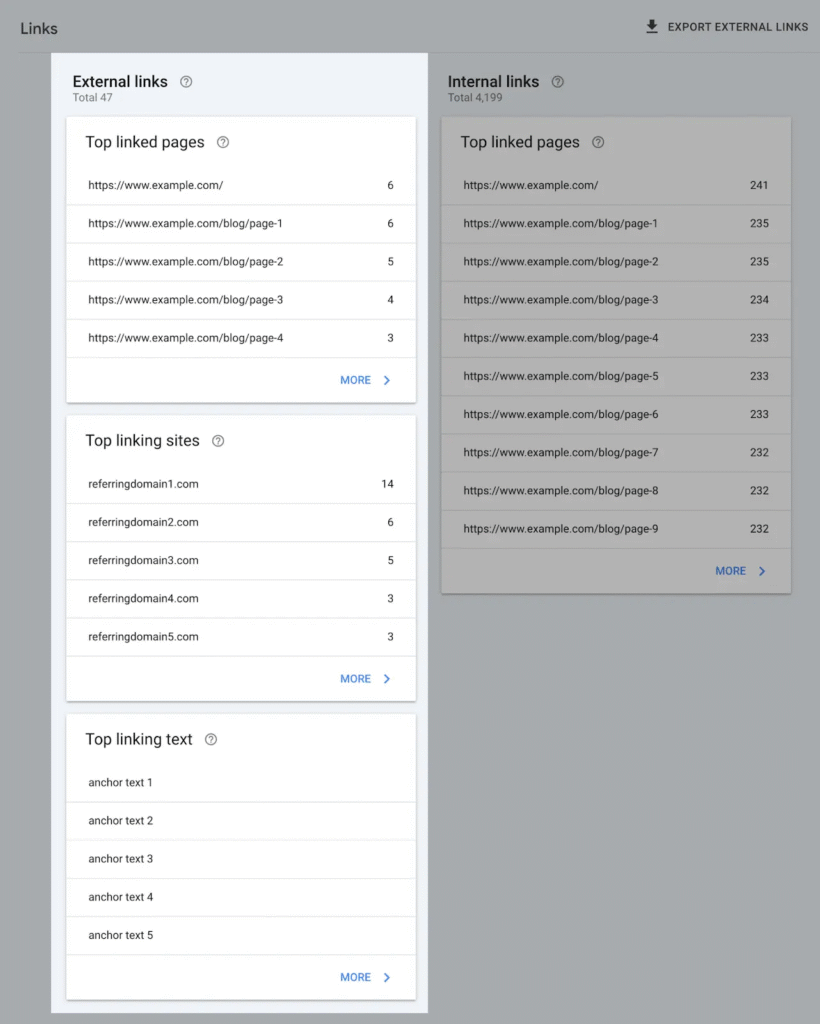
This is only a basic report and doesn’t tell you how valuable the links are for your website.
Third-party SEO tools such as Ahrefs (or SEMRush) can give you a more detailed breakdown of your backlink profile.
Ahrefs, for instance, has a Backlink Checker tool that shows you a list of all the backlinks to your website. It also shows you the backlink type (say Nofollow or Dofollow links), referring domains, and domain ratings. From this report, you’d see:
- High-quality, relevant links that contribute to your success.
- Spammy links hurting your rankings.
- Nice-to-have links but with no SEO benefits.
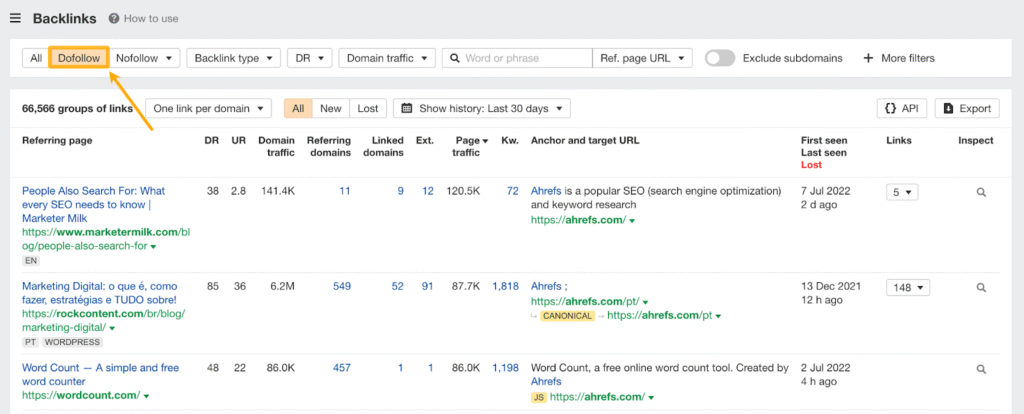
You can even filter through the data to see ”Best Links Only” or “Exclude Best Links.”
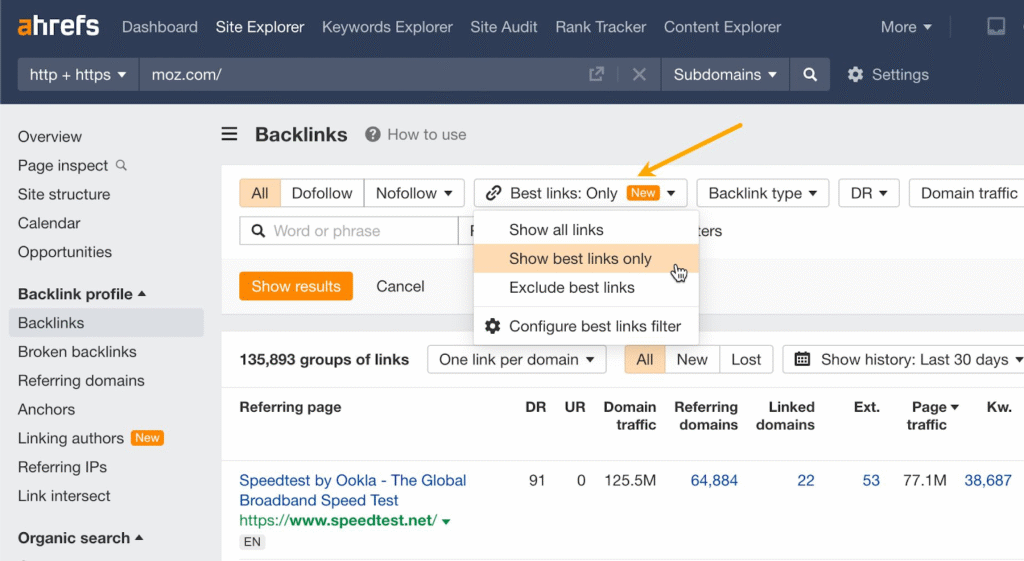
Tip: If there are toxic links, export the list and create a disavow file using Ahrefs. Then, upload the file to the Google Disavow Tool to tell Google to ignore the links.
All these help you prune bad links and allow good links to improve your long-term website health.
Step 2: Track Brand Mentions
Brand mentions are online references to your product, service, or brand that don’t link back to your website. They’re the best indicator of how much influence you have in your industry and what customers perceive of your brand. Your brand mentions can come from:
- Social media posts.
- Third-party citation websites like Yelp.
- New websites.
- Google images.
- Customer reviews.
- AI search engines.
… etc.
This is an example from an X user who mentioned our brand’s page checker tool in a tweet:
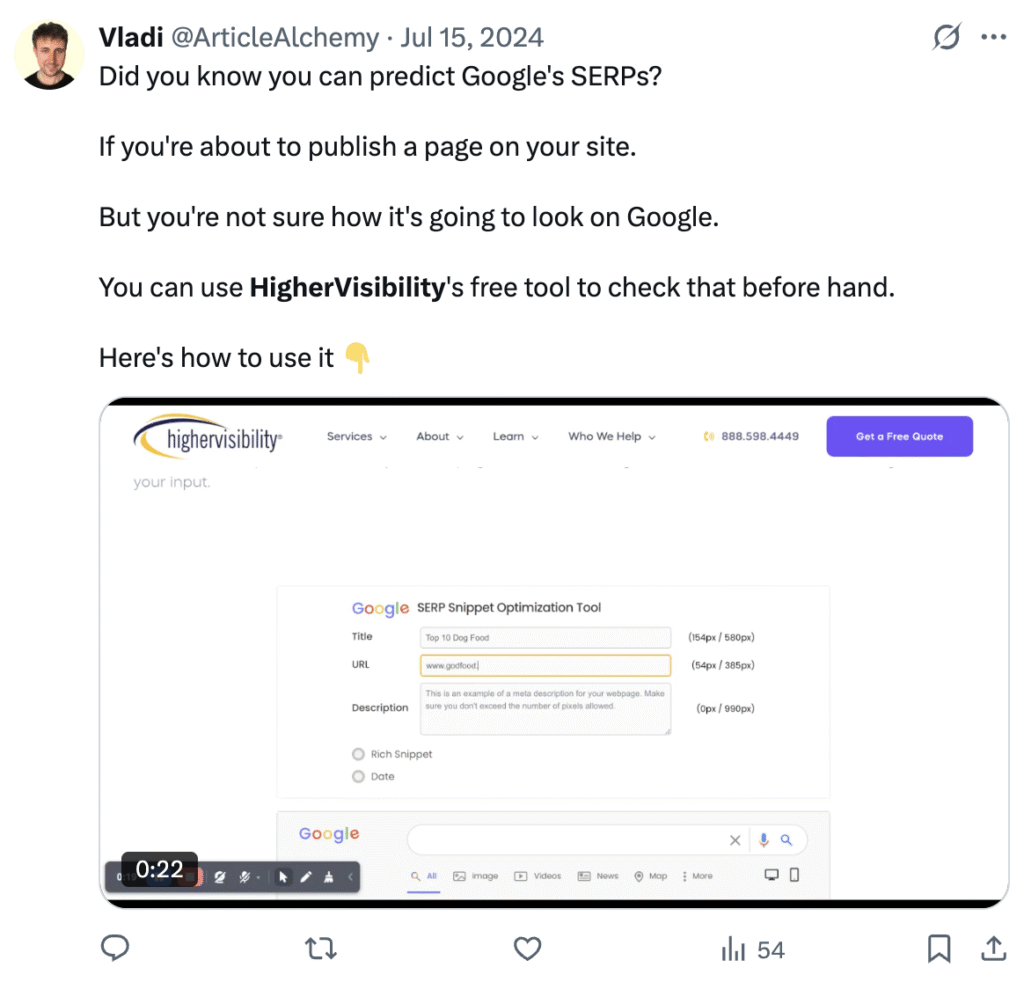
Brand mentions are important for your search performance because they determine how and where you appear when users search for topics related to your industry.
Ahrefs analyzed 75,000 brands and discovered that the brands with the highest brand mentions earn up to 10X more mentions on AI platforms:
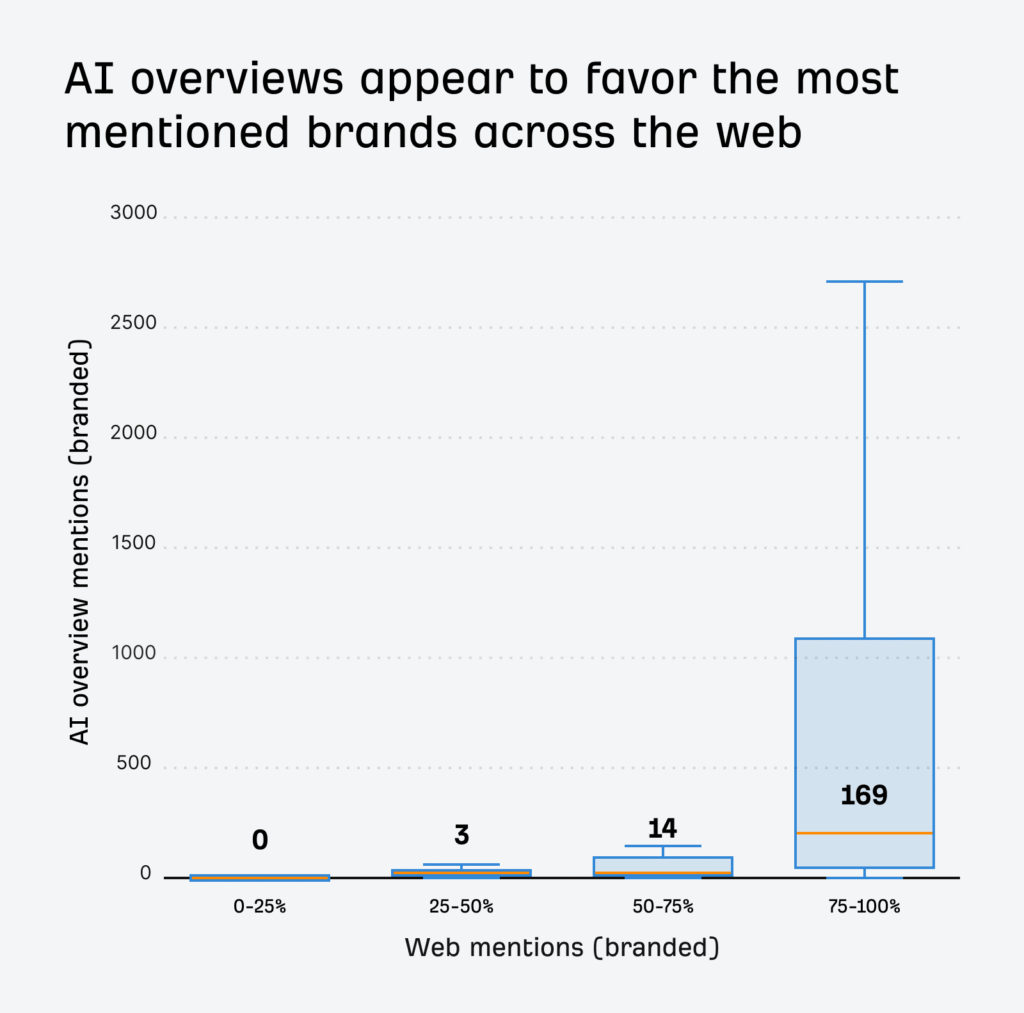
This is because AI platforms are predictive language models and train on a large portion of online data. Or, as Ryan Law, Director of Content Marketing at Ahrefs, puts it, “LLMs derive their understanding of a brand’s authority from words on the page, from the prevalence of particular words, the co-occurrence of different terms and topics, and the context in which those words are used.”
So, if you want to increase your visibility on search engines, especially AI search engines, you need to monitor how your brand shows up across the web.
And the higher your brand visibility on social media and other search engines, the more customers will get to see your business. Read more from our detailed article on how to optimize your website for zero-click search (which includes AI platforms).
There are several ways to track your brand mentions across the web:
- Use Manual Method:
This only works if you have fewer than 50 pages on your website. Simply enter a search like this into the Google search engine:
| intext:yourbrandname -x.com -facebook.com -x.com -pinterest.com |
It pulls out all the mentions of your brand in the platforms you highlighted. You can filter the search to show results from the past 24 hours or week.
I used the same prompt for our brand name, and here’s what I got:
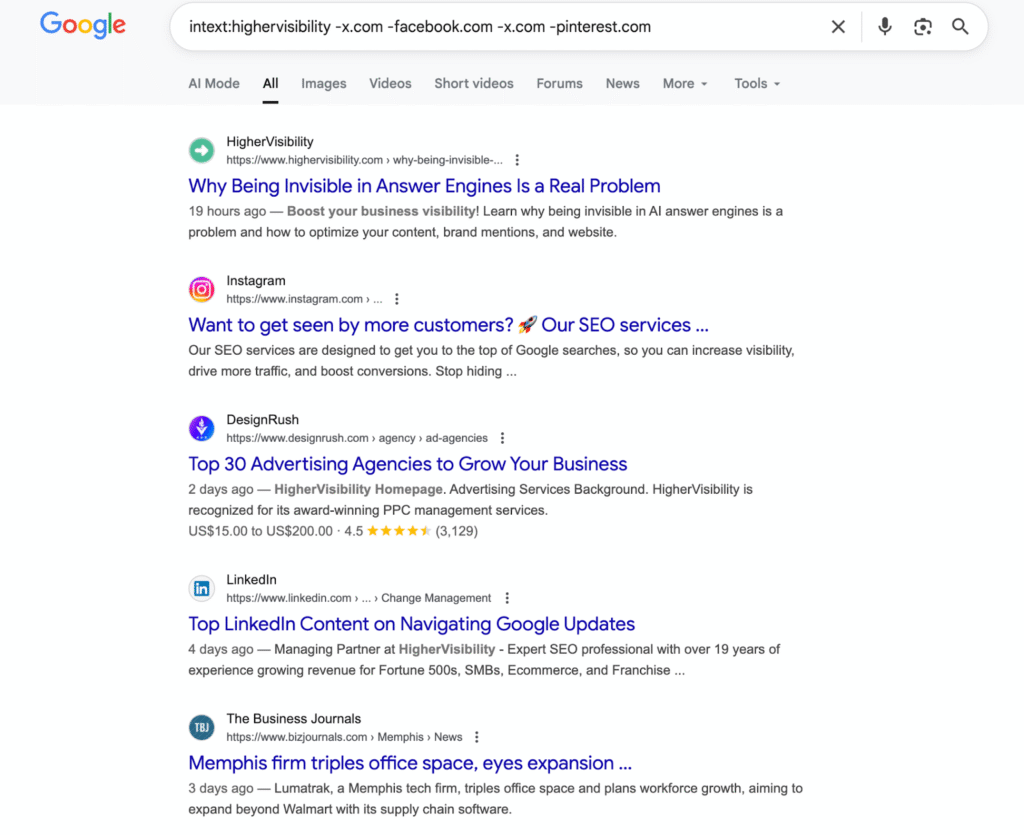
It pulled sources where our brand has been mentioned in the past week. You can also use Chris Ainsworth’s scraper to scrape the data from the web and find pages that don’t link back to your website.
Again, this method is stressful and only works for websites with a limited number of web pages.
- The automated method
Use Ahrefs Content Explorer or Brand Radar to automate the process. The Content Explorer is like a mini search engine within Ahrefs, powered by a database of over a billion pages.
You can use it to find mentions of your brand across the web. Remember to exclude your domain, like this:
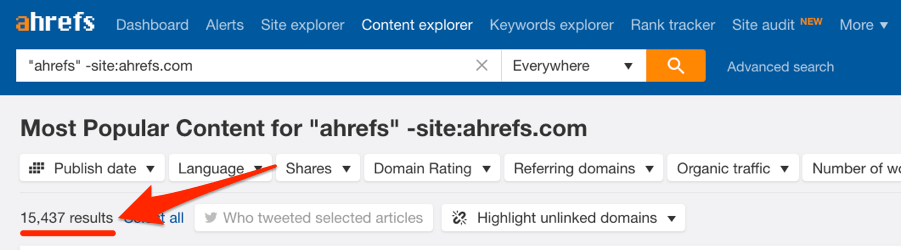
You can filter these results by word count, organic traffic, or domain ratings to find relevant mentions of your brand.
Ahrefs Brand Radar tool can also help to track your brand mentions on AI platforms. Right on the dashboard, you’ll see the total number of traffic you get from the mentions and keywords you appear for:
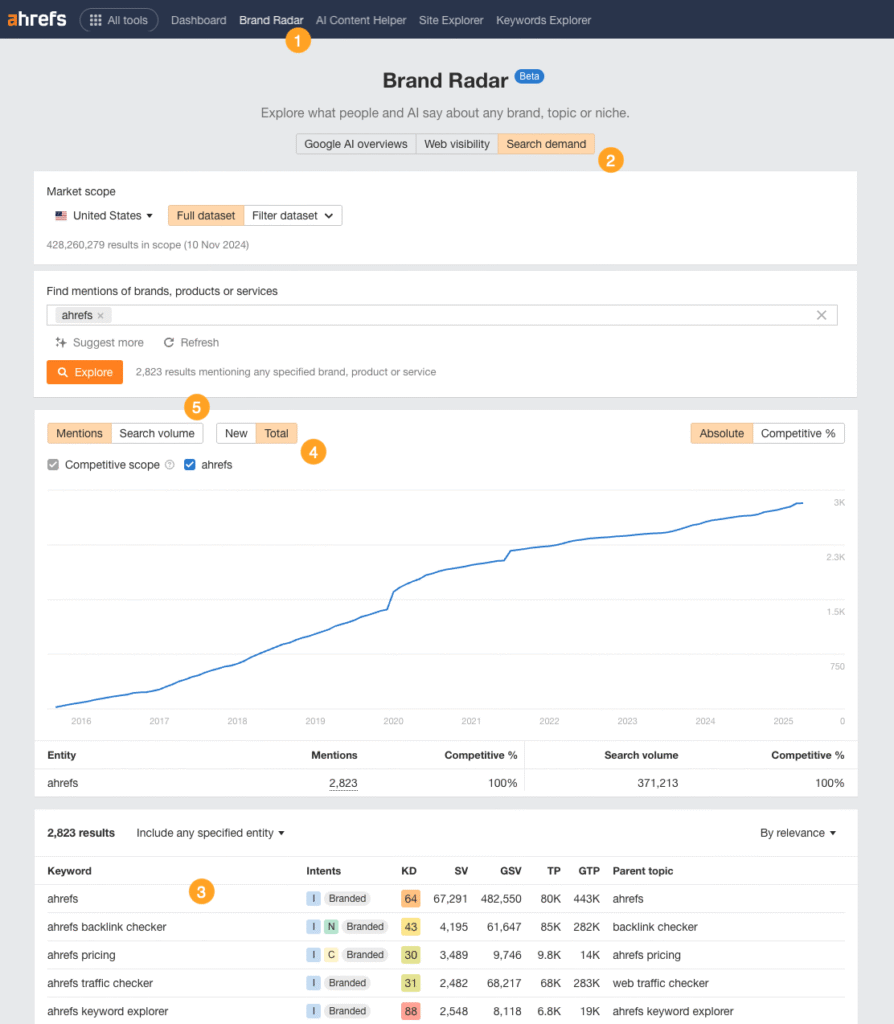
Step 3: Manage Online Reviews
Reviews are everything! They act as social proof to shape your brand reputation, local SEO rankings, and conversion rates. According to Backlinko:
- 71% of consumers read reviews online when searching for a new business.
- 70% of American consumers won’t try out a new business without reading online reviews first.
- 55% of consumers would consider a business with 4-5 star ratings (on a 5-star scale).
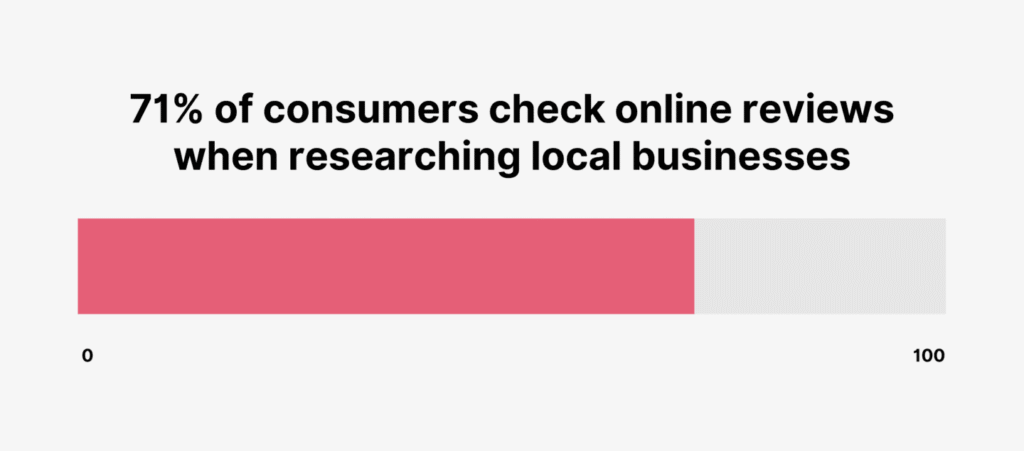
To search engines, reviews send “trust” signals that your brand is credible, relevant, and valuable to users. Google, for instance, highlighted that a high number of positive user reviews boosts a brand’s credibility:
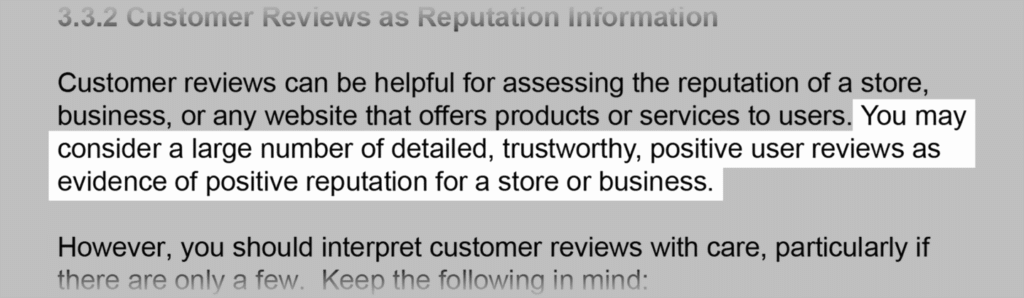
As a result, the more positive reviews you get/share, the more likely to appear on the search results for relevant search queries.
Kyra Sammis, customer success manager at Trustpilot, affirms this in her session on SMX Next:
“Google changes, but reviews are most likely here to stay. According to research from Moz.com, offsite SEO-related factors, such as third-party reviews, account for more than 50% of the ranking factor weight. Factors like relevance, trustworthiness, and authority will likely always play a role in a page’s ability to rank, and building up your online presence with reviews can help businesses crush all three of those criteria.”
The more credible feedback your brand accumulates on your Google Business profile, Yelp, TrustPilot, and industry-specific directories, the stronger your perceived authority.
Corey Patterson, former editor for MarTech and Search Engine Land also adds that “Customer reviews are potential content sources for your web properties. By displaying them on your website, you can diversify your content while adding relevant text to your pages, both of which can contribute to improved organic page rankings.”
To understand the impact of your online reviews, you first need to set key performance indicators (KPIs) for your review management process. For example, a satisfied customer who refers to a family or friend won’t register as a search ranking signal but ties back into revenue growth.
Following this analogy, you can segment the KPIs into two:
- As an SEO signal. Here, you’d measure review volume, average ratings, response rate, etc.
- As a business growth driver. In this case, you’d track referral visits, revenue per referred customer, average customer order value, etc.
Some of the KPIs to track success are:
- The total number of reviews (the good, bad, and ugly).
- Average response rate.
- The number of clients you acquired from third-party review websites or directories.
- Brand awareness (number of individuals exposed to your brand mentions).
- Customer acquisition and retention rate.
- Average resolution time.
Use SEMRush or ReviewTracker to monitor and manage your online reviews. SEMRush’s review management tool converges all your company mentions on the review website in one dashboard. See how it looks:
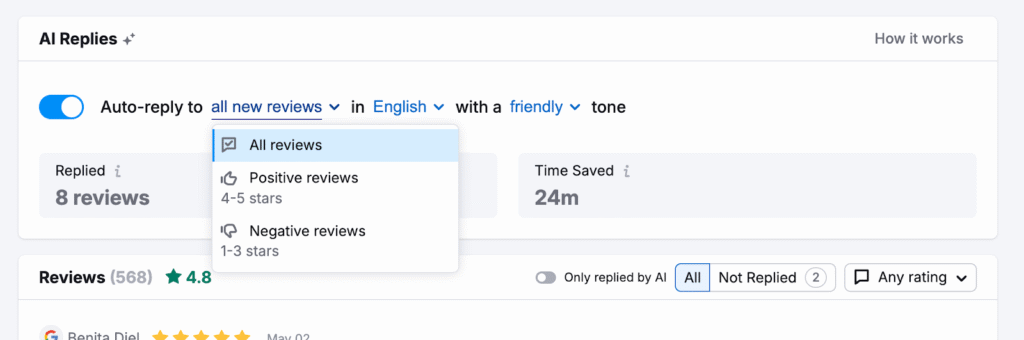
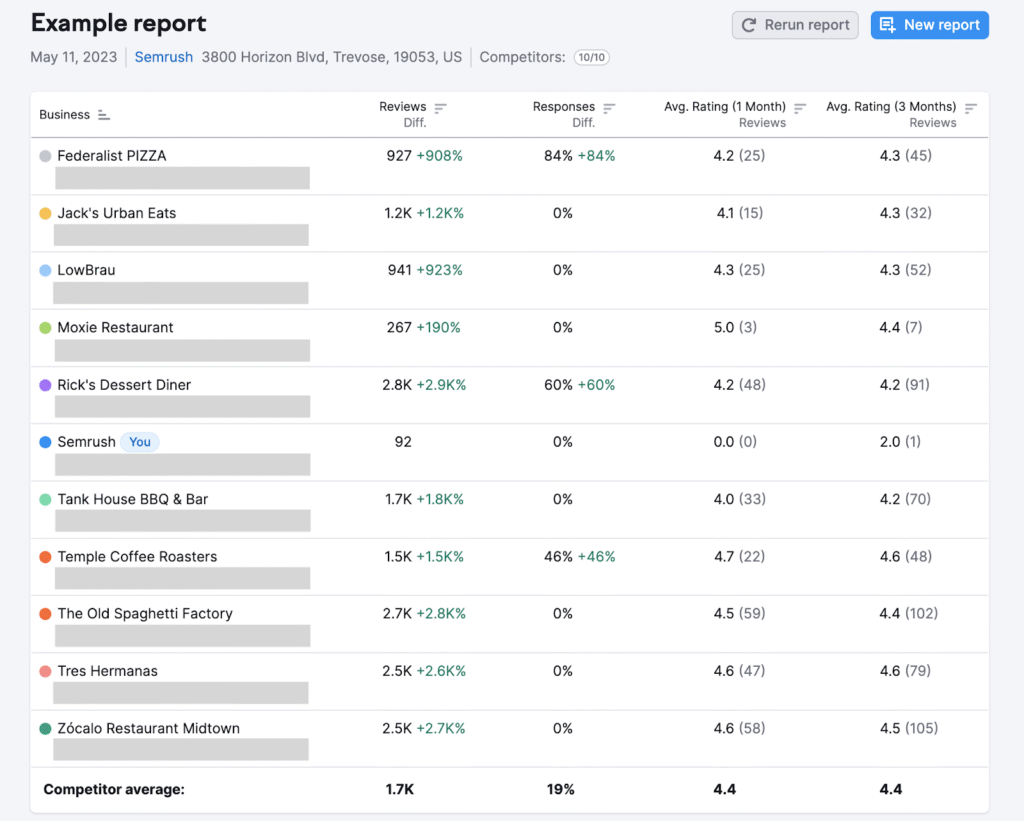
It comes with a review analytics feature that shows you the total number of reviews, responses, and average rating:
Step 4: Monitor social media engagement
Currently, there are 5.56 billion individuals on social media; that’s more than the entire population of Asia, the most populous continent in the world.
While social signals aren’t a direct ranking factor, they improve your search performance:
- They amplify your content to a diverse audience.
- Social media is a fast way to build brand awareness and shorten market entry.
- They drive referral traffic back to your website.
- They can potentially increase your brand mentions on AI search engines.
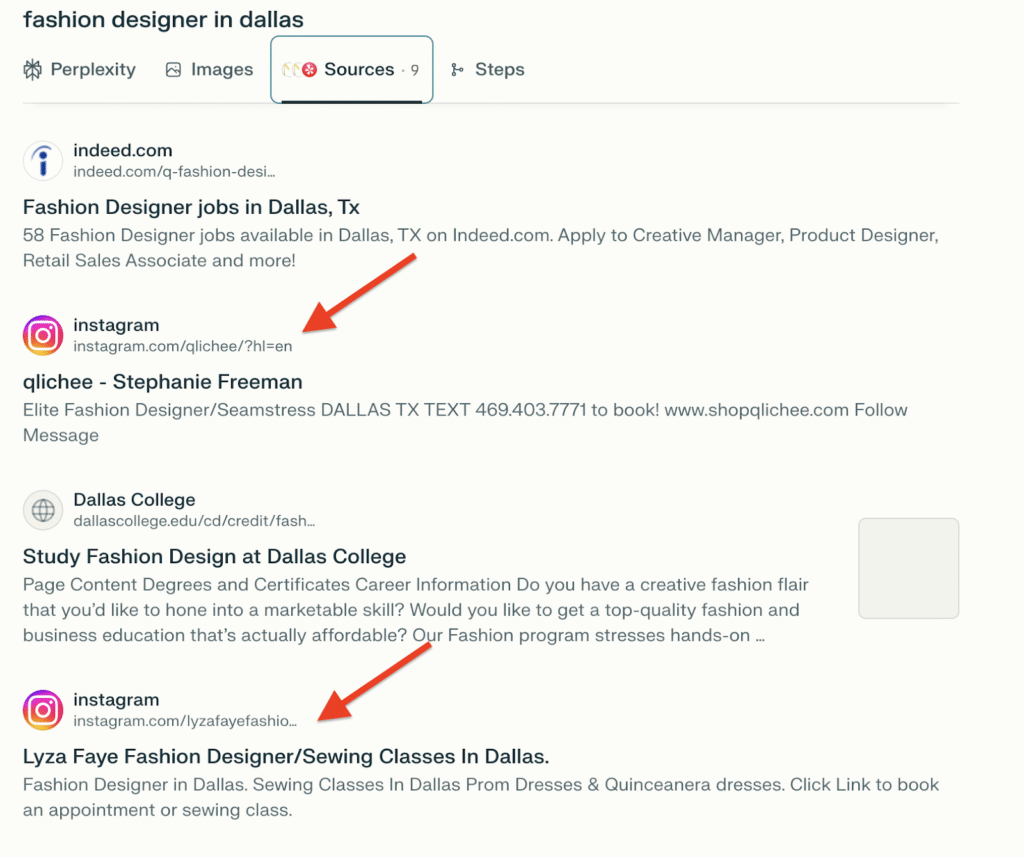
For example, when I asked about a fashion designer, Dallas, Perplexity AI highlighted some brands on Instagram:
Key metrics to track for your social signals are:
- Engagement rate: This measures how actively users interact with your content through likes, comments, and shares. A higher engagement rate indicates content that resonates well with your audience.
- Conversion rate: This measures the number of desired actions users take after interacting with your content. It can be purchases, sign-ups, or requests for more information.
- Referral traffic: This measures the total amount of traffic social media drives to your website.
- Brand awareness: This reflects your brand’s visibility on social platforms. You can track it through the number of brand mentions or share of voice.
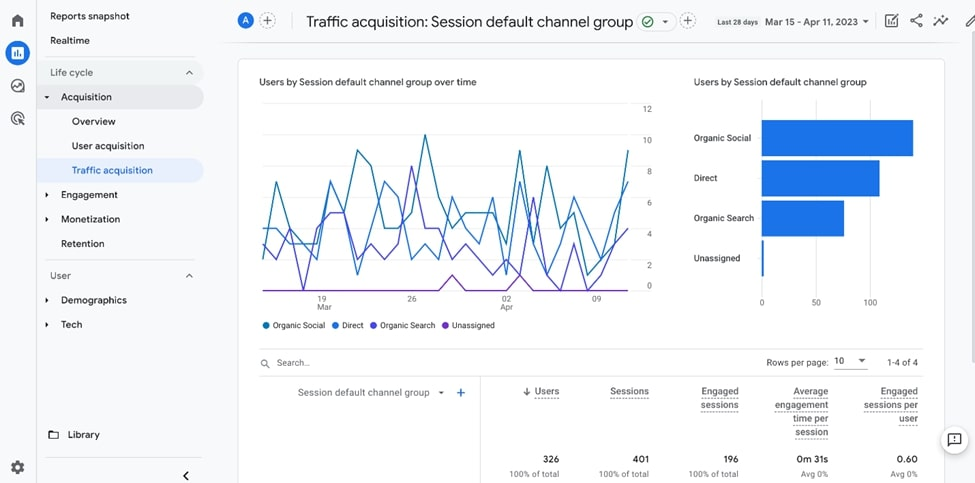
You can measure how much referral traffic comes from social media to your website through Google Analytics:
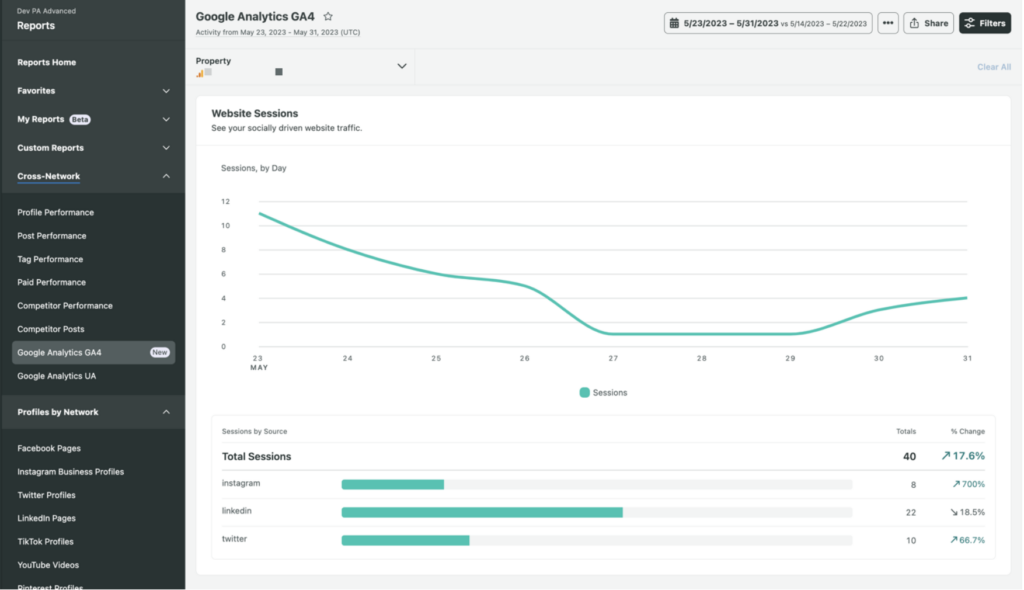
Or, use SproutSocial for more detailed analytics:
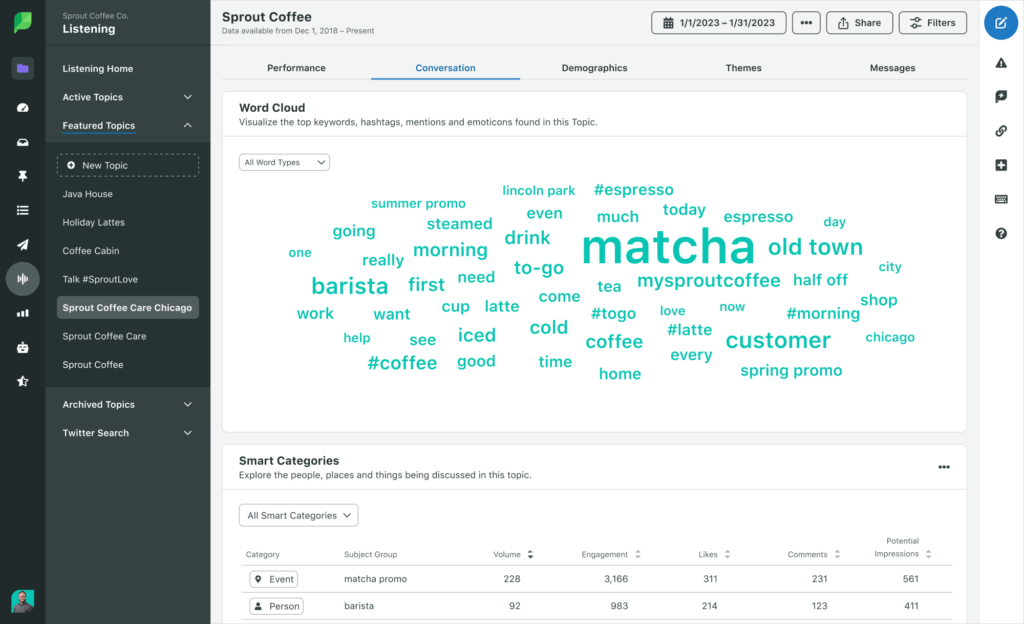
Here, you can see the full scope of your brand’s visibility on social platforms, the keywords you rank for:
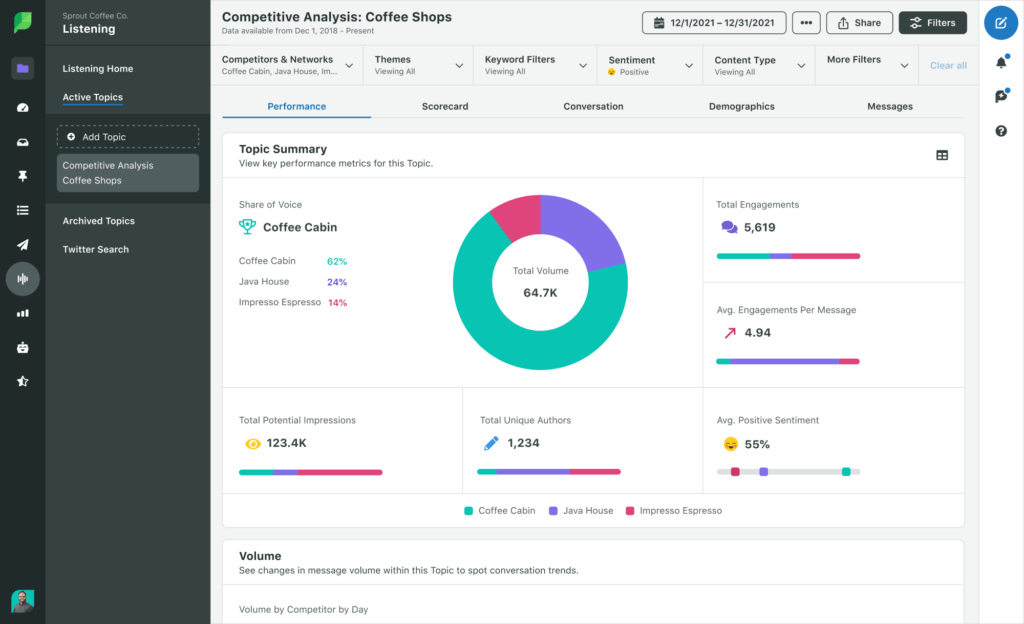
…and your brand’s share of voice against the competition:
Step 5: Build an off-page SEO report
Now… Here’s the fun part!
Once you’ve measured your performance across platforms, the next step is to summarize your key findings in a report.
Technically, this should contain all the key metrics I mentioned in this post. Generate reports from the platform on each step and combine them into a document that tells the complete story of your off-page SEO progress.
Here’s an example of what it should look like:
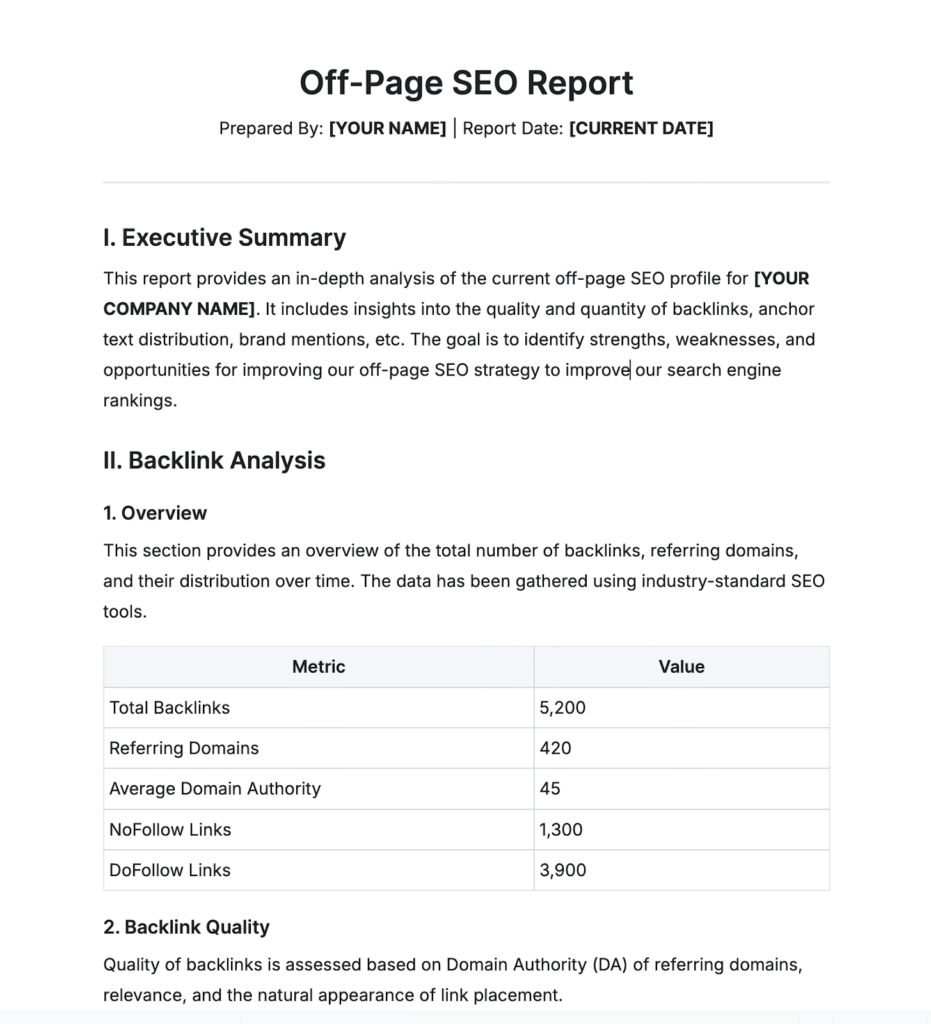
Based on this report, check out your:
- Best performing off-page strategy. For example, if guest blogging on niche websites funnels the most high-quality inbound links, it’s a sign that you can double your efforts there. Also, compare the data side by side to see which strategy performs better.
- Underperforming strategies. This can help you save time and reduce your budget.
- Opportunities to scale. Again, if a strategy drives you towards your goal than the others, allocate more resources to amplify its impact.
- Areas to improve. Not all underperformers need to be abandoned. For instance, if your social media strategy is generating reach but not driving referral traffic, you’ll need to optimize posts or use trackable UTM links to drive traffic to your website.
In Conclusion…
Off-page SEO works. Promote your content as much as you can and be conscious of the terms you want your brand to be associated with. The more eyeballs you have on it, the higher your brand visibility on traditional and AI search engines.


Enter your email to get strategic insights, a plan of action, and pricing options.
From Our Insite Blog
We believe that SEO requires an all-encompassing approach to ensure a sustainable future for your site and achieve your goal…. conversions.

After working with HigherVisibility for just a few months, we started getting more traffic and selling more memberships. Great people that treat you right and get results.