Customer Journey Mapping: Enhancing User Experience Through Data

Key Takeaways
- Customer journey mapping allows you to see your business from the customer's perspective, identifying key moments that impact their experience and enabling you to prevent customer churn.
- Distinguishing between the buyer journey and the customer journey is crucial: the buyer journey focuses on the path to purchase, while the customer journey encompasses the entire brand relationship story from awareness to loyalty.
- Utilizing real data during the customer journey mapping process helps you gather insights that accurately reflect customer experiences and expectations, enabling you to optimize touchpoints and improve user experience.
Customer journey mapping is a visual overview of your customers’ steps and processes when interacting with your business. It shows you their experience at key moments to help you improve every stage for memorable outcomes.
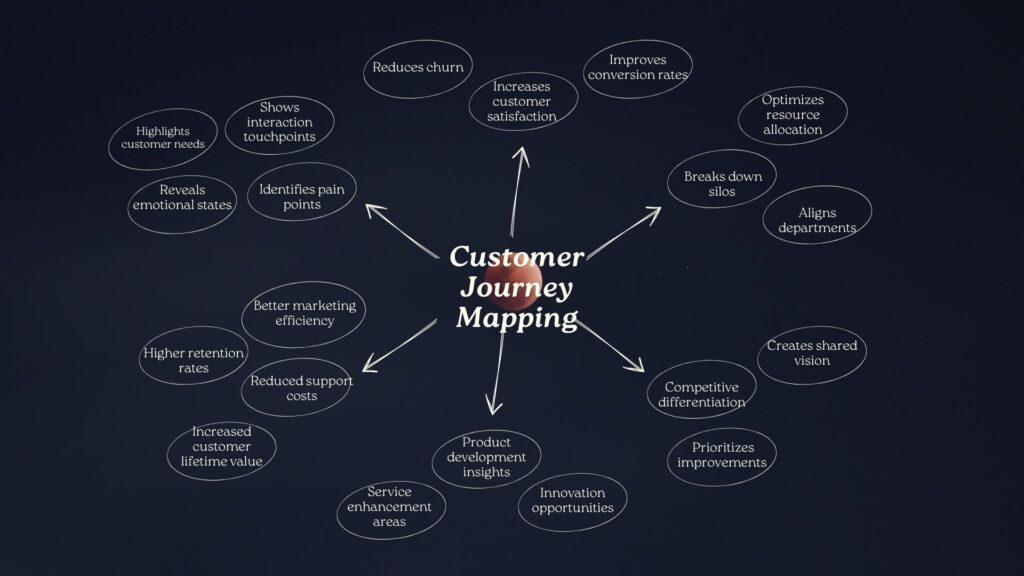
This helps you see your business through the customer’s eyes to identify the moments that make or break the customer experience. You can then use this insight to prevent customer churn where you notice they typically drop off. It can also help you increase conversion rates (since the critical touchpoints are optimized to improve user experience). Here’s a mindmap of how relevant the customer journey map is to modern businesses:
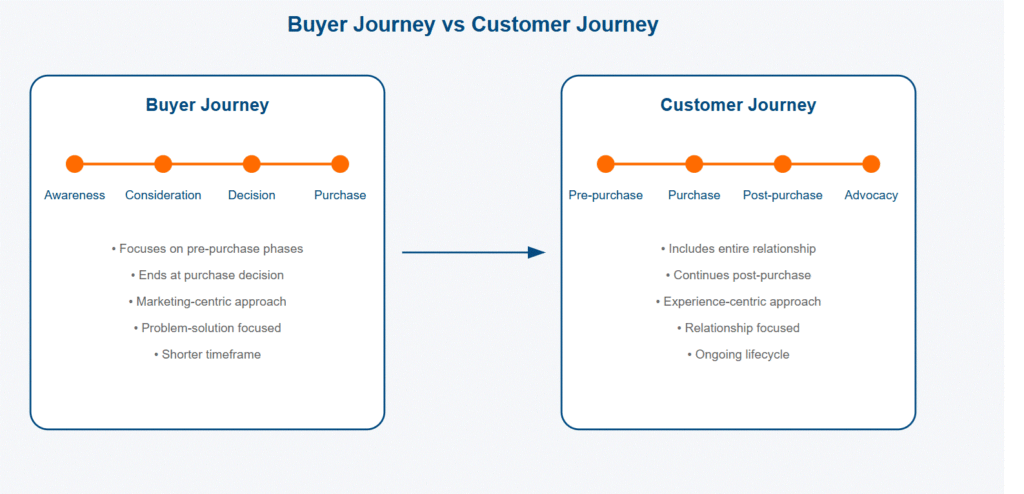
By the way, the buyer journey is different to the customer journey. The buyer journey focuses on the steps someone takes to become a customer. It starts with identifying a problem and making a purchase.
In other words, the buyer journey maps the decision-making process before purchase and tracks how a prospect researches, evaluates, and ultimately decides to buy a product or service. In contrast, the customer journey is more comprehensive. It encompasses every interaction between a person and a brand, from initial awareness down to eventual purchase and long-term loyalty/advocacy.
- Buyer journey = the path to purchase
- Customer journey = the complete brand relationship story.
How to Use Data During the Customer Journey Mapping Process
To truly understand your customers’ journey, you need to look beyond assumptions and tap into real data. This helps you gather relevant information that reflects their experience and expectations as they explore your offerings. Here are two essential types of data to collect and analyze:
- Solicited Data
- Unsolicited Data
1. Solicited Data
This data is sourced directly from your customers; it’s where they tell their story in their own words. Think of it as having a conversation with your customers at crucial moments in their journey.
This includes pre-purchase research, where you capture insights before they become customers. This helps you understand what influences potential customers before they commit. This can be surveys embedded at strategic points with questions such as:
- Before checkout, ask
How did you find us?
Is there a content you loved the most that you remember?
How was your experience with our website?
etc., etc.
- Before they download a high-value content you’ve published, ask
How did you know about this content asset?
Have you read from our blog before? If Yes, is there a memorable blog post you’ve seen?
Have you seen us on your social media feed before?
One thing to note here is to keep the survey questions as straightforward and few as possible. You may bore them with too many questions— an alternative is to make the questions optional so they don’t have to answer if they don’t want to.
- After starting a free trial, Ask
Have you used other products before ours?
What are you looking to achieve?
What is your typical use case?
What is the size of your team?
You can give options to each of these questions to help them choose answers easily.
There is also the post-customer feedback phase. Once a customer becomes a customer, use surveys to measure satisfaction, loyalty, and areas for improvement.
This can be an NPS survey (Net Promoter Score) to know how likely a customer is to recommend your products or services to others, typically on a scale of 0 to 10. These surveys are sent after significant interactions, such as a purchase or subscription renewal.
You can also use support interaction surveys to assess the efficiency of your onboarding or customer service. For example, you can ask your customer, “How easy was it to set up your account?” and ask, “How would you rate your recent interaction with support?”
2. Unsolicited Data
Unsolicited data provides quantitative insights into customer behaviors without direct input from them. This data helps you understand how users interact with your brand across multiple channels. Although it can’t reveal the exact “why” behind every action, it shows patterns and trends in customer behavior that can help you improve their interactions with your brand.
Here’s how you can collect and use unsolicited data:
Website Data
Analyze your website traffic sources to see which platforms refer the most visitors. For example, if some of your traffic comes from LinkedIn, it means some of your accounts have strong engagement, and it might be a good strategy to continue repurposing and distributing your content and talking to people about your brand there.
If Facebook also drives a huge chunk of traffic, you should intensify efforts on your current strategy as you have gained visibility on Facebook.
Google Analytics
Google Analytics offers deeper insights into how users interact with your website. It helps you understand customer pathways and identify which pages most influence conversions.
It can show:
- Pages users land on first.
- Pages they click on next.
- The complete journey users take across multiple pages. For example, if a user lands on your product page and checks your landing page, proceeds to the “About Us” page, and interacts with other content before signing up for your newsletter, Google Analytics can show these different touch points so you can know where potential users visit before they take a specific action on your website.
Find image here https://www.lovesdata.com/blog/google-analytics-4-events?format=amp
Social media
Social media platforms also provide metrics like engagement (likes, comments, and shares) and click-through rates. Analyzing these helps you understand:
- The posts that resonate with your audience and increase traffic to your website or sign-ups.
- The content type that engages and encourages users to take specific actions.
Third-party sites
Third-party sites (review sites or forums) also provide insights into the public perception of your brand. A marketing manager I spoke to a few days ago said they use Reddit to know what people say about their product (and the industry) and how they can improve their services and sell to users better.
Using these forums to gauge customer perception (including their feelings about your brand) can also set you up for success.
Stages of the Customer Journey
There are five major stages of a customer journey. They include:
1. The Awareness Stage
At this stage, the customer becomes aware of a problem or need. They may not know about your brand yet but are beginning to search for solutions. Customers could come across your website through various means. It could be that:
- They landed on your optimized blog post after a search on Google
- They saw a PPC ad or social media ad you promoted
- They read a report or whitepaper you’ve published
- Someone referred them to the brand
At this stage (with these different touchpoints), your goal is to position your business as a helpful and credible resource. Offer valuable content like ebooks, how-to guides, and blog posts that address their pain points and make it easy for them to learn more about their problem and the solutions you provide.
2. The Consideration Stage
Here, prospects are comparing potential solutions. They are weighing the pros and cons of different products or services. They may have already interacted with your content and are now looking to see what makes your offering unique. Actions at this juncture might include:
- A subscription to your newsletter for more insights
- Reading your product comparison articles or case studies from your content library
- Attending a webinar to learn more about your solutions
- Watching you more closely on social media or through specific podcasts (the latter is common in B2B)
At this stage, you need to showcase your strengths. Publish high-value content like detailed product listicles, feature comparisons, or case studies that show how your solution is different from competitors.
3. The Decision Stage
Now, the customer is ready to make a purchasing decision. They’ve narrowed their options and are likely deciding between a few brands, including yours. Here, they may:
- Request a free demo or consultation
- Look for free trials or promotions to get a discount on their first purchase
- Engage with your customer service team for last-minute questions
- Read reviews (especially in B2C) to be sure the product/service is right for them
Your role here is to reassure them and smooth the path to purchase. Ensure your purchase process is straightforward and provide resources like free demos, consultation calls, or limited-time promotions.
4. The Retention Stage
Once a customer makes a purchase, the focus shifts to keeping them engaged and satisfied. At this stage, your goal is to prevent churn and encourage long-term loyalty. Customers may:
- Use your product and explore tutorials or your knowledge base (for B2B products)
- Reach out to your customer support for help with setup
- Receive more emails asking if they need help with proper onboarding
- Receive follow-up emails asking for feedback
To ensure retention, prioritize an excellent onboarding experience and provide consistent support.
5. The Loyalty Stage
In this final stage, satisfied customers become brand advocates. They will use your product and promote your brand to those they know. Customers in this stage will:
- Leave positive reviews on review sites (or on your website)
- Agree to speak to you for a case study
- Recommend your product to their colleagues
- Share their experiences on social media
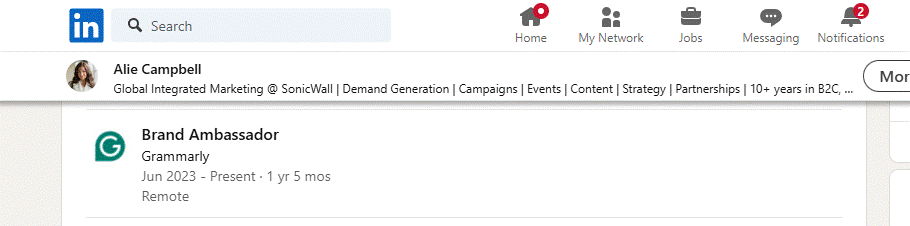
To ensure this, your product must do what it says it will do. And beyond this, you can offer incentives for every referral to make them feel compensated for being advocates of your brand. You can even offer them the tag “brand ambassador,” as Grammarly does to content marketers. Here’s an example:
What To Include In A Customer Journey Map
Here’s what a customer journey map looks like. As you can see, it shows the different stages the user interacted with the brand and where they did it. It also identified the physical and digital touch points (which is relevant for businesses with physical retail stores).
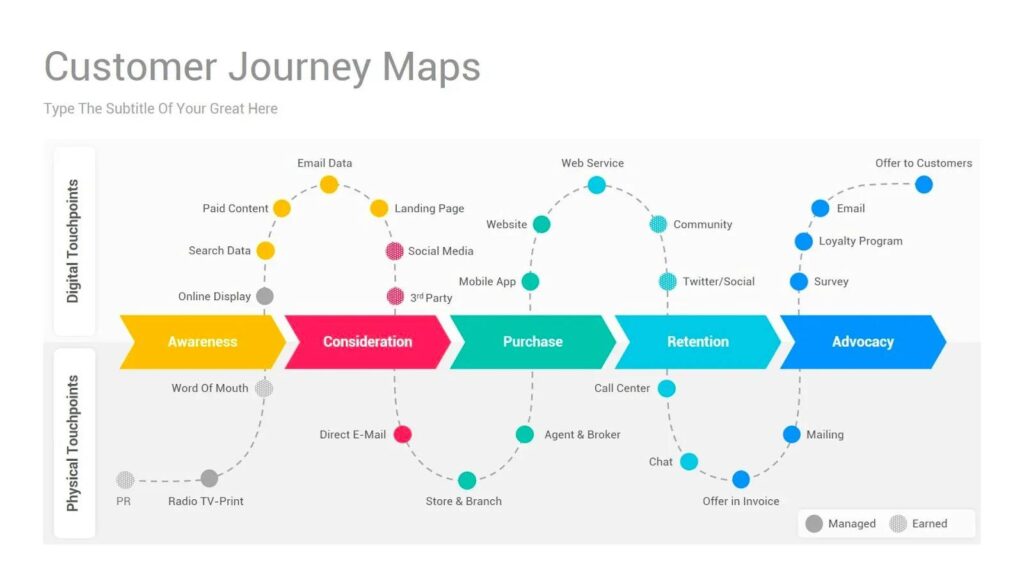
To create yours, consider the following information to include in your map:
- Customer Journey Stages: Include the stages in the customer journey to help you understand their needs as they go through each stage.
- Customer Touch Points: These are interactions between a potential customer and a brand. These can be through a blog post, a product page on your website, a PPC ad, word-of-mouth marketing, emails, etc.
You can also include
- Their pain points (to show you understand what led them to a specific stage or touchpoint)
- Their actions and emotions at each touch points to know their thoughts at the different touchpoints
How to Create a Customer Journey Map
You need to visualize every step users take to create a customer journey map that reflects their experiences. This includes when they first discovered your business to the point where they became a loyal advocate. Let’s walk through the key steps to build a detailed, actionable map:
1. Know Your Objectives
Set clear objectives before creating your customer journey map. This means asking yourself, “What do I want to accomplish with this map? Do I want to improve the user experience, increase conversions, or identify roadblocks that affect overall success?”
Then go further down by asking questions like:
- “What do I want to learn about my customers’ experience?”
- “How can I make the experience smoother and more satisfying for them so they can make decisions faster?”
- “Where are they engaging with us the most, and how can I get them to that stage faster?”
2. Profile Your Personas and Know Their Pain Points
Your journey map should be based on detailed customer personas.
These personas represent your real customers’ behavior, needs, and demographics. Conduct research using surveys or interviews to gather valuable insights about their needs and goals and know how your product or service can improve their day-to-day operations.
Questions to ask during these surveys and customer interviews can include:
- “How did you hear about (your company)?”
- “What attracted you to (your product/service)?”
- “What specific problem are you trying to solve?” (especially if there are multiple use cases for your product)
- “What would improve your experience with us?”
This data will help you understand how different personas interact with your brand and can help you design a journey that meets their specific needs.
3. Highlight Your Target Personas
Instead of grouping all personas into one journey, focus on one or two key personas.
Create separate maps for different personas to ensure accuracy. Start with your most common customer profile and use data to identify their specific path when engaging with your brand. This approach will help you understand their multiple touchpoints so you can ideate on how to improve them.
4. Identify Key Steps and Touchpoints
These are the steps they took before taking action on your website. This could be making a purchase or signing up for a newsletter. Touchpoints are the moments when a customer interacts with your brand and forms opinions about it. These can include:
- Website visits
- Social media interactions
- Paid advertisements
- Emails and newsletters
- In-store experiences
By mapping out these interactions, you can learn about where customers might encounter roadblocks or areas of confusion. You’ll also learn how to improve their experience from these different places.
An easy example is improving website page speed if many users use your website and the slow page speed affects user experience. It can also be as minute as improving web design or writing web copy that positions your product to show how it can help your (potential) customers.
5. Map Customer Actions and Emotions
For each stage, list the customer’s actions and emotions.
Example:
- Awareness Stage: The prospect sees a blog post (action) and feels intrigued but unsure if your product is a fit (emotion).
- Consideration Stage: The prospect subscribes to your newsletter to learn more (action) and wonders if your solution is right for their problem (emotion).
- Decision Stage: The prospect signs up for a free trial (action) and feels excited and overwhelmed by using the product (emotion).
Understanding their emotions at each stage helps create a more empathetic and supportive journey. In the last-case scenario, helpful support would be to provide a better onboarding process that lets them ease into your product (if it’s technical) so their experience can be much better.
6. Identify Pain Points and Obstacles
What stops your customer from moving forward? Is it high shipping costs (for B2C), a complex checkout process, or insufficient customer support?
Recognizing these pain points allows you to address them proactively.
For example:
- Customers may abandon their cart due to hidden fees (common in B2C businesses).
- They might leave the site early if the navigation is unclear or they don’t know how your product/service can help them.
List the potential obstacles and the actual friction to create a smoother experience in every stage they are in.
7. Evaluate Resources and Tools
Review the resources and tools you currently have to support your customer journey. Do you have the necessary tools for customer follow-ups, or are you missing out on key touchpoints? For instance:
- Do you have enough people on your team to create better campaigns that convert prospects?
- Do you have the budget to spend on an efficient CRM software? Do you have the budget to hire an efficient talent to manage these activities?
- Is it in your marketing budget to spend more money on specific initiatives that increase engagement on high-value content assets?
When you know the gaps in your customer journey, you need a team to help you fill them. Assess if your team is equipped to support your prospects in the different touchpoints that matter so you can increase the results of your overall marketing efforts.
8. Take the Customer Journey Yourself
To truly understand your customers’ experience, walk through the entire journey yourself. Engage with your business from the perspective of a customer:
- Follow their path from discovering your brand to making a purchase.
- Note any frustrations or difficulties along the way. These could include slow page speed, clunky interface, or no CTA where it should be by reflex.
While your research might be a little skewed because of potential bias, let others take the journey for you. You can speak to some of your target audience who are not yet customers to take the typical journey or sign up to use your software. They’d give feedback on their experience (and opinions on where and how you can improve).
9. Analyze and Optimize
Your journey map should be a living document, not a one-time exercise. Analyze customer behaviors regularly to know what has changed and how you can improve their experience to increase conversion and retention rates. To do this,
- Use a tool like Hotjar to answer the question, “Where do most customers leave the journey?” This may be by analyzing heatmaps from your website to see drop-off points
- Then, use your interviews and surveys to answer the question, “What feedback are we receiving from customers about their experience?”
Doing this can help you improve your customer experience when they need to take specific actions on your website.
When to Start Customer Journey Mapping
There are various occasions when you need to start mapping the customer journey. Some of them include:
- If there is low customer satisfaction.
- When starting a new business.
- To ensure you anticipate and are meeting your prospects’ needs.
Types Of Customer Journey Maps
You can create different customer journey maps depending on the journey you want to illustrate.
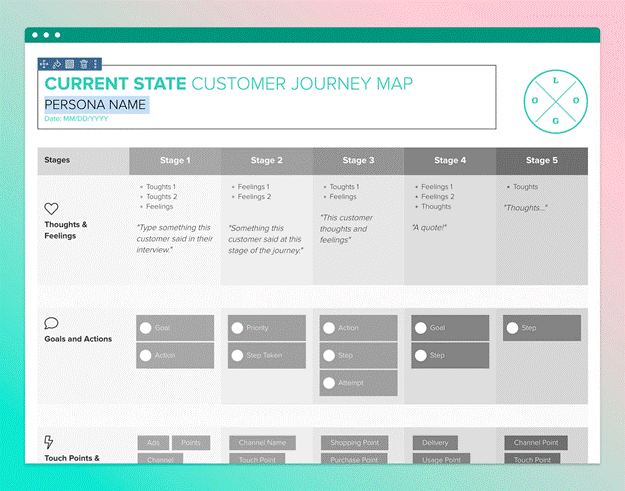
Current State
This journey map captures how customers interact with your brand, including their thoughts, actions, and touchpoints at each journey stage.
This helps you:
- Find gaps in your customer experience.
- Understand where customers may experience friction.
- Find strategic areas to optimize their experience of your brand.
Day In The Life
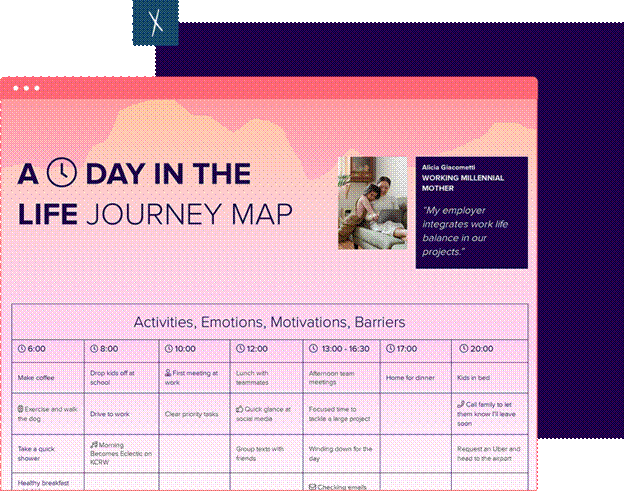
This map goes beyond direct brand interactions to show a customer’s typical day. It gives insights into external factors that may influence their behavior and helps you understand how customers’ routines, preferences, and environment impact their interaction with your brand.
This helps you to:
- Anticipate when and where customers might engage your brand.
- Create messaging or touchpoints that fit naturally into their daily activities.
- Identify non-obvious factors that shape buying decisions.
Service Blueprint
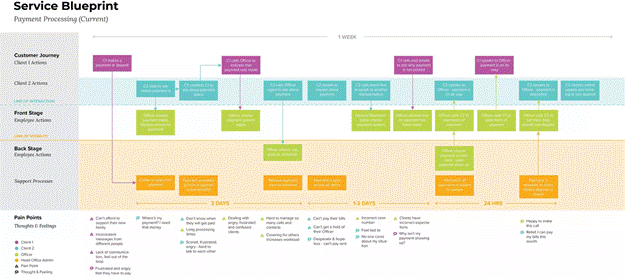
A service blueprint journey map focuses on the customer’s experience and the internal processes and teams involved at each touch point. It gives you a clear picture of how your internal operations impact the customer experience.
This helps you:
- Align cross-functional teams and processes to improve customer experience
- Identify bottlenecks in internal workflows that affect customers
Future State
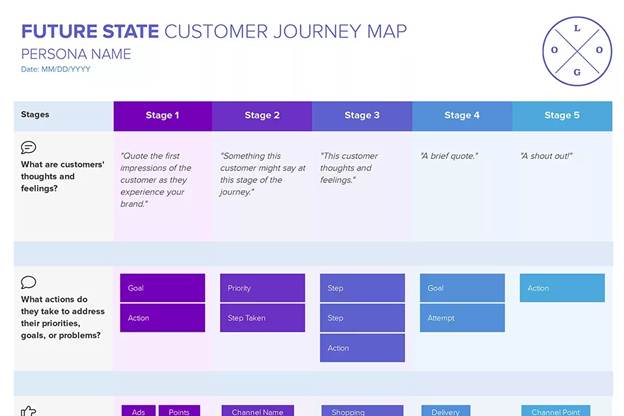
This map illustrates your vision for how you want the customer journey to unfold. It helps you set clear goals and develop strategies to improve future interactions.
This helps you to:
- Plan future enhancements to the customer journey.
- Set actionable milestones to increase customer engagement levels throughout the customer journey.
Conclusion
A customer journey map helps you understand more about the customer experience where it matters. It provides insights into what users may see to introduce them to your brand and the specific actions they take when they hear about your brand. You can use solicited and unsolicited data to know these things and how these different touch points moved them a step closer to the point of purchase. And when you know these things, find ways to improve the user experience to help future users.


Enter your email to get strategic insights, a plan of action, and pricing options.
From Our Insite Blog
We believe that SEO requires an all-encompassing approach to ensure a sustainable future for your site and achieve your goal…. conversions.

The HV team is the smartest, most creative SEO people in the business. Overall, they have been a pleasure to work with, and I would recommend them without reservation.