Free SEO Website Grader
Two scores, one scan: how your site ranks in Google and whether AI answers mention you at all.
Enter your URL and get a graded report in about 60 seconds. We run 100+ checks across on-page SEO, technical health, page speed, backlinks and local signals then check how visible your brand is in AI search, where a growing share of buyers now start. Free, no software to install.









 Prefer to call?


Most sites don’t have one dramatic problem. They have a dozen small ones, a missing canonical tag, images with no alt text, a mobile layout that shifts on load, a page that takes four seconds to render, that quietly add up to lost rankings and lost revenue.
The SEO Website Grader finds them and puts them in priority order, so you know what to fix first instead of guessing.


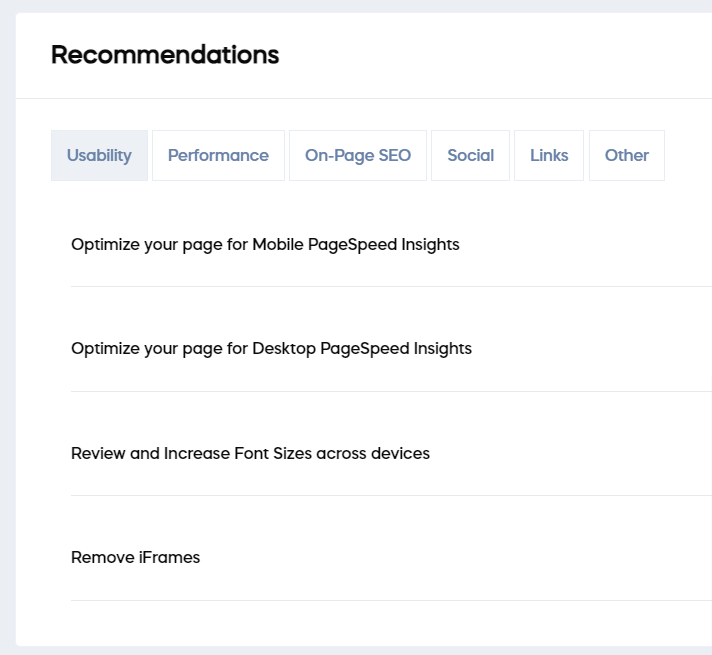
To use the recommendation checklist and obtain the instant report for SEO strengths and weaknesses, follow these specific steps:


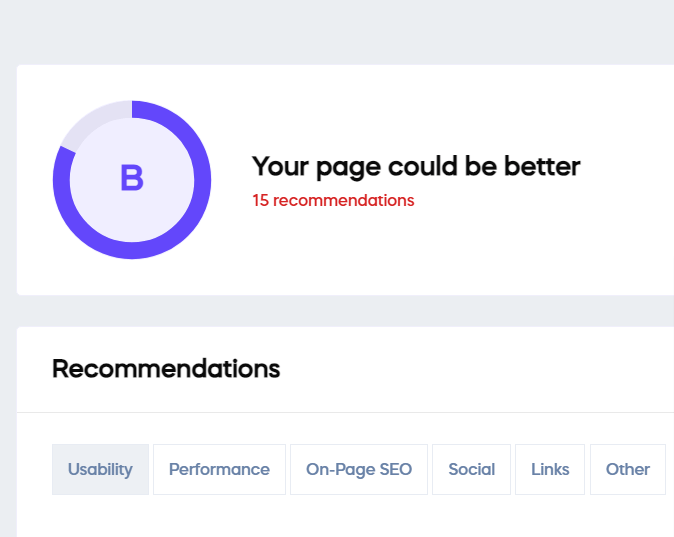
Since 2009 we’ve helped hundreds of businesses grow through search. The SEO Website Grader runs 100+ checks across the elements that consistently move rankings:
On-Page SEO: Title tags, meta descriptions, header tag structure, keyword usage and distribution, image alt attributes, canonical tags and more, with specific guidance on how to fix each issue on your platform.
AI Search & GEO Visibility: Whether AI assistants can crawl and understand your site, how your content reads to a large language model, and whether Google’s AI Overviews already cite you. Full detail in the next section.
Keyword Rankings: A summary of the keywords your site currently ranks for, by position, with estimated search volume and traffic, so you have a baseline to measure against.
Off-Page & Backlinks: Total backlinks, referring domains, Domain Authority and a sample of your most valuable links. Backlinks remain one of the strongest ranking factors in search.
Mobile Usability & Core Web Vitals: How your site renders on mobile and tablet, plus your Google PageSpeed and Core Web Vitals scores with pass/fail benchmarks.
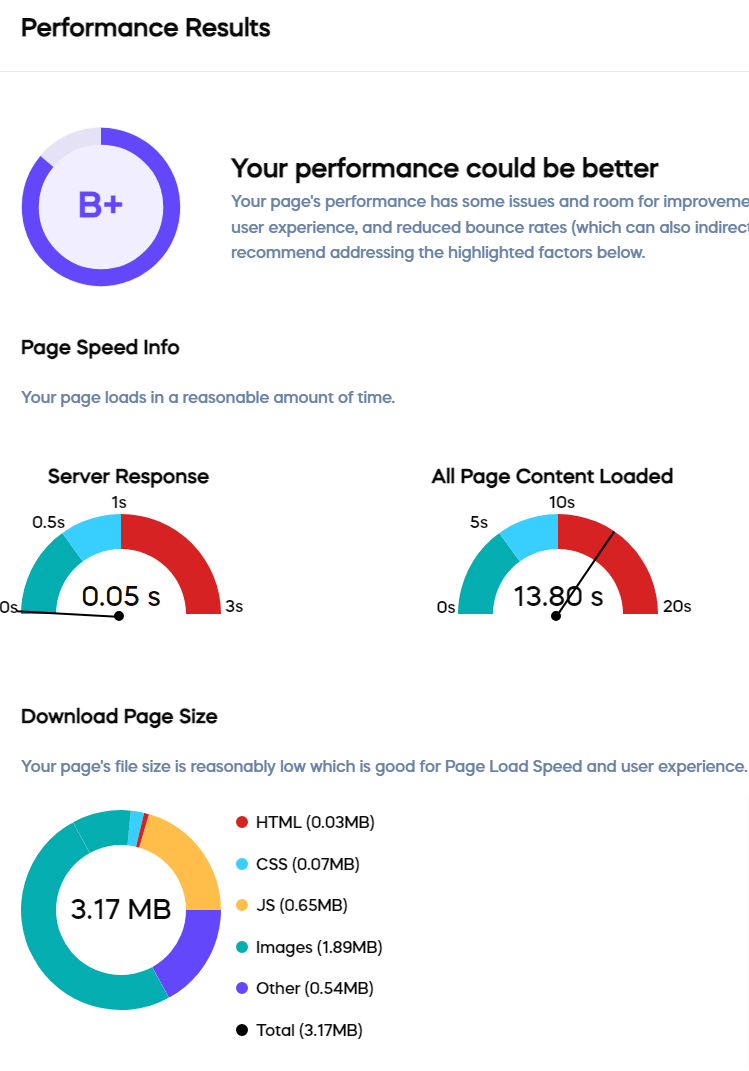
Page Size & Load Speed: Real load metrics measured the way a visitor experiences them, not a synthetic estimate.
Local SEO Basics: For businesses with a physical location: Google Business Profile presence, NAP consistency, and the local signals that determine whether you show up in map results.
Technology Stack: The CMS, frameworks and libraries your site is built on, useful context for scoping what fixes are actually feasible.
Prioritized Recommendations: Everything above, sorted by impact, so the first thing you fix is the thing that matters most.
Your AI Search Visibility Score
Search isn’t one destination anymore. Google’s AI Overviews now appear on roughly a quarter of searches and answer the question before anyone clicks. Meanwhile buyers are asking ChatGPT, Gemini, Claude and Perplexity for recommendations directly, and if those models don’t know who you are, you’re not in the consideration set at all.
Traditional SEO doesn’t fully cover this. Generative Engine Optimization (GEO) does. Your grade includes it.
GEO isn’t replacing SEO, it’s built on it. Sites with strong fundamentals are the ones AI models trust and cite. But the signals are different enough that a clean SEO score no longer guarantees you exist in an AI answer. Your grade shows you both, side by side.
SEO vs. GEO: What’s Actually Different
Most businesses are doing the left column and ignoring the right. The grader tells you how far behind you are on each.
 Optimizes for search engines like Google
Goal is ranking in the results list
Driven by keywords and backlinks
Measured in rankings and traffic
Content written for users and crawlers
Optimizes for AI systems like ChatGPT, Gemini, and Claude
Goal is being cited inside the answer
Driven by context, clarity and entity signals
Measured in mentions, citations and share of voice
Content structured for users, crawlers and language models
Optimizes for search engines like Google
Goal is ranking in the results list
Driven by keywords and backlinks
Measured in rankings and traffic
Content written for users and crawlers
Optimizes for AI systems like ChatGPT, Gemini, and Claude
Goal is being cited inside the answer
Driven by context, clarity and entity signals
Measured in mentions, citations and share of voice
Content structured for users, crawlers and language models
Who This Is For

who want to know whether their site is the reason the phone isn’t ringing, without paying for an audit to find out.

who need a defensible, prioritized list to take to a developer or a leadership team.

run your site, run a competitor’s, and see the gap in objective numbers before you sign anything.
Frequently Asked Questions
An SEO grader is an automated tool that scans a web page and scores it against established search optimization criteria — on-page elements, technical health, page speed, mobile usability and backlink profile — then returns a grade and a list of fixes. Ours adds a second score for AI search visibility.
Yes. A letter grade of B puts you above most sites and indicates your fundamentals are solid. The remaining points are usually in page speed, content depth, backlink authority and , increasingly, AI search readiness. Sites in the C’s and D’s are far more common.
Only partially. ChatGPT can review copy you paste in and suggest improvements, but it can’t crawl your site, measure your Core Web Vitals, pull your backlink profile or check your rankings, it has no live access to that data. A dedicated grader does. The more useful question now is the reverse one: what does ChatGPT say about your business when a buyer asks? Your grade includes that.
Monthly during active optimization, quarterly once you’re stable. Re-grade after any significant site change — a redesign, a migration, or a CMS switch.
No, and be skeptical of any tool that says otherwise. The grade measures how well your site is optimized. Rankings also depend on competition, domain authority, content quality and search intent. A high score removes the obstacles; it doesn’t remove the competitors.
It loads your page the way a search engine would, evaluates it against a checklist of ranking factors, and reports what passes and what fails. A good one doesn’t just flag problems, it tells you which ones matter most and how to fix them.
Yes, this one. The SEO Website Grader is free, runs in about 60 seconds, and returns a full report including AI visibility. No trial, no credit card.
Automated audits like this one are free. A manual audit from an agency typically runs $2,500–$10,000+ depending on site size and depth. Start with the free grade, it tells you whether a paid audit is even warranted.
Yes. Your report includes a dedicated Generative Engine Optimization section covering whether AI crawlers can access and parse your site, how your content scores against the signals language models use when deciding what to cite, and which of your queries already appear in Google’s AI Overviews.
An SEO grader is an automated tool that scans a web page and scores it against established search optimization criteria — on-page elements, technical health, page speed, mobile usability and backlink profile — then returns a grade and a list of fixes. Ours adds a second score for AI search visibility.
It loads your page the way a search engine would, evaluates it against a checklist of ranking factors, and reports what passes and what fails. A good one doesn’t just flag problems, it tells you which ones matter most and how to fix them.
Yes. A letter grade of B puts you above most sites and indicates your fundamentals are solid. The remaining points are usually in page speed, content depth, backlink authority and , increasingly, AI search readiness. Sites in the C’s and D’s are far more common.
Yes, this one. The SEO Website Grader is free, runs in about 60 seconds, and returns a full report including AI visibility. No trial, no credit card.
Only partially. ChatGPT can review copy you paste in and suggest improvements, but it can’t crawl your site, measure your Core Web Vitals, pull your backlink profile or check your rankings, it has no live access to that data. A dedicated grader does. The more useful question now is the reverse one: what does ChatGPT say about your business when a buyer asks? Your grade includes that.
Automated audits like this one are free. A manual audit from an agency typically runs $2,500–$10,000+ depending on site size and depth. Start with the free grade, it tells you whether a paid audit is even warranted.
Monthly during active optimization, quarterly once you’re stable. Re-grade after any significant site change — a redesign, a migration, or a CMS switch.
Yes. Your report includes a dedicated Generative Engine Optimization section covering whether AI crawlers can access and parse your site, how your content scores against the signals language models use when deciding what to cite, and which of your queries already appear in Google’s AI Overviews.
No, and be skeptical of any tool that says otherwise. The grade measures how well your site is optimized. Rankings also depend on competition, domain authority, content quality and search intent. A high score removes the obstacles; it doesn’t remove the competitors.